Institute of Evolutionary Biology, University of Bonn, 53121, Bonn, Germany.
Johann-Friedrich-Blumenbach Institute for Zoology & Anthropology, Animal Evolution and Biodiversity, University of Göttingen, 37073, Göttingen, Germany.
BMC Evol Biol. 2019 Aug 28;19(1):173. doi: 10.1186/s12862-019-1498-9.
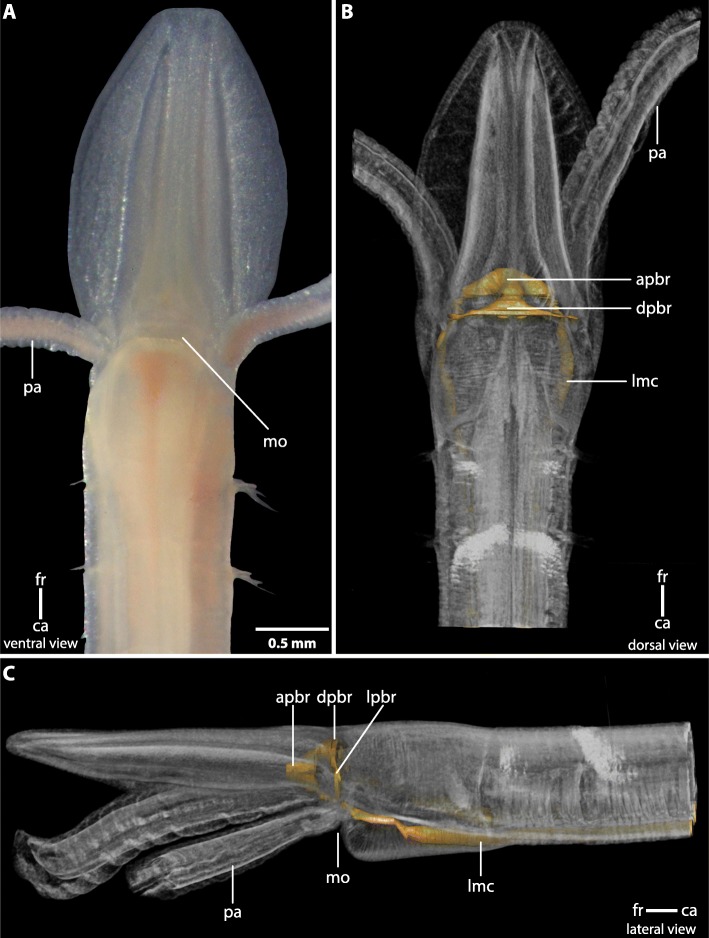
The annelid anterior central nervous system is often described to consist of a dorsal prostomial brain, consisting of several commissures and connected to the ventral ganglionic nerve cord via circumesophageal connectives. In the light of current molecular phylogenies, our assumptions on the primary design of the nervous system in Annelida has to be reconsidered. For that purpose we provide a detailed investigation of the adult nervous system of Magelonidae - a putatively basally branching annelid family - and studied early stages of the development of the latter.
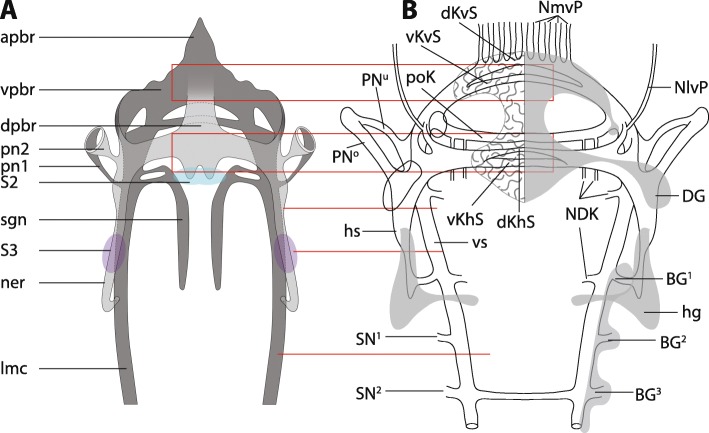
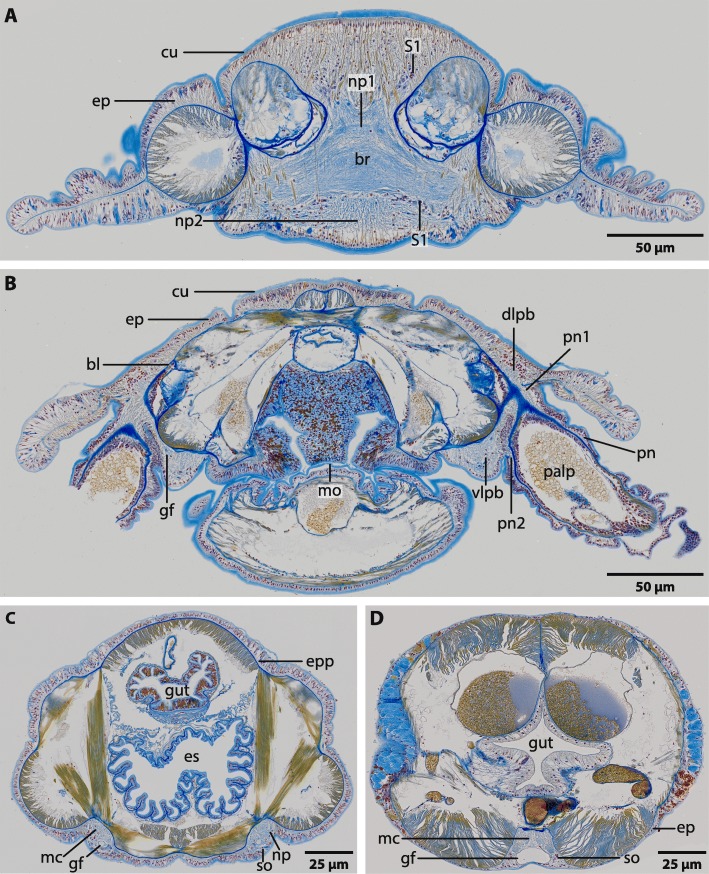
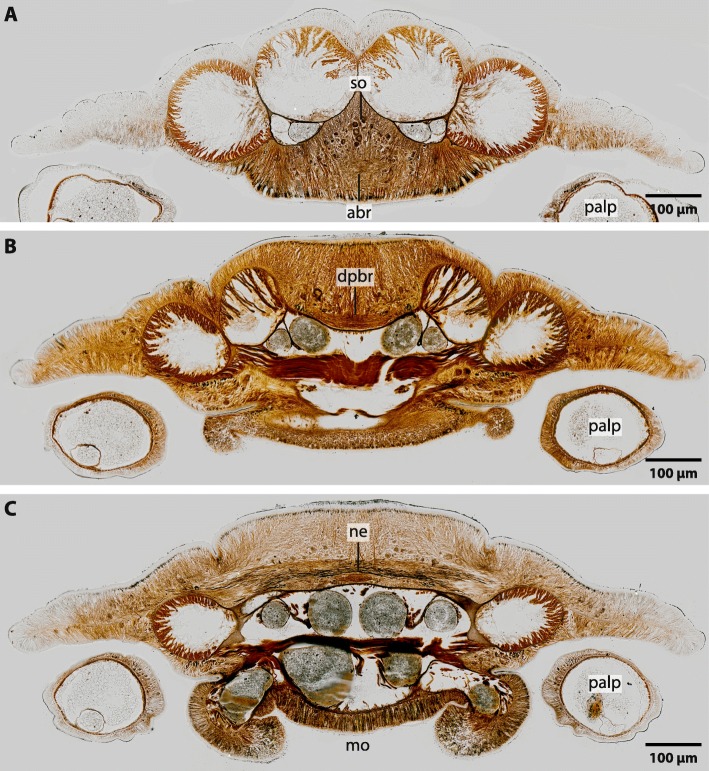
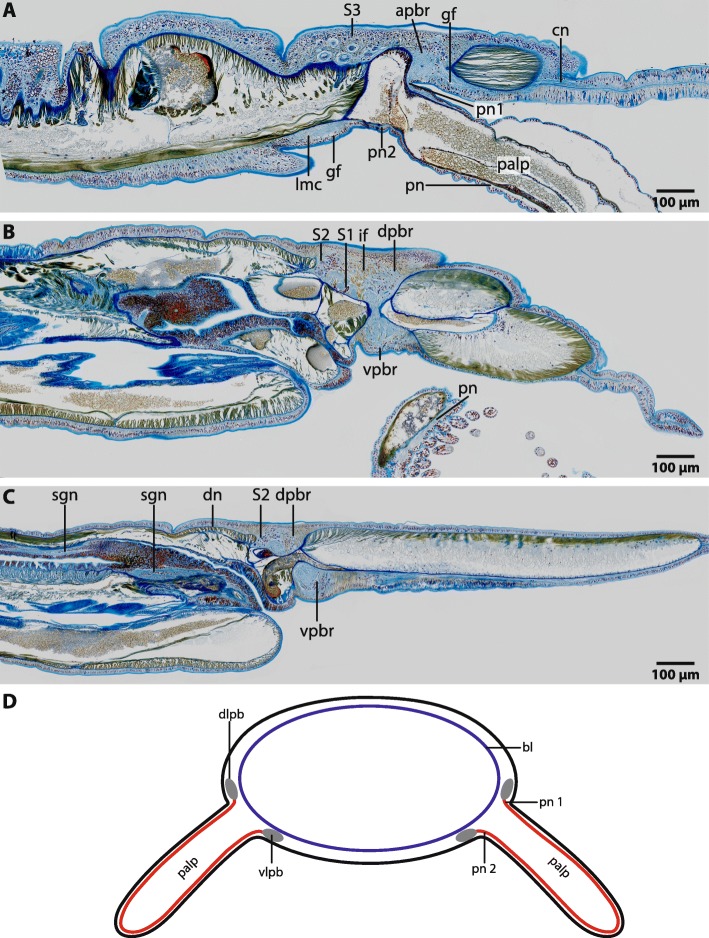
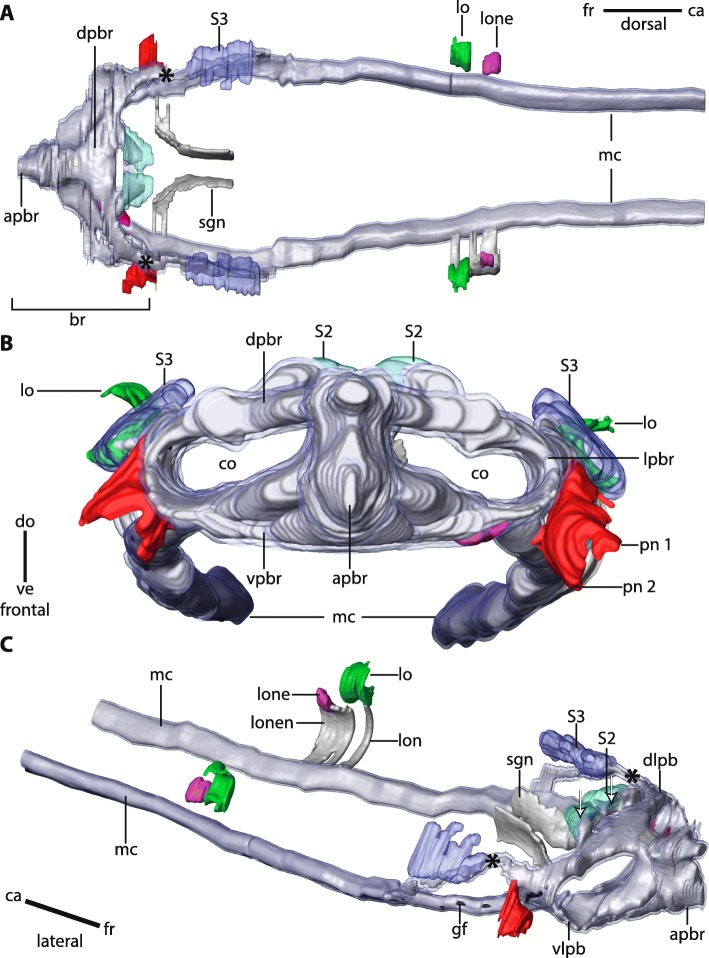
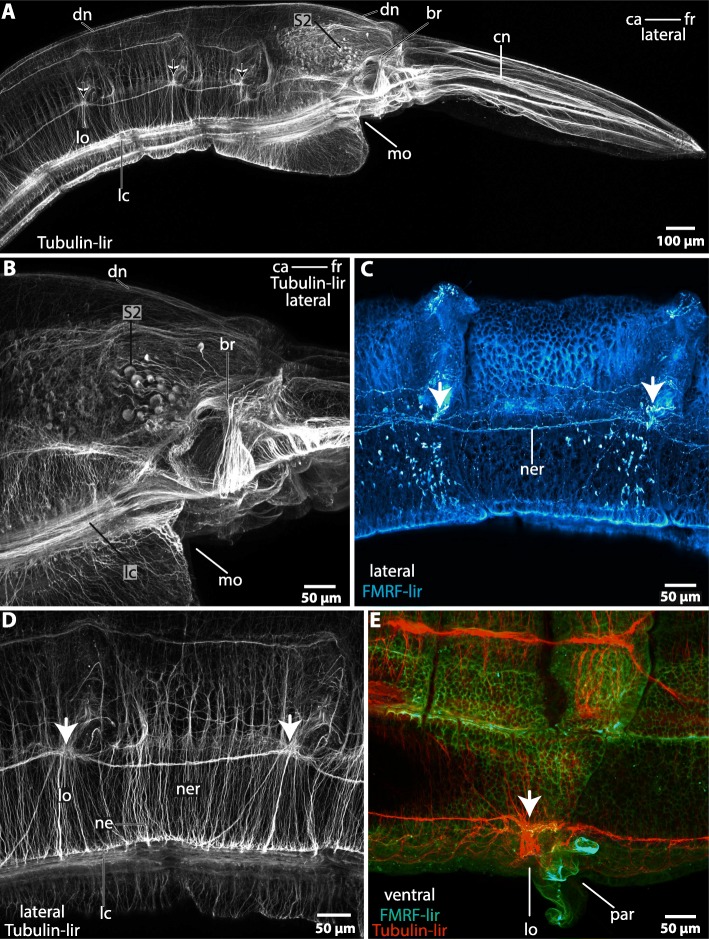
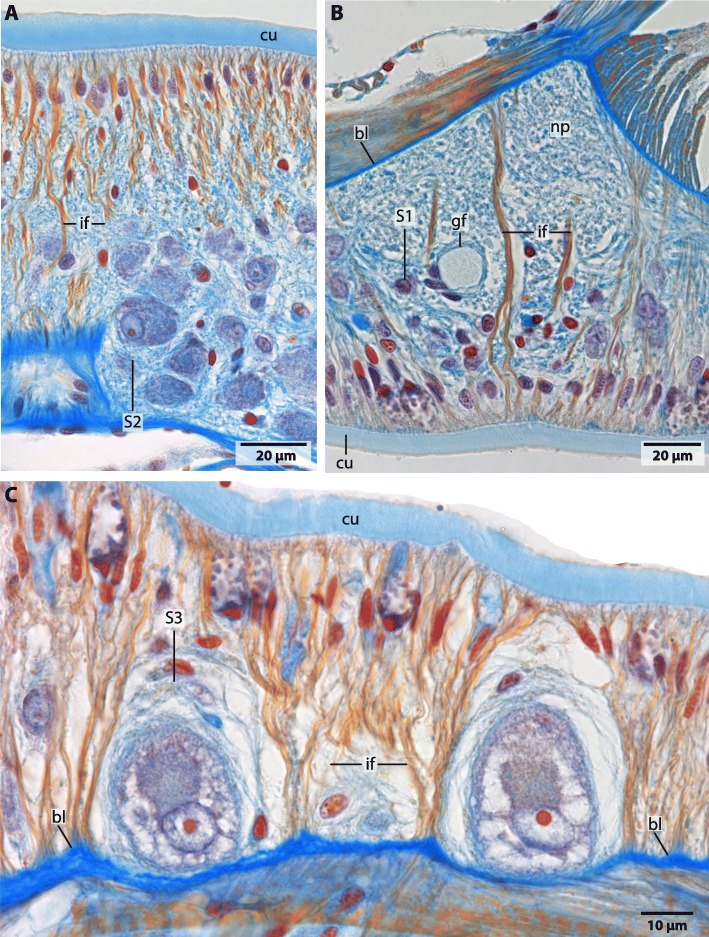
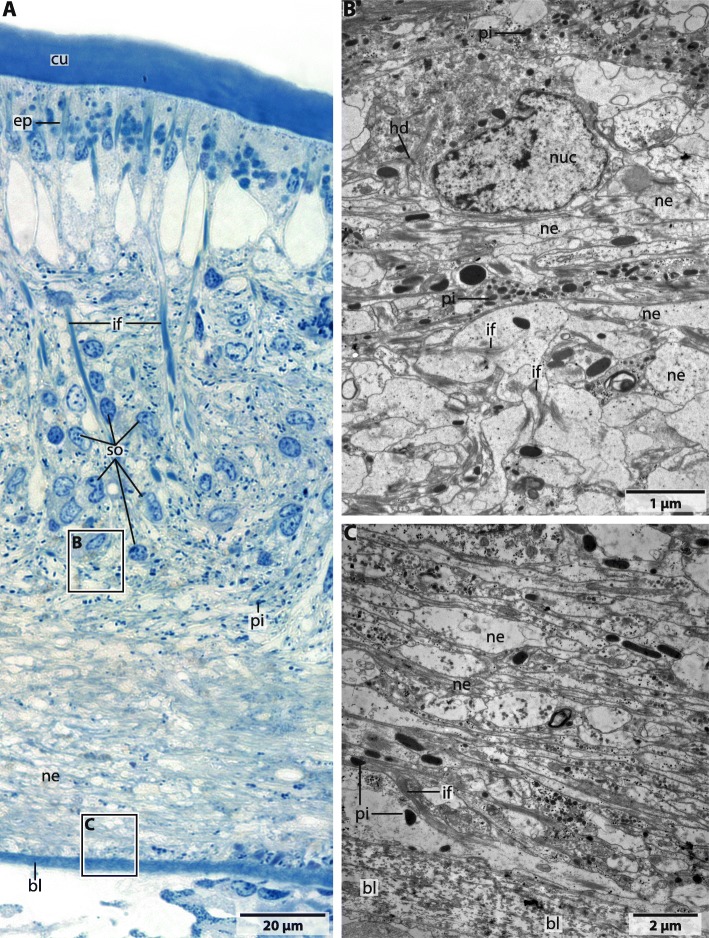
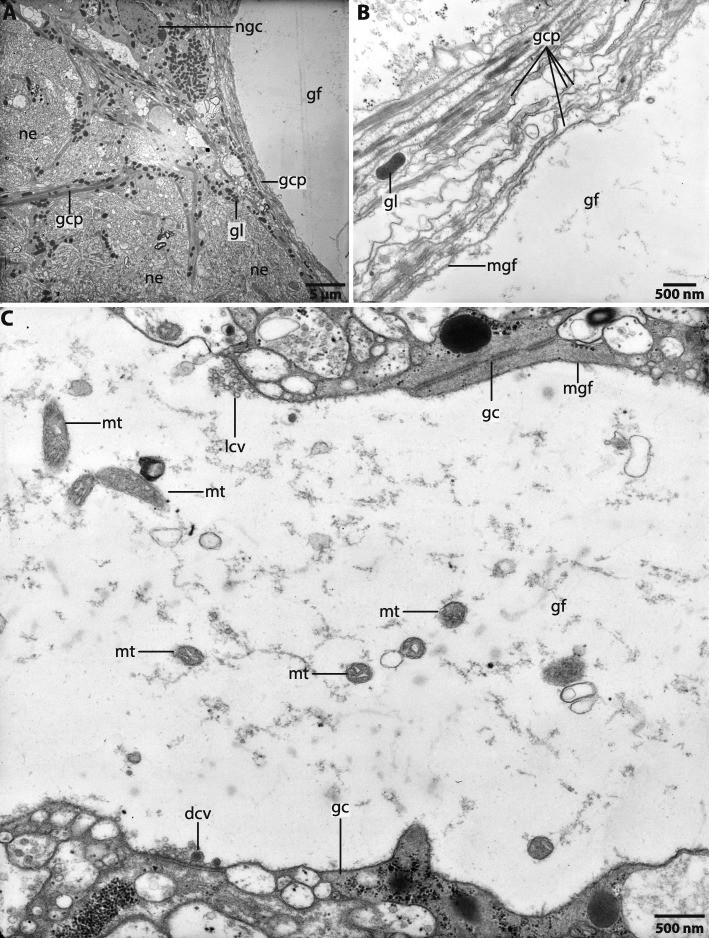
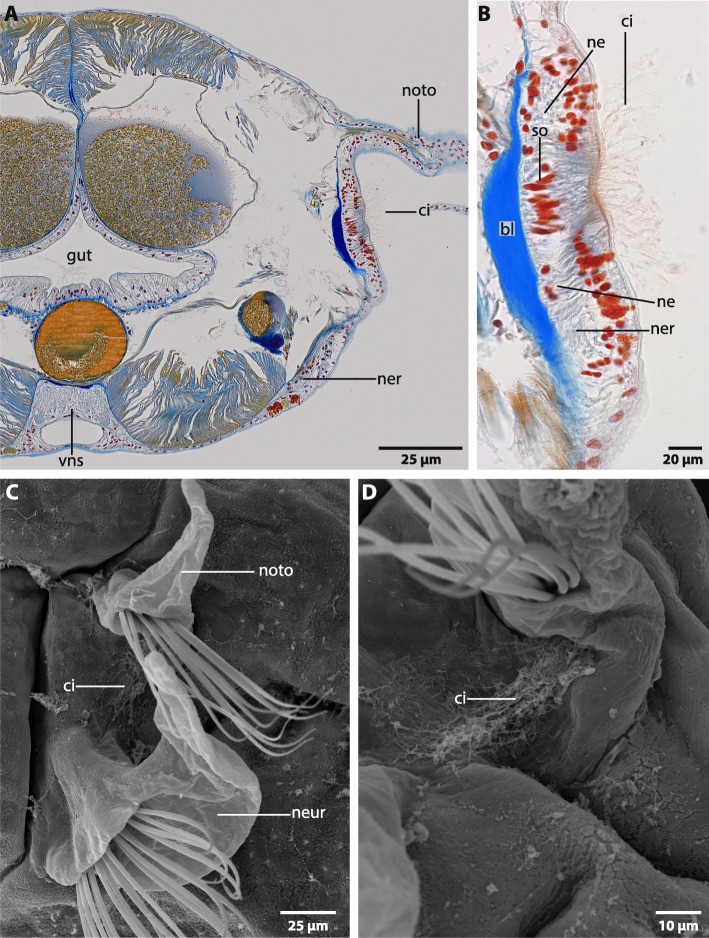
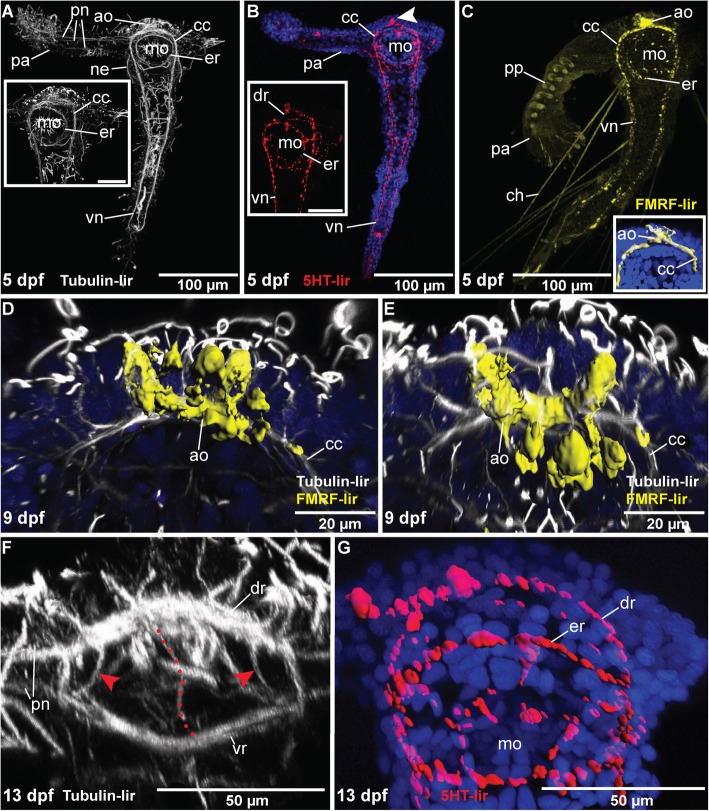
Our comparative investigation using an integrative morphological approach shows that the nervous system of Magelonidae is located inside the epidermis. The brain is composed of an anterior compact neuropil and posteriorly encircles the prostomial coelomic cavities. From the brain two lateral medullary cords branch off which fuse caudally. Prominent brain structures such as nuchal organs, ganglia or mushroom bodies are absent and the entire nervous system is medullary. Our investigations also contradict previous investigations and present an updated view on established assumptions and descriptions.
The comprehensive dataset presented herein enables a detailed investigation of the magelonid anterior central nervous system for the first time. The data reveal that early in annelid evolution complexity of brains and anterior sensory structures rises. Polymorphic neurons in clusters and distinct brain parts, as well as lateral organs - all of which are not present in outgroup taxa and in the putative magelonid sister group Oweniidae - already evolved in Magelonidae. Commissures inside the brain, ganglia and nuchal organs, however, most likely evolved in the stem lineage of Amphinomidae + Sipuncula and Pleistoannelida (Errantia+ Sedentaria). The investigation demonstrates the necessity to continuously question established descriptions and interpretations of earlier publications and the need for transparent datasets. Our results also hint towards a stronger inclusion of larval morphology and developmental investigations in order to understand adult morphological features, not only in Annelida.
环节动物的前中枢神经系统通常被描述为由几个神经节构成的背侧脑,通过围食管神经连合与腹神经索相连。鉴于当前的分子系统发育,我们对环节动物神经系统的原始设计的假设必须重新考虑。为此,我们对 Magelonidae(一种假定的基础分支环节动物家族)的成年神经系统进行了详细调查,并研究了后者的早期发育阶段。
我们使用综合形态学方法进行的比较研究表明,Magelonidae 的神经系统位于表皮内部。脑由一个前紧凑神经原和后向环绕的前体体腔组成。从脑的两个侧面分出两个侧髓索,它们在尾部融合。没有明显的脑结构,如颈器、神经节或蘑菇体,整个神经系统都是髓质的。我们的研究也与以前的研究相矛盾,并对已确立的假设和描述提出了更新的观点。
本文提供的综合数据集首次使 Magelonidae 前中枢神经系统的详细研究成为可能。这些数据表明,在环节动物进化的早期,脑和前感觉结构的复杂性增加。成群结队的多态神经元和明显的脑区以及侧器官——所有这些在外部群类群和假定的 Magelonidae 姐妹群 Oweniidae 中都不存在——已经在 Magelonidae 中进化。然而,脑内的神经连合、神经节和颈器很可能是在 Amphinomidae + Sipuncula 和 Pleistoannelida(Errantia+Sedentaria)的祖先谱系中进化而来的。该研究表明,有必要不断质疑早期出版物中已确立的描述和解释,并需要透明的数据集。我们的研究结果还表明,为了理解不仅在环节动物中成年形态特征,需要更深入地研究幼虫形态和发育调查。