Mohammadi Maryam, Najafi Houshang, Mohamadi Yarijani Zeynab, Vaezi Gholamhasan, Hojati Vida
Department of Biology, Damghan Branch, Islamic Azad University, Damghan, Iran.
Medical Biology Research Center, Kermanshah University of Medical Sciences, Kermanshah, Iran.
Heliyon. 2019 Aug 13;5(8):e02180. doi: 10.1016/j.heliyon.2019.e02180. eCollection 2019 Aug.
Remote organ injury is one of the complications which are developed following ischemia-reperfusion induced acute kidney injury (AKI), dramatically increasing its mortality rate. The aim of the present study was to investigate the effect of piperine pretreatment on liver dysfunction following ischemia-reperfusion induced AKI.
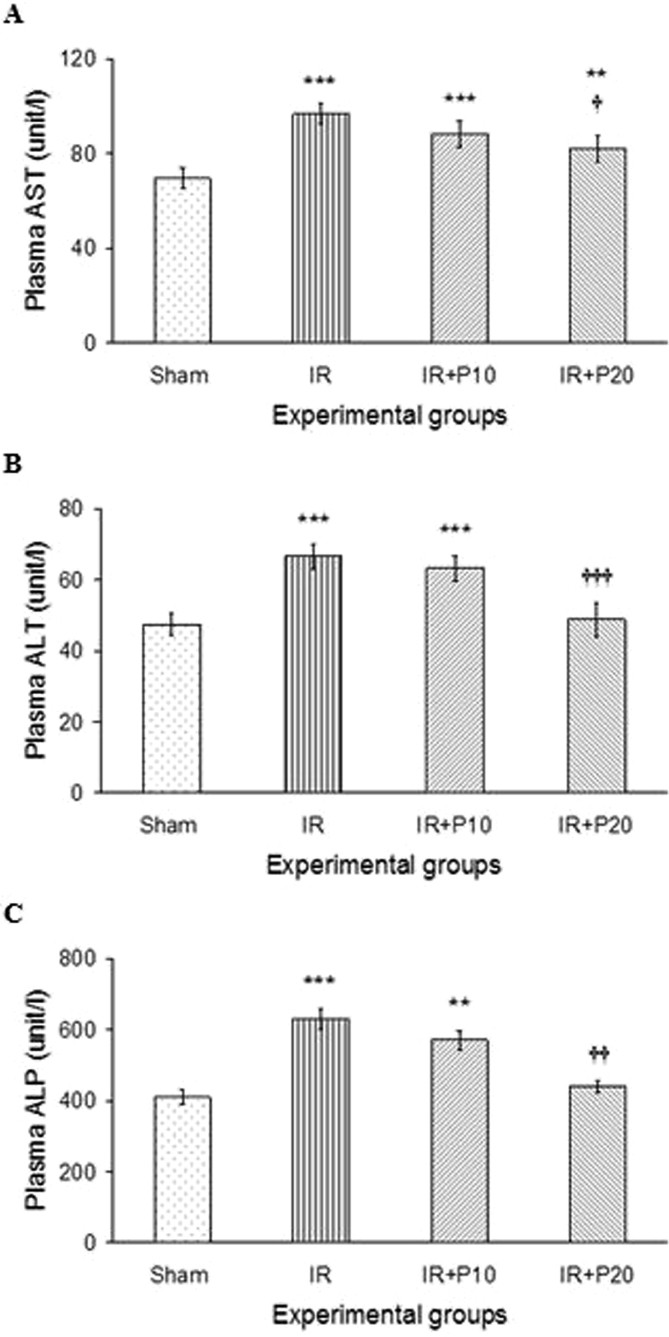
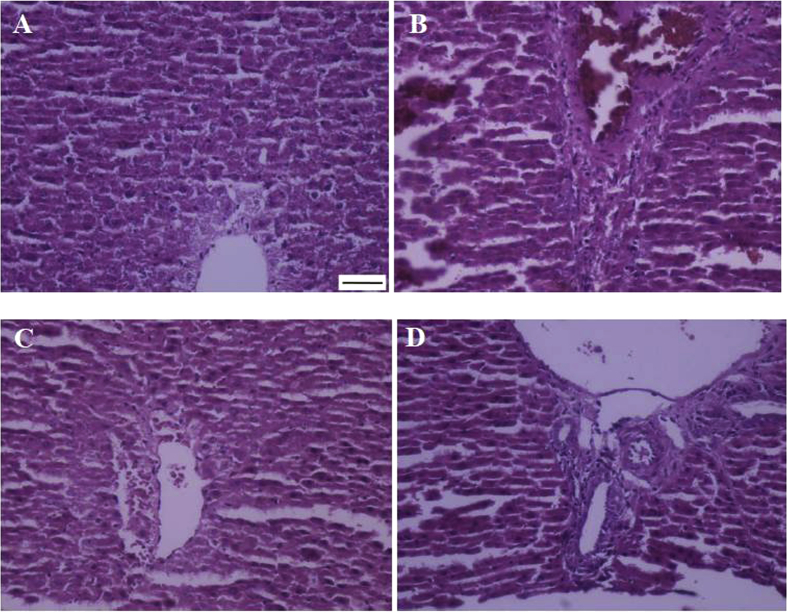
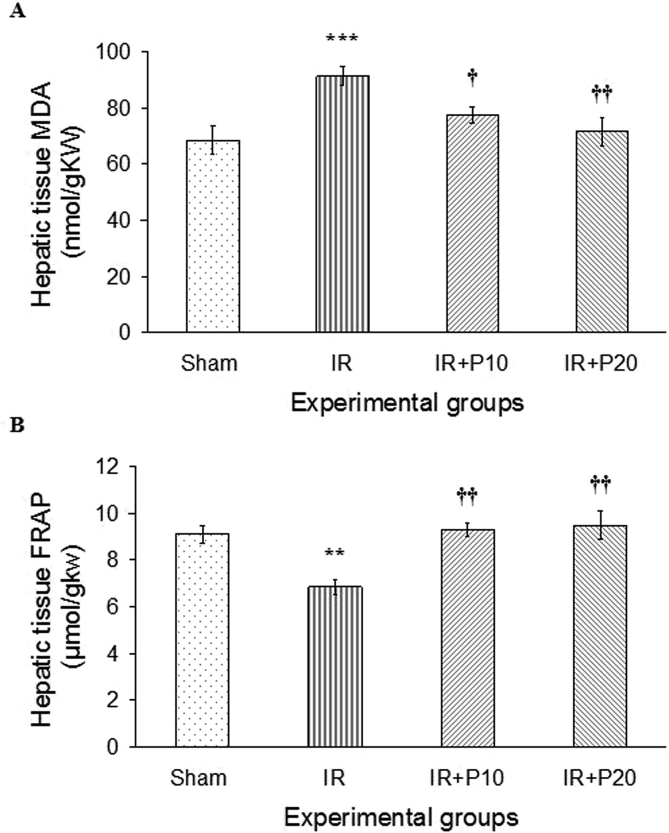
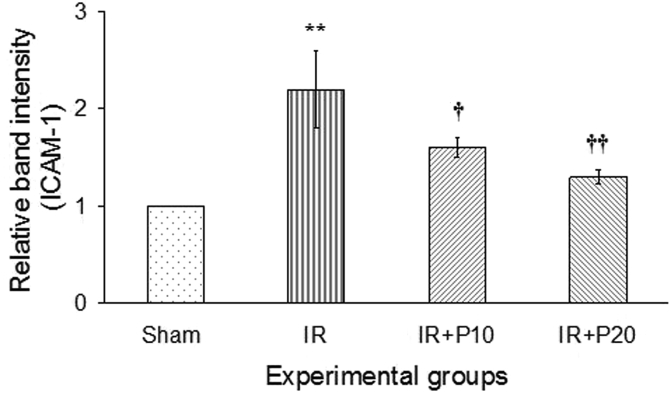
Acute kidney injury was induced by 30 min-bilateral renal ischemia followed by 24 h of reperfusion. To investigate liver damages, the levels of aspartate aminotransferase (AST), alanine aminotransferase (ALT), and alkaline phosphatase (ALP) enzymes were measured in plasma. In order to study oxidative stress, malondialdehyde (MDA) and ferric reducing antioxidant power (FRAP) levels were measured. Furthermore, the expression of intercellular adhesion molecule-1 (ICAM-1) mRNA along with infiltration of leukocytes in the liver tissue was measured for inflammation assessment. Histopathological damages were studied through measuring the extent of cellular fibrosis, sinusoidal dilatation, and vascular congestion in liver tissue.
Following acute kidney injury, AST, ALT, and ALP levels in plasma, MDA level and ICAM-1 expression in the liver tissue, infiltration of leukocytes into the interstitium, and hepatic histopathologic damages increased significantly, while FRAP decreased. Pretreatment with piperine at 10 and 20 mg/kg body weight was able to improve these damages, such that some of them reached its value in the sham group, though piperine in the 20 mg/kg was more effective.
The results of this study suggest that ischemia-reperfusion induced AKI result in hepatic damages, and pretreatment with piperine can prevent development of these damages through its antioxidant and anti-inflammatory properties.
远程器官损伤是缺血再灌注诱导的急性肾损伤(AKI)后出现的并发症之一,显著增加了其死亡率。本研究的目的是探讨胡椒碱预处理对缺血再灌注诱导的AKI后肝功能障碍的影响。
通过30分钟的双侧肾缺血,随后再灌注24小时诱导急性肾损伤。为了研究肝损伤,测定血浆中天冬氨酸转氨酶(AST)、丙氨酸转氨酶(ALT)和碱性磷酸酶(ALP)的水平。为了研究氧化应激,测定丙二醛(MDA)和铁还原抗氧化能力(FRAP)水平。此外,测定细胞间粘附分子-1(ICAM-1)mRNA的表达以及肝组织中白细胞的浸润情况以评估炎症。通过测量肝组织中细胞纤维化、窦状扩张和血管充血的程度来研究组织病理学损伤。
急性肾损伤后,血浆中AST、ALT和ALP水平、肝组织中MDA水平和ICAM-1表达、白细胞向间质的浸润以及肝脏组织病理学损伤显著增加,而FRAP降低。10和20mg/kg体重的胡椒碱预处理能够改善这些损伤,使得其中一些损伤达到假手术组的值,尽管20mg/kg的胡椒碱更有效。
本研究结果表明,缺血再灌注诱导的AKI会导致肝损伤,胡椒碱预处理可通过其抗氧化和抗炎特性预防这些损伤的发生。