United States Army Institute of Surgical Research, 3698 Chambers Pass BLDG 3610, JBSA Fort Sam Houston, San Antonio, TX, 78234, USA.
Biomedical Engineering Department, University of Texas at San Antonio, San Antonio, TX, USA.
J Transl Med. 2019 Aug 29;17(1):297. doi: 10.1186/s12967-019-2038-5.
Mesenchymal stem cells (MSCs) are attractive cell-therapy candidates. Despite their popularity and promise, there is no uniform method of preparation of MSCs. Typically, cells are cryopreserved in liquid nitrogen, thawed, and subsequently administered to a patient with little to no information on their function post-thaw. We hypothesized that a short acclimation period post-thaw will facilitate the recovery of MSC's functional potency.
Human bone-marrow-derived MSCs were divided into 3 groups: FC (fresh cells; from existing culture); TT (thawed + time; acclimated for 24 h post-thaw); and FT (freshly thawed; thawed and immediately used). The 3 groups were analyzed for their cellular and functional potency.
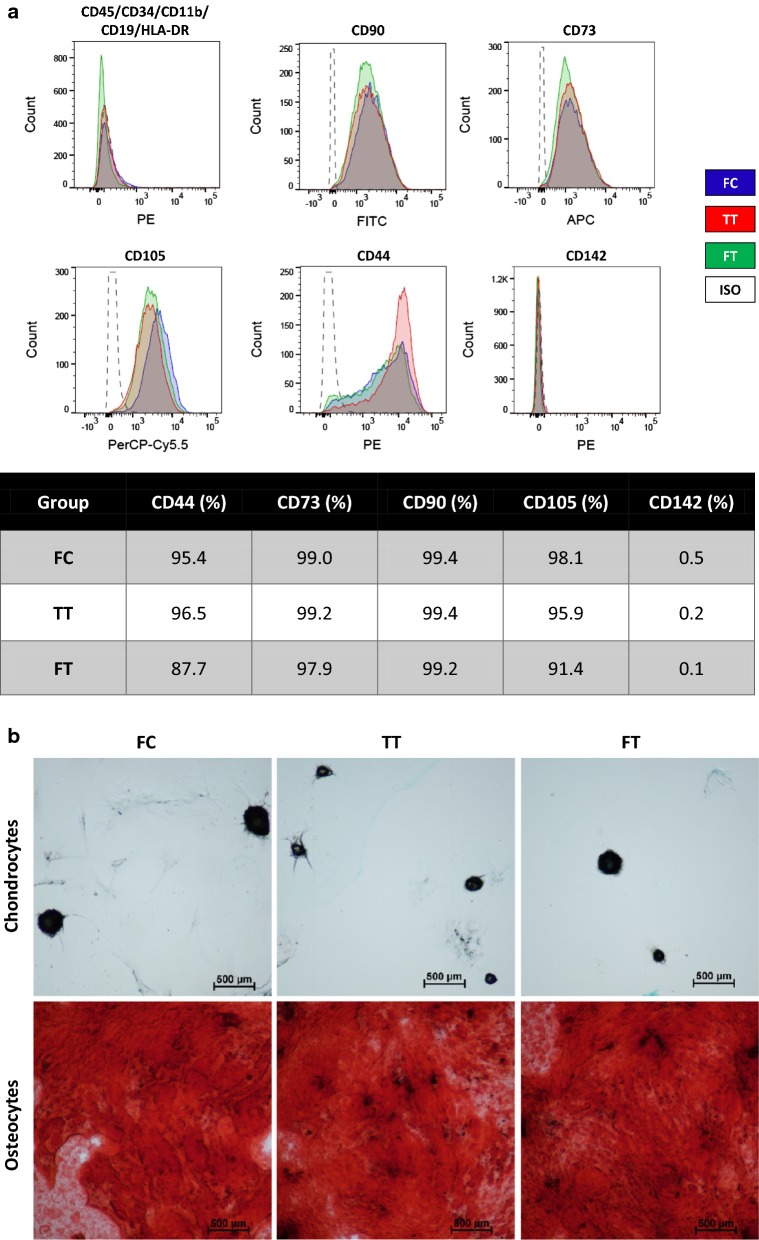
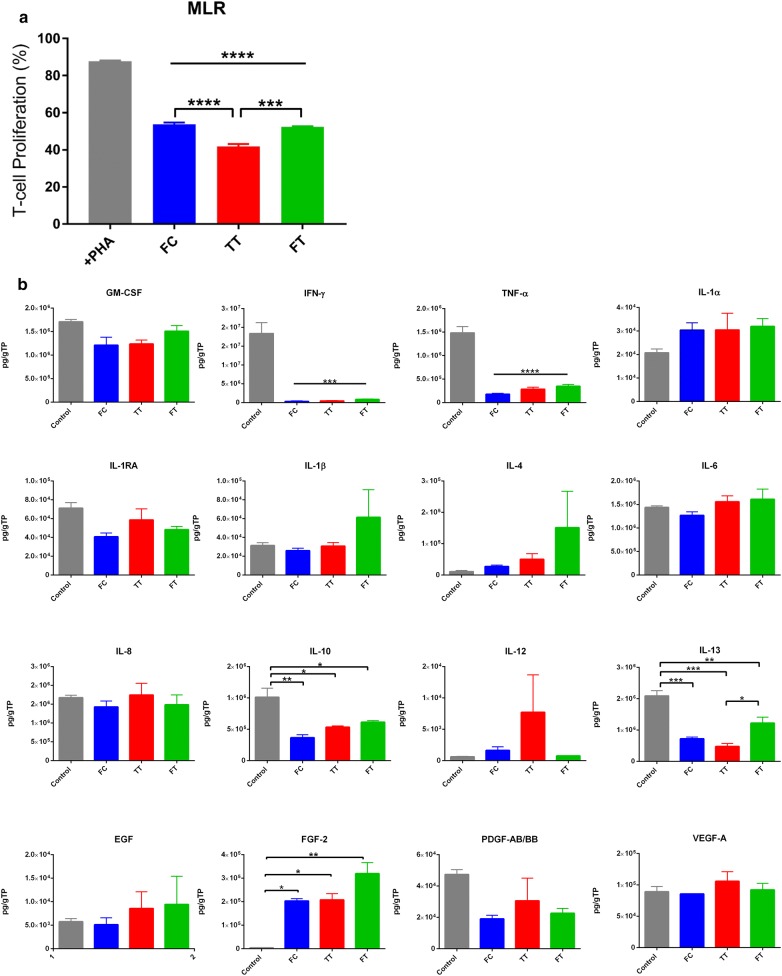
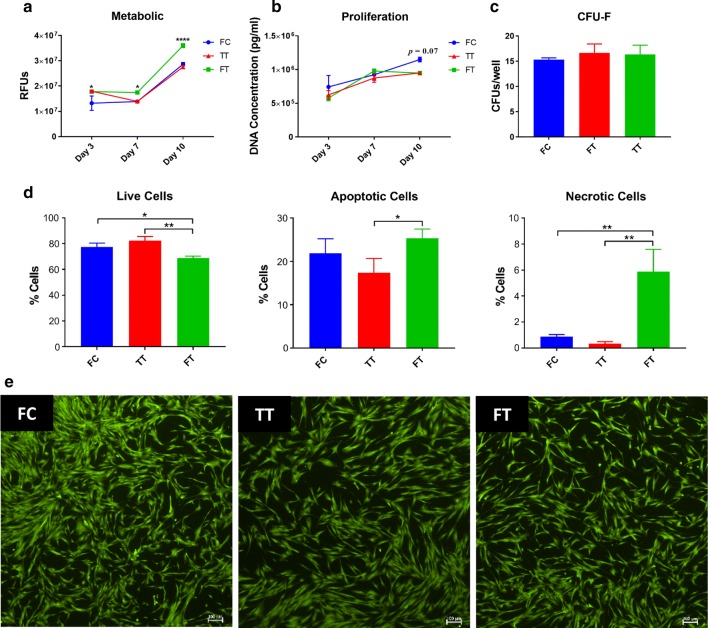
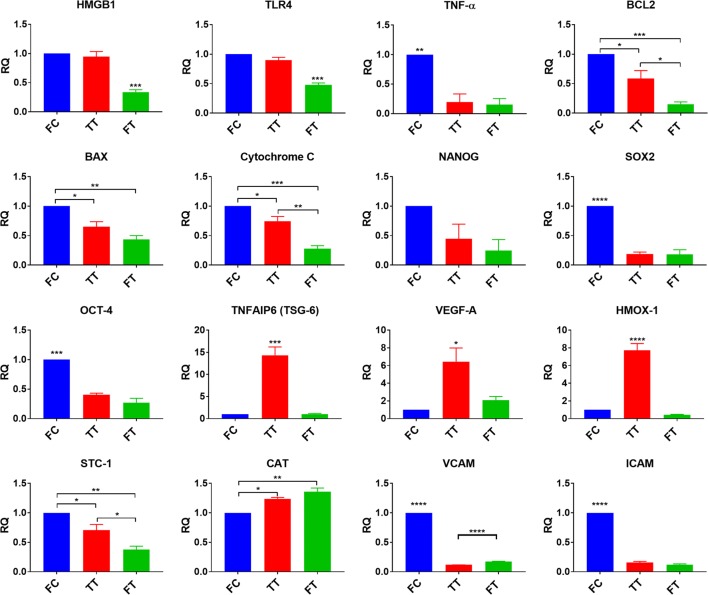
Phenotypic analysis demonstrated a decrease in CD44 and CD105 surface markers in FT MSCs, with no change in the other two groups. All MSCs were able to differentiate down the osteogenic and chondrogenic lineages. In FT cells, metabolic activity and apoptosis was significantly increased with concomitant decrease in cell proliferation; clonogenic capacity; and key regenerative genes. Following 24-h acclimation, apoptosis was significantly reduced in TT cells with a concomitant upregulation in angiogenic and anti-inflammatory genes. While all MSCs significantly arrested T-cell proliferation, the TT MSCs were significantly more potent. Similarly, although all MSCs maintained their anti-inflammatory properties, IFN-γ secretion was significantly diminished in FT cells.
These data demonstrate that FT MSCs maintain their multipotent differentiation capacity, immunomodulatory function, and anti-inflammatory properties; yet, various aspects of cell characteristics and function are deleteriously affected by cryopreservation. Importantly, a 24-h acclimation period 'reactivates' thawed cells to recover their diminished stem-cell function.
间充质干细胞(MSCs)是一种有吸引力的细胞治疗候选物。尽管它们很受欢迎,也很有前途,但目前还没有一种统一的方法来制备 MSCs。通常,细胞在液氮中冷冻保存,解冻后,在解冻后几乎没有关于其功能的信息的情况下,将其施用于患者。我们假设解冻后进行短暂的适应期将有助于恢复 MSC 的功能潜力。
将人骨髓来源的 MSCs 分为 3 组:FC(新鲜细胞;来自现有培养物);TT(解冻+时间;解冻后适应 24 小时);FT(新鲜解冻;解冻后立即使用)。分析这 3 组细胞的细胞和功能潜力。
表型分析表明,FT MSCs 表面标志物 CD44 和 CD105 减少,而其他两组无变化。所有 MSC 均能向成骨和软骨谱系分化。在 FT 细胞中,代谢活性和细胞凋亡明显增加,同时细胞增殖、集落形成能力和关键再生基因减少。经过 24 小时适应后,TT 细胞中的细胞凋亡明显减少,同时血管生成和抗炎基因上调。虽然所有 MSC 均能显著抑制 T 细胞增殖,但 TT MSC 更有效。同样,尽管所有 MSC 均保持其抗炎特性,但 FT 细胞中 IFN-γ 的分泌明显减少。
这些数据表明,FT MSCs 保持其多能分化能力、免疫调节功能和抗炎特性;然而,细胞特征和功能的各个方面都因冷冻保存而受到有害影响。重要的是,24 小时适应期可“激活”解冻细胞,恢复其受损的干细胞功能。