Michelson Daniel, Malik Kanika, Krishna Madhuri, Sharma Rhea, Mathur Sonal, Bhat Bhargav, Parikh Rachana, Roy Kallol, Joshi Akankasha, Sahu Rooplata, Chilhate Bhagwant, Boustani Maya, Cuijpers Pim, Chorpita Bruce, Fairburn Christopher G, Patel Vikram
School of Psychology, University of Sussex, Brighton, UK.
Sangath, Goa and New Delhi, India.
Behav Res Ther. 2020 Jul;130:103439. doi: 10.1016/j.brat.2019.103439. Epub 2019 Jul 30.
The PRIDE programme aims to establish a suite of transdiagnostic psychological interventions organised around a stepped care system in Indian secondary schools. This paper describes the development of a low-intensity, first-line component of the PRIDE model.
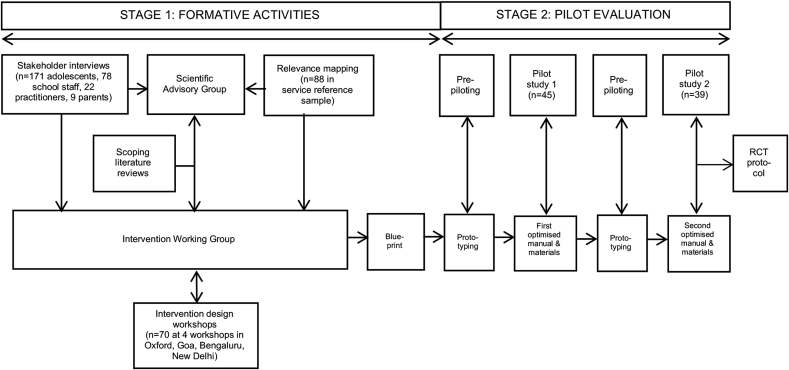
Contextual and global evidence informed an intervention 'blueprint' with problem solving as the primary practice element. Successive iterations were tested and modified across two pilot cohort studies (N = 45; N = 39). Participants were aged 13-20 years and presenting with elevated mental health symptoms in New Delhi schools.
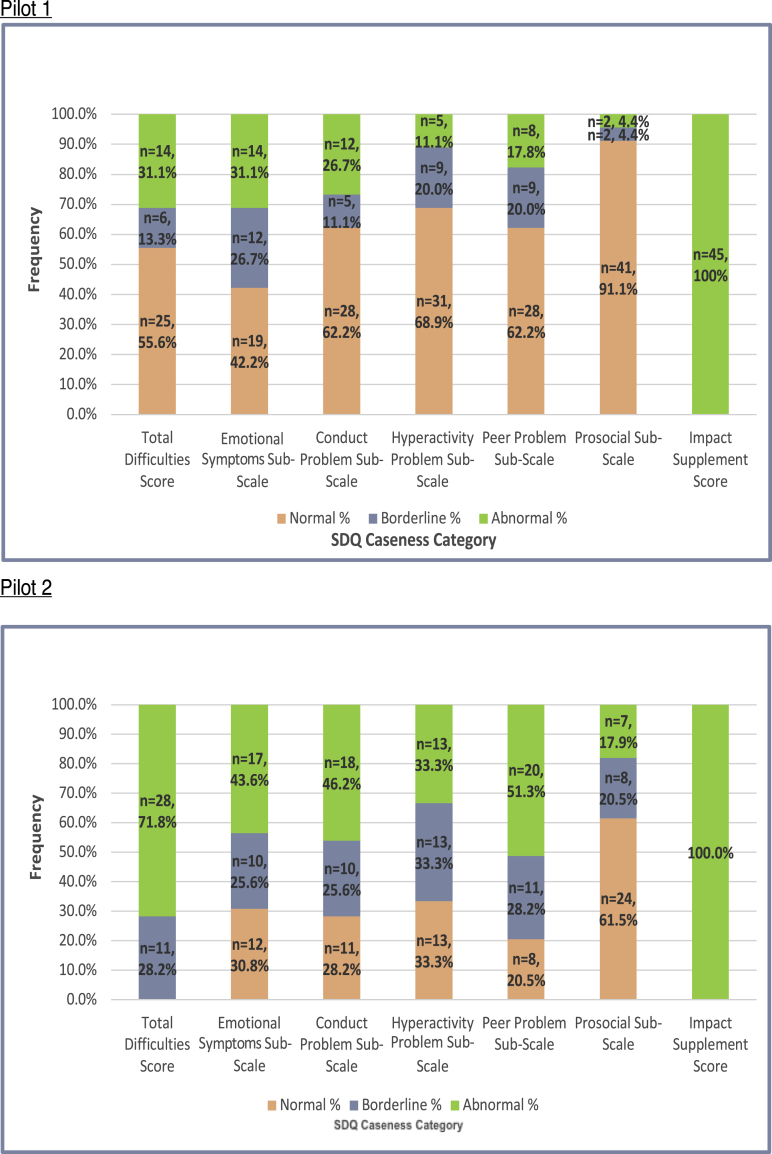
The first iteration of the intervention, based on a guided self-help modality, showed promising outcomes and user satisfaction when delivered by psychologists. However, delivery was not feasible within the intended 6-week schedule, and participants struggled to use materials outside 'guidance' sessions. In Pilot 2, a modified counsellor-led problem-solving intervention was implemented by less experienced counsellors over a 3-4 week schedule. Outcomes were maintained, with indications of enhanced feasibility and acceptability. High demand was observed across both pilots, leading to more stringent eligibility criteria and a modified sensitisation plan.
Findings have shaped a first-line intervention for common adolescent mental health problems in low-resource settings. A forthcoming randomised controlled trial will test its effectiveness.
PRIDE项目旨在围绕印度中学的分级护理系统建立一套跨诊断心理干预措施。本文描述了PRIDE模型中低强度一线组成部分的开发过程。
基于背景和全球证据形成了一个以问题解决为主要实践要素的干预“蓝图”。在两项试点队列研究(N = 45;N = 39)中对连续迭代进行了测试和修改。参与者年龄在13至20岁之间,来自新德里的学校,心理健康症状有所加重。
基于引导式自助模式的干预首次迭代由心理学家实施时显示出了有前景的结果和用户满意度。然而,在预期的6周时间内实施并不可行,参与者在“指导”课程之外难以使用材料。在试点2中,经验不足的咨询师在3至4周的时间内实施了一种经过修改的由咨询师主导的问题解决干预。结果得以维持,且显示出可行性和可接受性有所提高。在两个试点中都观察到了高需求,这导致了更严格的资格标准和修改后的宣传计划。
研究结果形成了一种针对资源匮乏环境中常见青少年心理健康问题的一线干预措施。即将进行的一项随机对照试验将测试其有效性。