Yang I-Ping, Miao Zhi-Feng, Huang Ching-Wen, Tsai Hsiang-Lin, Yeh Yung-Sung, Su Wei-Chih, Chang Tsung-Kun, Chang Se-Fen, Wang Jaw-Yuan
Department of Nursing, Shu-Zen College of Medicine and Management, Kaohsiung, Taiwan.
Division of Colorectal Surgery, Department of Surgery, Kaohsiung Medical University Hospital, Kaohsiung Medical University, Kaohsiung, Taiwan.
Ther Adv Med Oncol. 2019 Aug 20;11:1758835919866964. doi: 10.1177/1758835919866964. eCollection 2019.
The high prevalence of type 2 diabetes mellitus (DM) among patients with colorectal cancer (CRC) is becoming a serious public health concern worldwide. FOLFOX4 chemotherapy is one of the most widely used adjuvant therapies in patients with stage III colon cancer after surgical resection. However, chemotherapy resistance is associated with a poor prognosis. The prognostic impact of high blood sugar levels on oxaliplatin resistance in CRC patients is an unexplored topic.
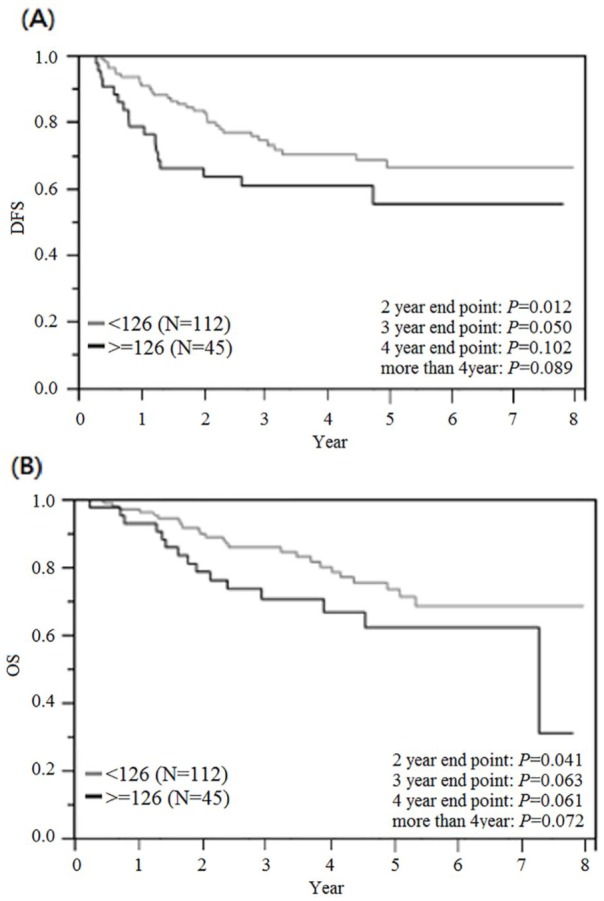
In total, 157 patients with stage III CRC were classified according to their fasting blood sugar level (⩾126 or <126 mg/dl). Clinicopathological features and oxaliplatin chemoresistance/survival outcome of the two groups were compared. cell proliferation assay was performed through d-(+)-glucose administration.
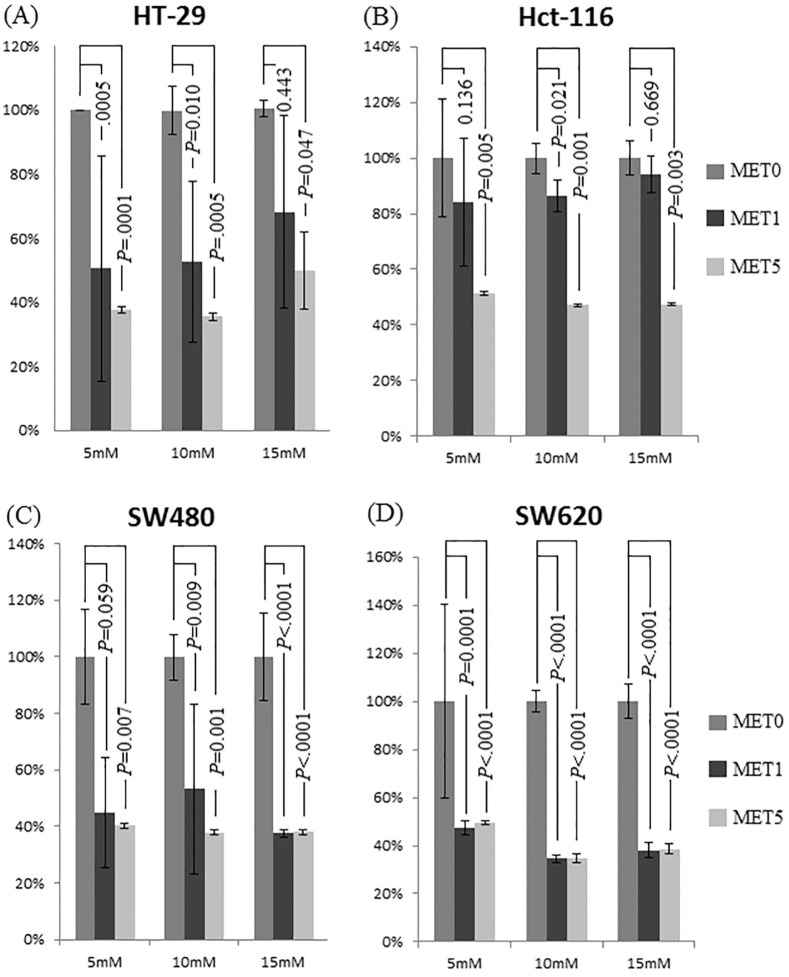
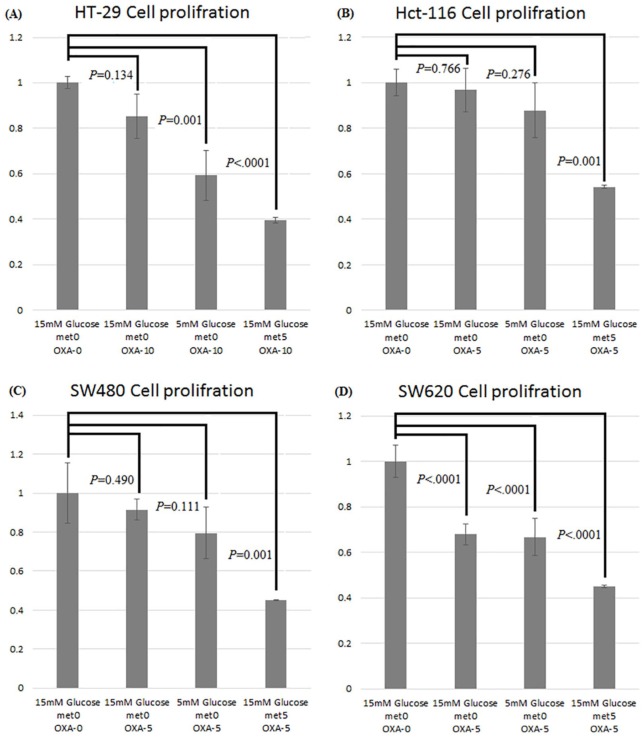
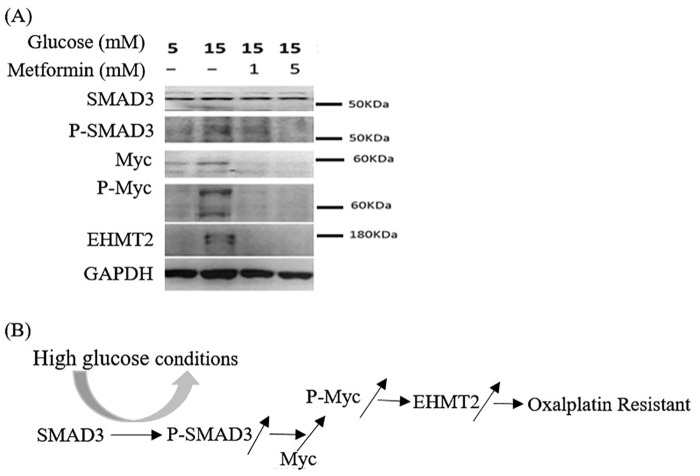
Multivariate analysis results revealed that high blood sugar level was a significantly independent prognostic factor of disease-free survival and overall survival (both < 0.05), but not DM history. After metformin administration, enhanced proliferation of CRC cells (HT-29, HCT-116, SW480, and SW620) with d-(+)-glucose administration could be reversed and oxaliplatin chemosensitivity considerably increased ( < 0.05). Furthermore, phosphorylation of two glycolysis-related target proteins, SMAD3 and MYC, notably increased under high glucose concentration.
Hyperglycemia can affect clinical outcomes in stage III CRC patients receiving adjuvant chemotherapy, and the mechanism underlying oxaliplatin resistance is possibly associated with increased phosphorylation of SMAD3 and MYC and upregulation of EHMT2 expression.
结直肠癌(CRC)患者中2型糖尿病(DM)的高患病率正成为全球严重的公共卫生问题。FOLFOX4化疗是III期结肠癌患者手术切除后最广泛使用的辅助治疗方法之一。然而,化疗耐药与预后不良相关。高血糖水平对CRC患者奥沙利铂耐药性的预后影响是一个尚未探索的课题。
总共157例III期CRC患者根据其空腹血糖水平(⩾126或<126mg/dl)进行分类。比较两组的临床病理特征和奥沙利铂化疗耐药性/生存结果。通过给予d-(+)-葡萄糖进行细胞增殖测定。
多变量分析结果显示,高血糖水平是无病生存期和总生存期的显著独立预后因素(均<0.05),但不是DM病史。给予二甲双胍后,给予d-(+)-葡萄糖时CRC细胞(HT-29、HCT-116、SW480和SW620)的增殖增强可被逆转,奥沙利铂化疗敏感性显著增加(<0.05)。此外,在高葡萄糖浓度下,两种糖酵解相关靶蛋白SMAD3和MYC的磷酸化显著增加。
高血糖可影响接受辅助化疗的III期CRC患者的临床结局,奥沙利铂耐药的潜在机制可能与SMAD3和MYC磷酸化增加以及EHMT2表达上调有关。