Hunfalvay Melissa, Roberts Claire-Marie, Murray Nick, Tyagi Ankur, Kelly Hannah, Bolte Takumi
RightEye LLC, 7979 Old Georgetown Rd, Suite 801, Bethesda, MD 20814, USA.
University of the West of England, Department of Psychology, Bristol, Coldharbour Lane, Bristol, BS16 1QY, UK.
Concussion. 2019 Jul 25;4(1):CNC60. doi: 10.2217/cnc-2019-0001.
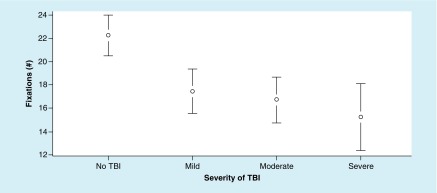
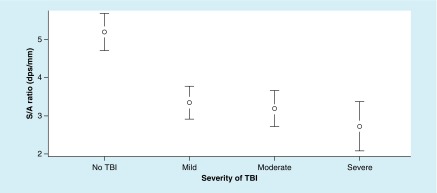
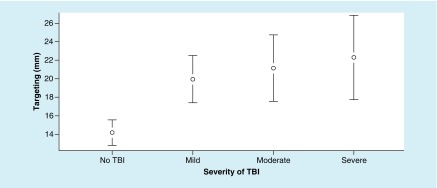
Eye tracking tests to measure horizontal and vertical saccades as a proxy for neural deficits associated with traumatic brain injury (TBI) were evaluated in the present study.
A total of 287 participants reporting either no TBI, mild, moderate or severe TBI participated in a suite of eye tracking tests to measure horizontal and vertical saccadic performance.
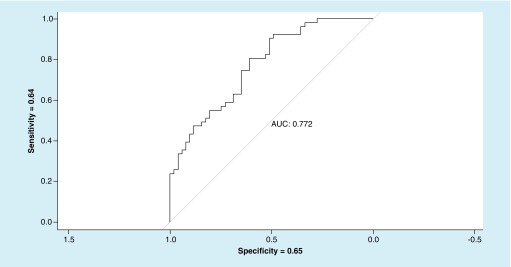
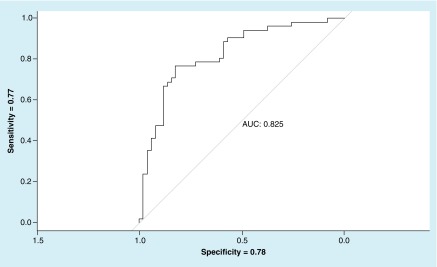
The horizontal saccades test offered a sensitivity of 0.77 and a specificity of 0.78, similarly the vertical saccades tests offered a sensitivity of 0.64 and a specificity of 0.65.
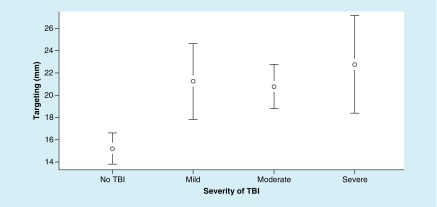
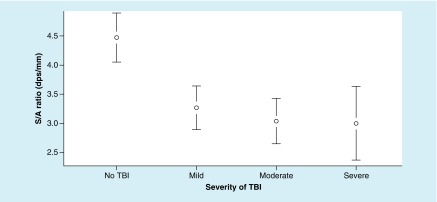
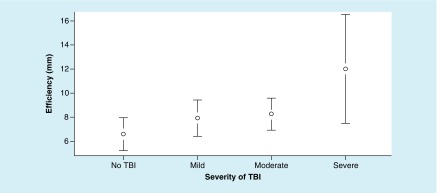
The results indicated that using eye-tracking technology to measure these metrics offers an objective, reliable and quantifiable way of differentiating between individuals with different severities of TBI, and those without a TBI.
在本研究中对用于测量水平和垂直扫视的眼动追踪测试进行评估,以作为与创伤性脑损伤(TBI)相关的神经功能缺损的替代指标。
共有287名参与者,他们报告无创伤性脑损伤、轻度、中度或重度创伤性脑损伤,参与了一系列眼动追踪测试,以测量水平和垂直扫视表现。
水平扫视测试的灵敏度为0.77,特异度为0.78;同样,垂直扫视测试的灵敏度为0.64,特异度为0.65。
结果表明,使用眼动追踪技术测量这些指标为区分不同严重程度的创伤性脑损伤患者和无创伤性脑损伤患者提供了一种客观、可靠且可量化的方法。