Molecular Pathology Unit, Cancer Research Centre, Institute for Medical Research, Ministry of Health Malaysia, Kuala Lumpur, Malaysia.
Department of Medical Sciences, School of Healthcare and Medical Sciences, Sunway University, Selangor, Malaysia.
Int J Cancer. 2020 Apr 15;146(8):2336-2347. doi: 10.1002/ijc.32656. Epub 2019 Oct 8.
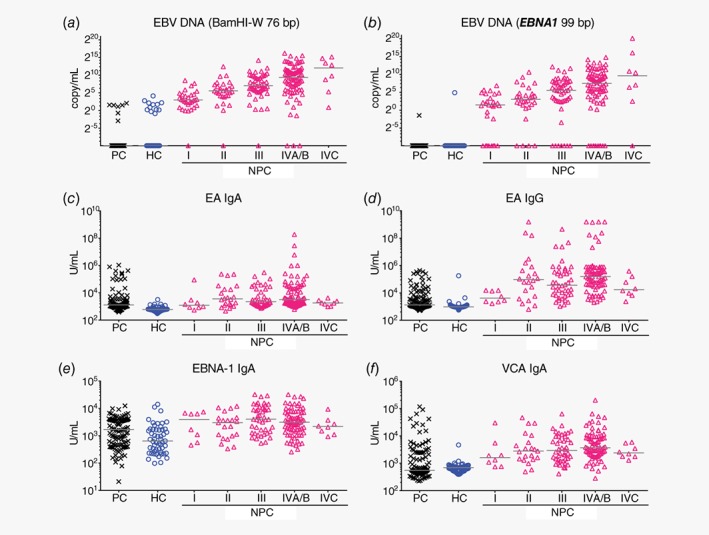
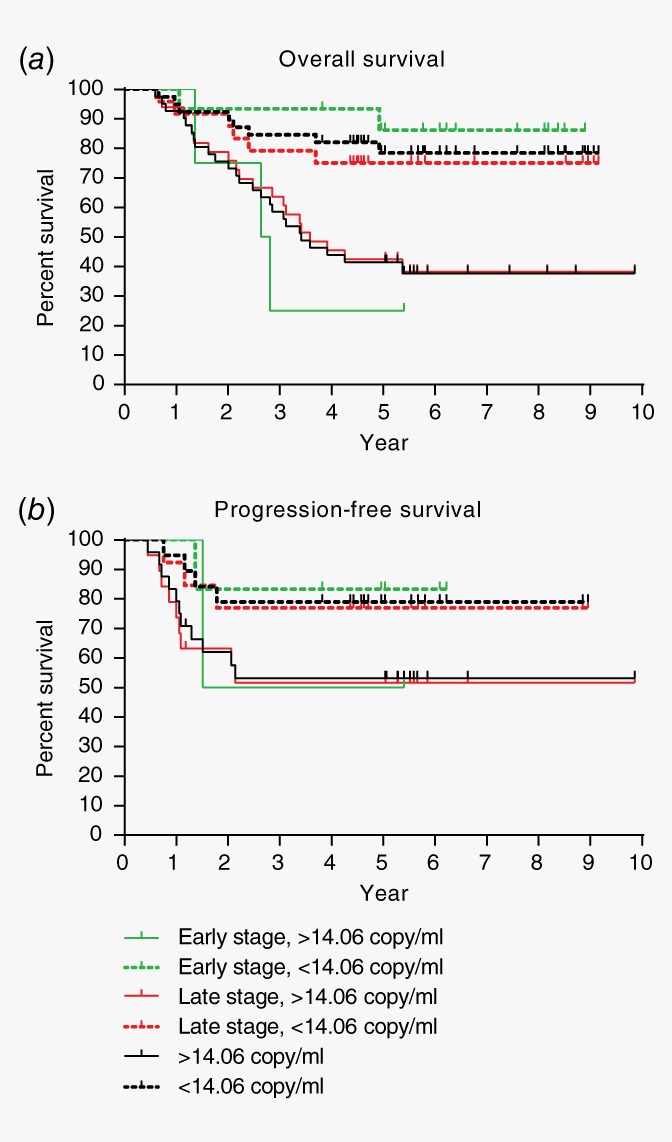
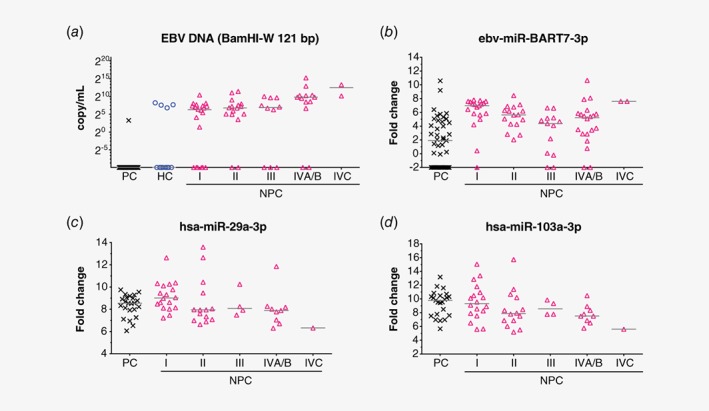
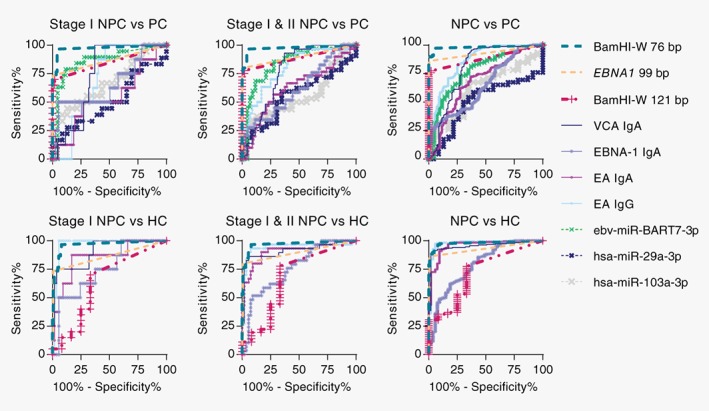
Nasopharyngeal carcinoma (NPC) is originated from the epithelial cells of nasopharynx, Epstein-Barr virus (EBV)-associated and has the highest incidence and mortality rates in Southeast Asia. Late presentation is a common issue and early detection could be the key to reduce the disease burden. Sensitivity of plasma EBV DNA, an established NPC biomarker, for Stage I NPC is controversial. Most newly reported NPC biomarkers have neither been externally validated nor compared to the established ones. This causes difficulty in planning for cost-effective early detection strategies. Our study systematically evaluated six established and four new biomarkers in NPC cases, population controls and hospital controls. We showed that BamHI-W 76 bp remains the most sensitive plasma biomarker, with 96.7% (29/30), 96.7% (58/60) and 97.4% (226/232) sensitivity to detect Stage I, early stage and all NPC, respectively. Its specificity was 94.2% (113/120) against population controls and 90.4% (113/125) against hospital controls. Diagnostic accuracy of BamHI-W 121 bp and ebv-miR-BART7-3p were validated. Hsa-miR-29a-3p and hsa-miR-103a-3p were not, possibly due to lower number of advanced stage NPC cases included in this subset. Decision tree modeling suggested that combination of BamHI-W 76 bp and VCA IgA or EA IgG may increase the specificity or sensitivity to detect NPC. EBNA1 99 bp could identify NPC patients with poor prognosis in early and advanced stage NPC. Our findings provided evidence for improvement in NPC screening strategies, covering considerations of opportunistic screening, combining biomarkers to increase sensitivity or specificity and testing biomarkers from single sampled specimen to avoid logistic problems of resampling.
鼻咽癌(NPC)起源于鼻咽部的上皮细胞,与 EBV 相关,在东南亚地区发病率和死亡率最高。就诊时分期较晚是一个常见的问题,早期发现可能是降低疾病负担的关键。已建立的 NPC 生物标志物——血浆 EBV DNA 的敏感性,对于Ⅰ期 NPC 存在争议。大多数新报道的 NPC 生物标志物既未经过外部验证,也未与已建立的标志物进行比较。这使得制定具有成本效益的早期检测策略变得困难。我们的研究系统地评估了 NPC 病例、人群对照和医院对照中六个已建立的和四个新的生物标志物。我们表明,BamHI-W 76bp 仍然是最敏感的血浆生物标志物,对Ⅰ期、早期和所有 NPC 的检测敏感性分别为 96.7%(29/30)、96.7%(58/60)和 97.4%(226/232)。其对人群对照的特异性为 94.2%(113/120),对医院对照的特异性为 90.4%(113/125)。BamHI-W 121bp 和 EBV-miR-BART7-3p 的诊断准确性得到了验证。hsa-miR-29a-3p 和 hsa-miR-103a-3p 则没有,可能是由于纳入该亚组的晚期 NPC 病例数量较少。决策树模型表明,BamHI-W 76bp 与 VCA IgA 或 EA IgG 的联合可能会提高检测 NPC 的特异性或敏感性。EBNA1 99bp 可识别早期和晚期 NPC 中预后不良的 NPC 患者。我们的研究结果为改进 NPC 筛查策略提供了依据,包括考虑机会性筛查、联合生物标志物以提高敏感性或特异性,以及从单次采样标本中检测生物标志物,以避免重新采样的逻辑问题。