Universidade do Estado do Amazonas, Manaus, Amazonas, Brazil.
Fundação de Medicina Tropical Dr. Heitor Vieira Dourado, Manaus, Amazonas, Brazil.
PLoS One. 2019 Aug 30;14(8):e0218939. doi: 10.1371/journal.pone.0218939. eCollection 2019.
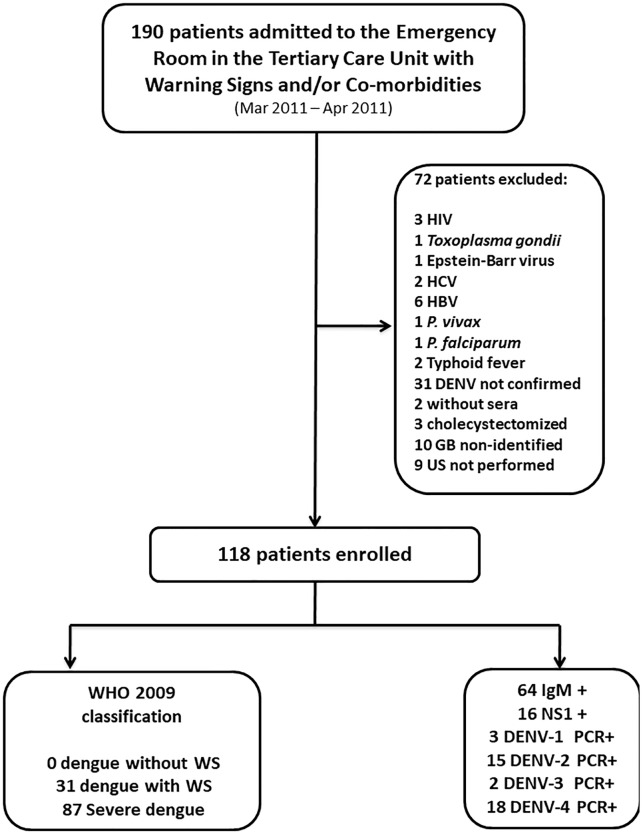
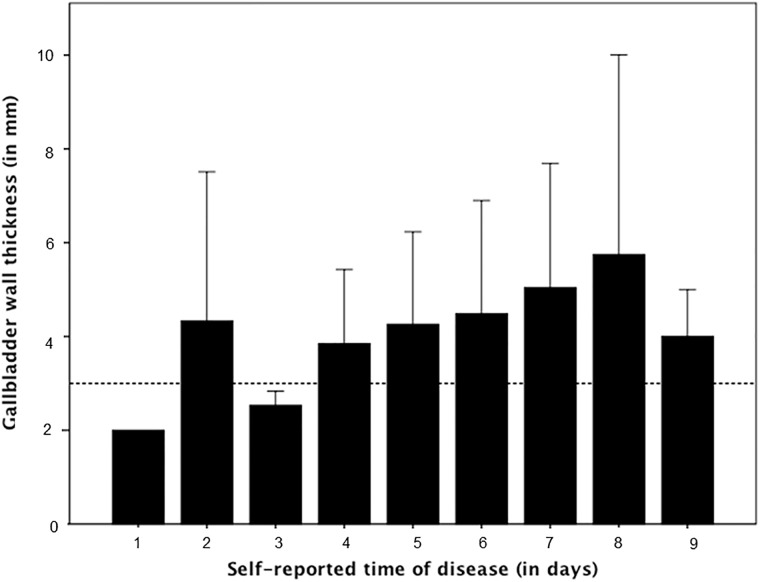
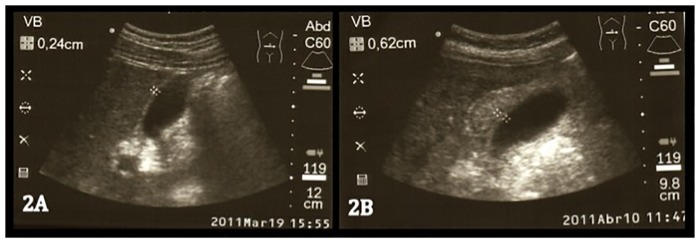
Dengue fever is the most important arthropod-borne viral infection worldwide. Secondary prevention to reduce mortality through improved clinical case management has substantially lowered the mortality rate for severe dengue during the past two decades. Gallbladder wall thickening (GBWT) is a nonspecific finding often associated with more severe cases of dengue infection. This study had the aim to describe the ultrasonographic findings in hospitalized patients with dengue infection from Manaus (in the Western Brazilian Amazon) and to correlate the GBWT with dengue severity, symptoms and laboratorial analysis. Patients from 13-84 years admitted to the emergency department at the Fundação de Medicina Tropical Dr. Heitor Vieira Dourado (FMT-HVD) were enrolled in this study. Patients' selection occurred during the most recent and huge dengue outbreak within the first semester of 2011. All enrolled subjects were systematically tested in order to rule out other possible etiologies for gallbladder inflammation. Abdominal ultrasound was performed by a single physician through bedside portable equipment and all other clinical and laboratorial information were retrieved from patients' electronic files. 54 subjects were considered for analysis, with confirmed dengue infection by NS1 and/or RT-PCR positivity. From all enrolled patients, 50 (42.4%) presented GBWT. GBWT was significantly and independently related to: age under 31 years, pregnancy, presence of bleeding, presence of any cavitary effusion, DHF classification and severe dengue classifications. During dengue outbreaks, the GBWT identification through a non-invasive and bedside procedure is a confident marker for prompt recognition of potential severe cases.
登革热是全球最重要的虫媒病毒感染。通过改善临床病例管理进行二级预防以降低死亡率,在过去二十年中大大降低了重症登革热的死亡率。胆囊壁增厚(GBWT)是一种与登革热感染更严重病例相关的非特异性发现。本研究旨在描述来自马瑙斯(巴西西部亚马逊地区)住院登革热感染患者的超声表现,并将 GBWT 与登革热严重程度、症状和实验室分析相关联。这项研究纳入了 2011 年上半年在 Fundação de Medicina Tropical Dr. Heitor Vieira Dourado(FMT-HVD)急诊室住院的年龄在 13 至 84 岁的登革热患者。在最近一次且规模巨大的登革热爆发期间,通过系统筛选排除了其他可能导致胆囊炎症的病因。由一名医生通过床边便携式设备进行腹部超声检查,所有其他临床和实验室信息均从患者的电子病历中检索。共有 54 名患者符合条件,通过 NS1 和/或 RT-PCR 阳性结果确诊为登革热感染。在所有纳入的患者中,有 50 名(42.4%)存在 GBWT。GBWT 与以下因素显著相关:年龄小于 31 岁、妊娠、出血、存在任何腔性积液、DHF 分类和重症登革热分类。在登革热爆发期间,通过非侵入性和床边程序识别 GBWT 是及时识别潜在重症病例的可靠标志物。