Baba Chihiro, Kawai Masahito, Takimoto-Inose Ayaka
Department of Behavioral Science, Graduate School of Humanities and Human Sciences, Hokkaido University, Sapporo 060-0810, Japan.
Shizunai Livestock Farm, Field Science Center for Northern Biosphere, Hokkaido University, Sapporo 060-0811, Japan.
Animals (Basel). 2019 Aug 29;9(9):630. doi: 10.3390/ani9090630.
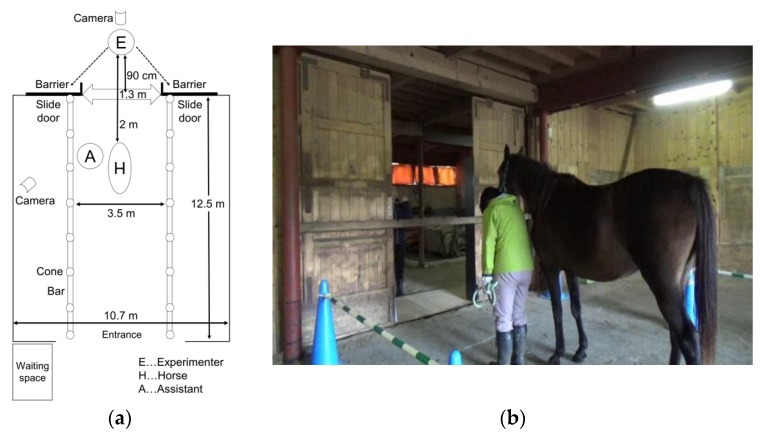
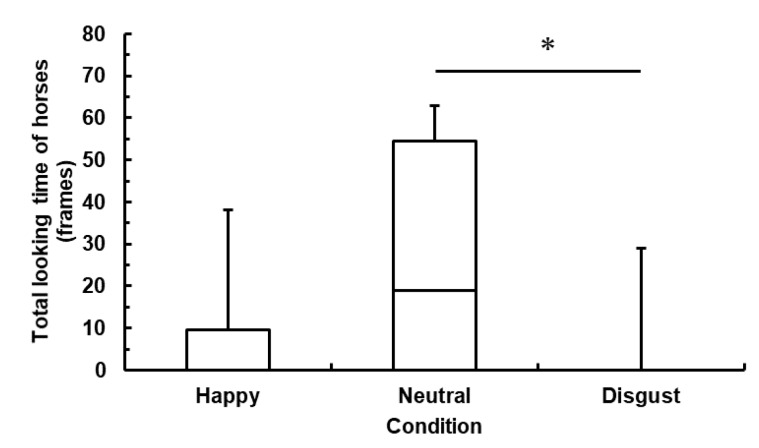
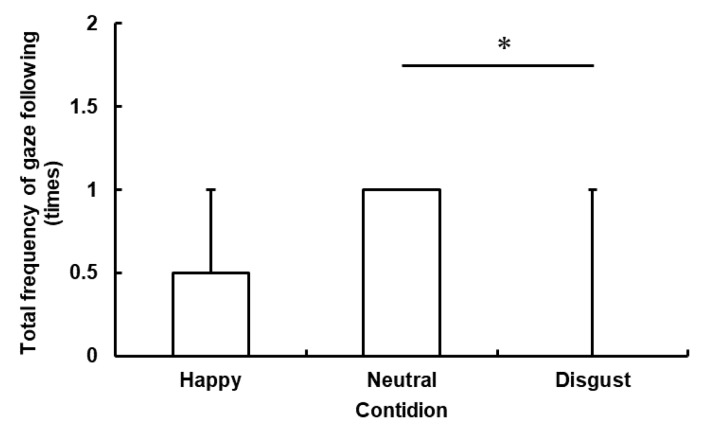
Emotions are important for social animals because animals' emotions function as beneficial cues to identify valuable resources such as food or to avoid danger by providing environmental information. Emotions also enable animals to predict individuals' behavior and determine how to behave in a specific context. Recently, several studies have reported that dogs are highly sensitive to not only conspecific but also human emotional cues. These studies suggest that domestication may have affected such sensitivity. However, there are still few studies that examine whether other domesticated animals, in addition to dogs, exhibit sensitivity to human emotional cues. In this study, we used a gaze-following task to investigate whether horses () are sensitive to human emotional cues (happy, neutral, disgust) and if they adjust their behavior accordingly. In the study, the experimenter suddenly turned her head to either right or left and showed emotional cues. The results revealed that horses significantly decreased the frequency with which they followed the experimenter's gaze and the total looking time during the gaze-emotional cue presentation in the Disgust condition compared to the Neutral condition. These results suggest the possibility that horses are sensitive to human emotional cues and behave on the basis of the meaning implied by negative human emotional cues.
情感对于群居动物很重要,因为动物的情感起着有益线索的作用,通过提供环境信息来识别诸如食物等有价值的资源或避免危险。情感还使动物能够预测个体的行为,并决定在特定情境下如何行动。最近,几项研究报告称,狗不仅对同种个体的情感线索高度敏感,对人类的情感线索也很敏感。这些研究表明,驯化可能影响了这种敏感性。然而,除了狗之外,很少有研究考察其他家养动物是否对人类情感线索表现出敏感性。在本研究中,我们使用了一个注视跟随任务来调查马是否对人类情感线索(高兴、中性、厌恶)敏感,以及它们是否会相应地调整自己的行为。在研究中,实验者突然将头转向右侧或左侧,并展示情感线索。结果显示,与中性条件相比,在厌恶条件下,马在注视-情感线索呈现过程中跟随实验者注视的频率以及总的注视时间显著减少。这些结果表明,马可能对人类情感线索敏感,并根据人类负面情感线索所暗示的含义做出行为反应。