School of Exercise and Nutrition Sciences, Faculty of Health, Queensland University of Technology, Kelvin Grove Campus, O Block, A Wing, Victoria Park Road, Kelvin Grove, Brisbane, Queensland, 4059, Australia.
Sydney Nursing School, The Universtiy of Sydney, 88 Mallett St, Sydney, New South Wales, 2050, Australia.
BMC Public Health. 2019 Aug 30;19(1):1196. doi: 10.1186/s12889-019-7539-x.
Currently in Australia there is a lack of clarity regarding routine assessment of primary school aged children's weight status despite it being the first step in the identification of overweight and obesity. The National Health and Medical Research Council Obesity Guidelines recommend primary health care professionals include routine weight status assessment in consultations with children yet research suggests this rarely occurs in practice. This study aimed to determine the views of primary health care professionals regarding routine weight status assessment in primary school aged children and to establish the barriers to assessing children's weight status.
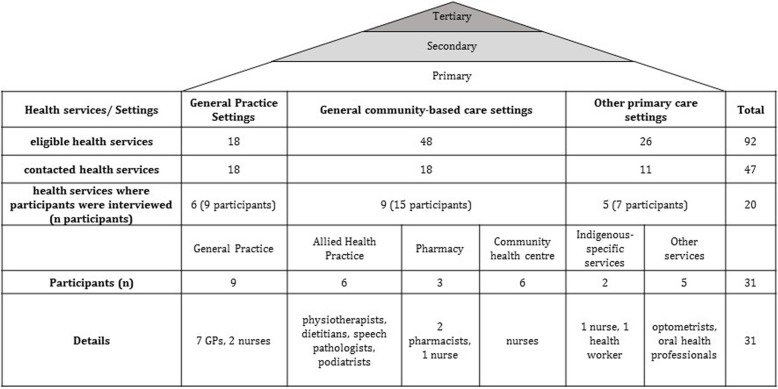
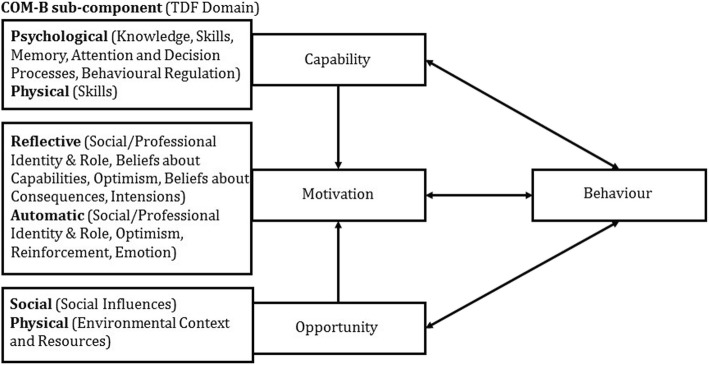
Using the case study of a regional town, Rockhampton, purposeful sampling was used to represent the key primary health care settings and professional groups. Interviews were conducted with 31 health professionals. Data were collected and analysed guided by two frameworks, the Capability, Opportunity, Motivation and Behaviour and Theoretical Domains Frameworks.
Eight themes emerged from data and these were relevant to the three levels of influence on the routine weight status of assessment, system, setting and individual. System level themes related to having a formalised program for the undertaking of routine weight status assessment in primary school aged children, increasing the population's awareness about the importance of the weight status check and limited public health services available for management of childhood overweight and obesity. Setting level theme regarded the location where routine weight status in primary school aged children could be undertaken. Four themes at the individual level of influence on the routine weight status assessment related to the primary health professionals' roles, barriers to assessing children's weight status, methods of weight status assessment and starting a weight related conversations with families.
The Government, primary health care services, professional organisations and associations as well as health professionals must commit to long-term implementation of the Obesity Guidelines. Immediate action to improve the undertaking of routine weight status assessment in children must be taken by each health service and health professional. Strategies should aim to positively affect motivation to assess children's weight status as it is the central component in creating change in practice.
目前,尽管评估小学生体重状况是识别超重和肥胖的第一步,但澳大利亚仍缺乏对其进行常规评估的明确规定。国家卫生和医学研究委员会肥胖指南建议初级保健专业人员在与儿童的咨询中纳入常规体重状况评估,但研究表明,这在实践中很少发生。本研究旨在确定初级保健专业人员对小学生常规体重评估的看法,并确定评估儿童体重状况的障碍。
采用以区域城镇罗克汉普顿为案例研究的目的抽样法,代表主要的初级保健环境和专业群体。对 31 名卫生专业人员进行了访谈。数据收集和分析以两个框架为指导,即能力、机会、动机和行为框架和理论领域框架。
从数据中得出了 8 个主题,这些主题与影响评估小学生常规体重状况的三个层面(系统、环境和个人)相关。系统层面的主题涉及为小学生进行常规体重评估制定一个正式的方案,提高公众对体重检查重要性的认识,以及为管理儿童超重和肥胖提供有限的公共卫生服务。环境层面的主题涉及可进行小学生常规体重评估的位置。个人层面的 4 个主题与初级保健专业人员的角色、评估儿童体重状况的障碍、体重状况评估方法以及与家庭开展体重相关对话有关。
政府、初级保健服务、专业组织和协会以及卫生专业人员必须承诺长期执行《肥胖指南》。每个卫生服务机构和卫生专业人员都必须立即采取行动,改善对儿童常规体重评估的开展。策略应旨在积极影响评估儿童体重状况的动机,因为这是改变实践的核心组成部分。