Department of Family and Community Medicine, Meharry Medical College, 1005 Dr. D. B. Todd Jr. Boulevard, Nashville, TN, 37208, USA.
Department of Biochemistry Cancer Biology Neuroscience & Pharmacology, Meharry Medical College, Nashville, TN, USA.
BMC Med Educ. 2019 Aug 30;19(1):325. doi: 10.1186/s12909-019-1727-3.
Lesbian, gay, bisexual, transgender and questioning (LGBTQ) individuals experience higher rates of health disparities. These disparities may be driven, in part, by biases of medical providers encountered in health care settings. Little is known about how medical, nursing, or dental students are trained to identify and reduce the effects of their own biases toward LGBTQ individuals. Therefore, a systematic review was conducted to determine the effectiveness of programs to reduce health care student or provider bias towards these LGBTQ patients.
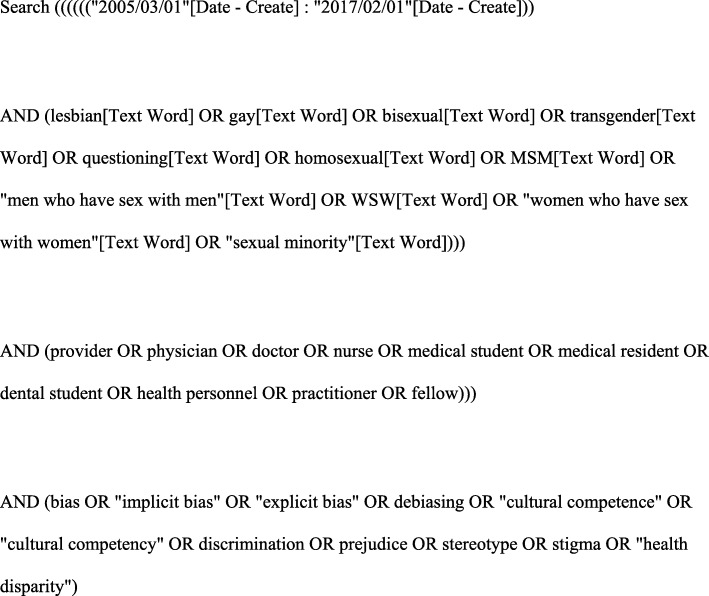
The authors performed searches of online databases (MEDLINE/PubMed, PsycINFO, Web of Science, Scopus, Ingenta, Science Direct, and Google Scholar) for original articles, published in English, between March 2005 and February 2017, describing intervention studies focused on reducing health care student or provider bias towards LGBTQ individuals. Data extracted included sample characteristics (i.e., medical, nursing, or dental students or providers), study design (i.e., pre-post intervention tests, qualitative), program format, program target (i.e., knowledge, comfort level, attitudes, implicit bias), and relevant outcomes. Study quality was assessed using a five-point scale.
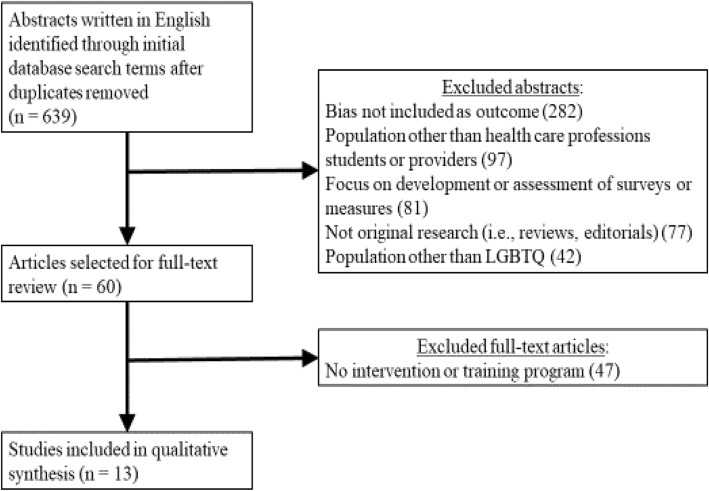
The search identified 639 abstracts addressing bias among medical, nursing, and dental students or providers; from these abstracts, 60 articles were identified as medical education programs to reduce bias; of these articles, 13 described programs to reduce bias towards LGBTQ patients. Bias-focused educational interventions were effective at increasing knowledge of LGBTQ health care issues. Experiential learning interventions were effective at increasing comfort levels working with LGBTQ patients. Intergroup contact was effective at promoting more tolerant attitudes toward LGBTQ patients. Despite promising support for bias education in increasing knowledge and comfort levels among medical, nursing, and dental students or providers towards LGBTQ persons, this systematic review did not identify any interventions that assessed changes in implicit bias among students or providers.
Strategies for assessing and mitigating implicit bias towards LGBTQ patients are discussed and recommendations for medical, nursing, and dental school curricula are presented.
女同性恋、男同性恋、双性恋、跨性别和疑问者(LGBTQ)个体经历更高的健康差异率。这些差异可能部分是由医疗保健环境中遇到的医疗服务提供者的偏见所驱动的。对于医学、护理或牙科学生如何接受培训以识别和减少对 LGBTQ 个体的偏见的影响,知之甚少。因此,进行了一项系统评价,以确定减少医疗保健学生或提供者对这些 LGBTQ 患者偏见的计划的有效性。
作者对在线数据库(MEDLINE/PubMed、PsycINFO、Web of Science、Scopus、Ingenta、Science Direct 和 Google Scholar)进行了搜索,以获取描述重点是减少医疗保健学生或提供者对 LGBTQ 个体偏见的干预研究的原始文章,这些文章均以英文发表,发表时间在 2005 年 3 月至 2017 年 2 月之间。提取的数据包括样本特征(即医学、护理或牙科学生或提供者)、研究设计(即干预前后测试、定性)、计划格式、计划目标(即知识、舒适水平、态度、内隐偏见)和相关结果。使用五分制评估研究质量。
搜索确定了 639 篇摘要,涉及医疗、护理和牙科学生或提供者的偏见;从这些摘要中,确定了 60 篇文章作为减少偏见的医学教育计划;其中 13 篇文章描述了减少对 LGBTQ 患者偏见的计划。以偏见为重点的教育干预措施在增加 LGBTQ 医疗保健问题的知识方面是有效的。体验式学习干预措施在增加与 LGBTQ 患者合作的舒适水平方面是有效的。群体间接触在促进对 LGBTQ 患者更宽容的态度方面是有效的。尽管有充分的证据表明偏见教育可以提高医学、护理和牙科学生或提供者对 LGBTQ 人群的知识和舒适水平,但本系统评价并未发现任何评估学生或提供者内隐偏见变化的干预措施。
讨论了评估和减轻对 LGBTQ 患者的内隐偏见的策略,并提出了医学、护理和牙科学校课程的建议。