Department of Urology, Beijing Hospital, National Center of Gerontology, Beijing, China.
Department of Pathology, Duke University Medicine, Durham, NC, USA.
Prostate Cancer Prostatic Dis. 2020 Mar;23(1):160-171. doi: 10.1038/s41391-019-0172-z. Epub 2019 Aug 30.
p53 is a tumor suppressor that prevents cancer onset and progression, and mutations in the p53 gene cause loss of the tumor suppressor function of the protein. The mutant p53 protein in tumor cells can form aggregates which contribute to the dominant-negative effect over the wild-type p53 protein, causing loss of p53 tumor suppression or gain of novel oncogenic functions. Mutations in p53 have been implicated in the pathogenesis of primary prostate cancer (PCa), and are often detected in recurrent and metastatic disease. Thus, targeting mutant p53 may constitute an alternative therapeutic strategy for advanced PCa for which there are no other viable options.
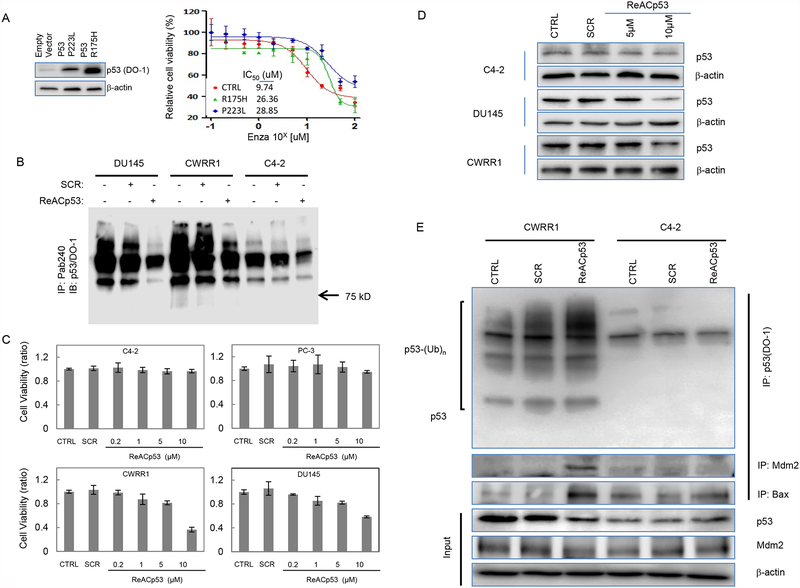
In this study, we used immunoprecipitation, immunofluorescence, clonogenic survival, and cell proliferation assays, flow cytometric analysis and in vivo xenograft to investigate the biological effects of ReACp53, a cell-permeable peptide inhibitor of p53 aggregation, on mutant p53-carrying PCa cells.
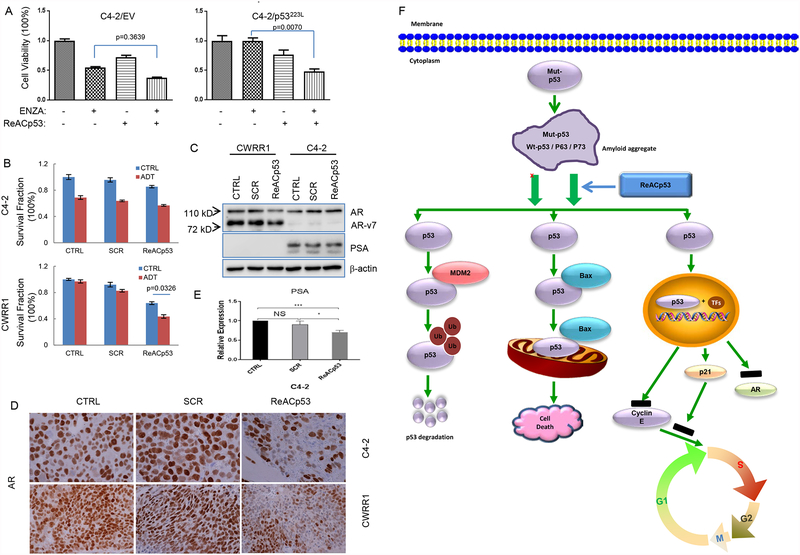
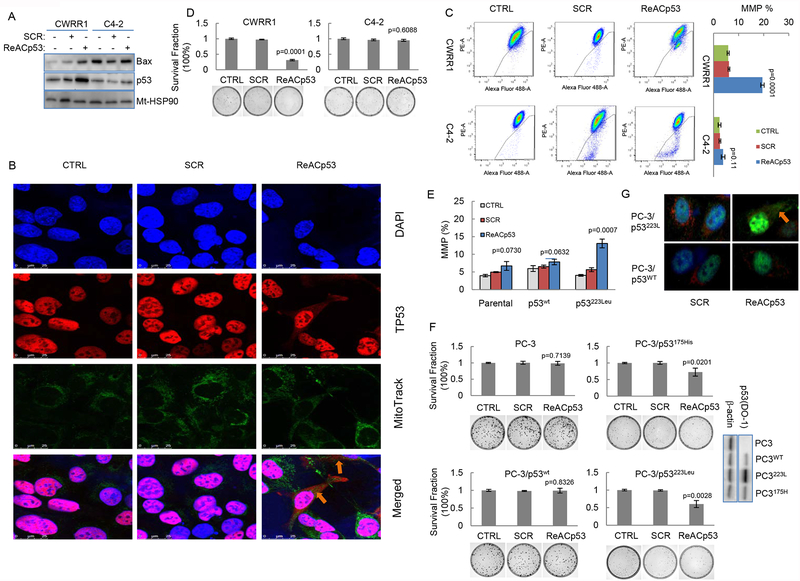
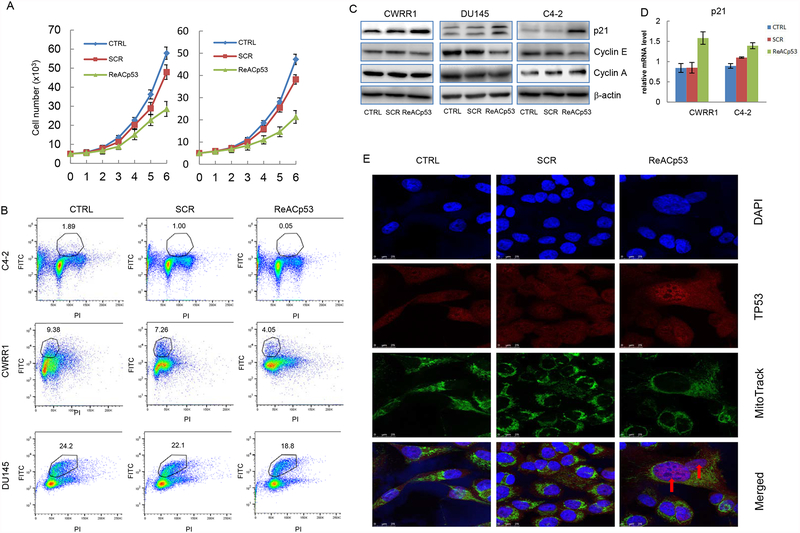
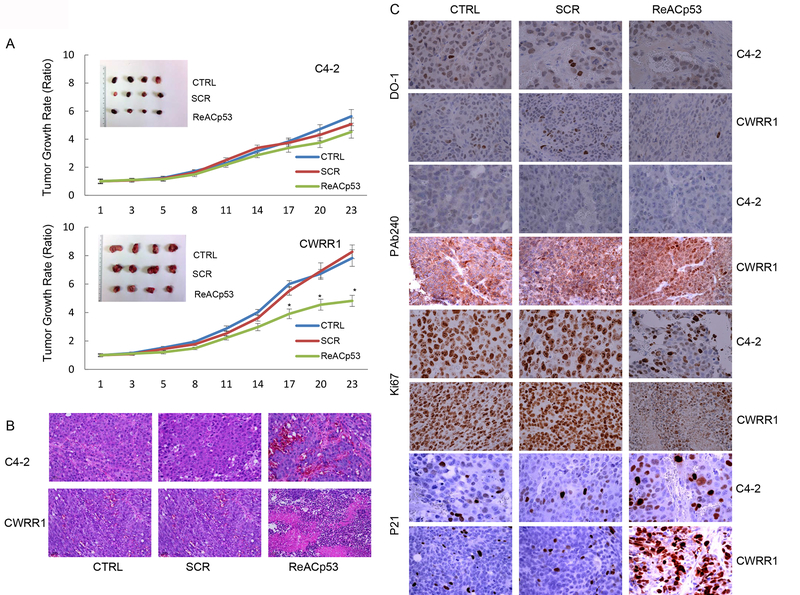
Our results show that ReACp53 targets amyloid aggregates of mutant p53 protein and restores the p53 nuclear function as transcriptional factor, induces mitochondrial cell death and reduces DNA synthesis of mutant p53-carrying PCa cells; ReACp53 also inhibits xenograft tumor growth in vivo.
The data presented here suggest a therapeutic potential of targeting mutant p53 protein in advanced PCa setting, which has a clinical impact for aggressive PCa with transforming how such tumors are managed.
p53 是一种肿瘤抑制因子,可防止癌症的发生和发展,而 p53 基因的突变会导致该蛋白的肿瘤抑制功能丧失。肿瘤细胞中突变的 p53 蛋白可以形成聚集体,从而对野生型 p53 蛋白产生显性负效应,导致 p53 肿瘤抑制功能丧失或获得新的致癌功能。p53 突变与原发性前列腺癌(PCa)的发病机制有关,并且在复发性和转移性疾病中经常被检测到。因此,针对突变型 p53 可能是晚期 PCa 的另一种治疗策略,因为目前尚无其他可行的选择。
在这项研究中,我们使用免疫沉淀、免疫荧光、集落形成存活、细胞增殖测定、流式细胞术分析和体内异种移植来研究 ReACp53(一种穿透细胞的 p53 聚集抑制剂)对携带突变型 p53 的 PCa 细胞的生物学影响。
我们的结果表明,ReACp53 靶向突变型 p53 蛋白的淀粉样聚集物,并恢复 p53 作为转录因子的核功能,诱导线粒体细胞死亡并减少携带突变型 p53 的 PCa 细胞的 DNA 合成;ReACp53 还抑制体内异种移植肿瘤的生长。
这里提出的数据表明,针对晚期 PCa 中突变型 p53 蛋白的治疗潜力具有临床意义,这将改变此类肿瘤的治疗方式。