Department of Computational Biology, University of Lausanne, Lausanne, Switzerland.
Swiss Institute of Bioinformatics, Lausanne, Switzerland.
Nat Methods. 2019 Sep;16(9):843-852. doi: 10.1038/s41592-019-0509-5. Epub 2019 Aug 30.
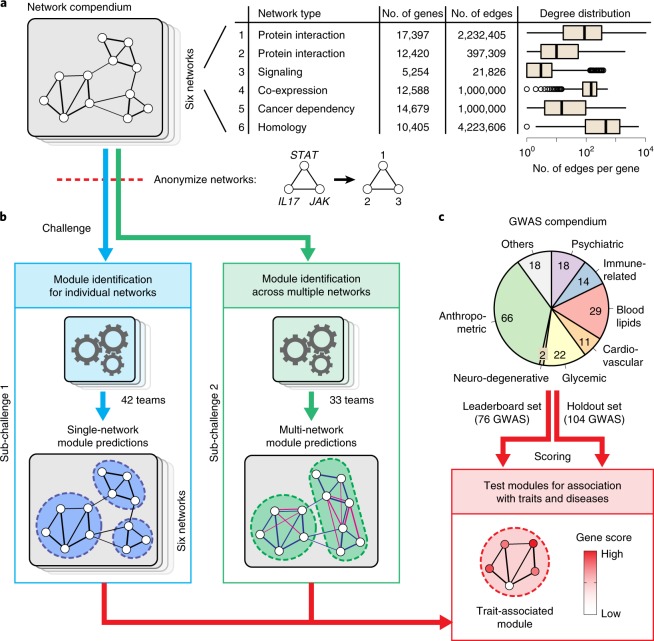
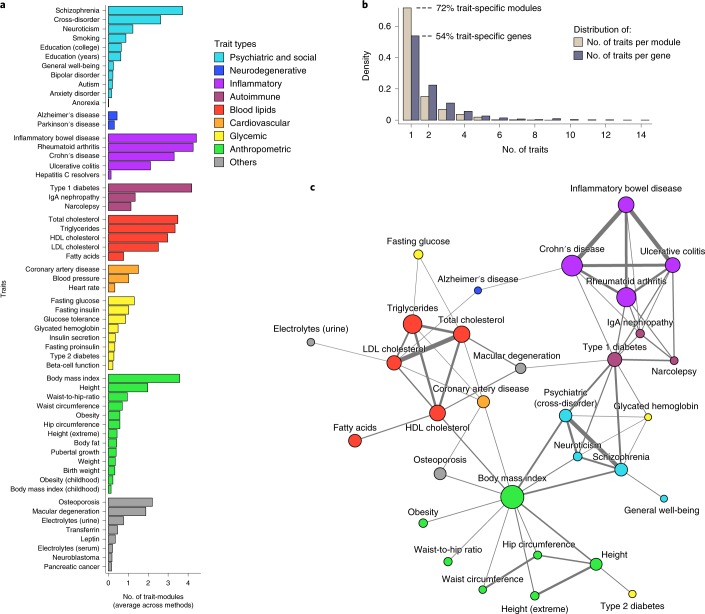
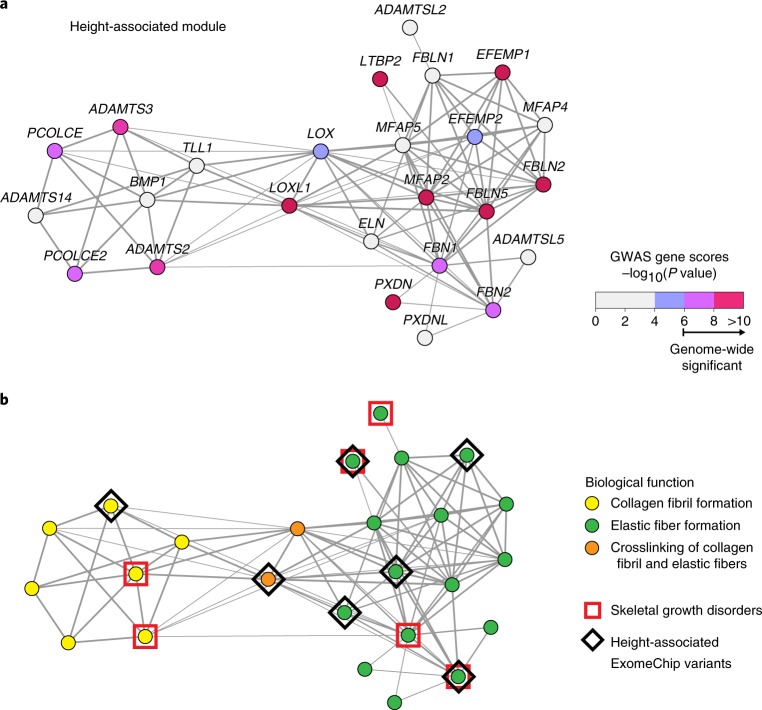
Many bioinformatics methods have been proposed for reducing the complexity of large gene or protein networks into relevant subnetworks or modules. Yet, how such methods compare to each other in terms of their ability to identify disease-relevant modules in different types of network remains poorly understood. We launched the 'Disease Module Identification DREAM Challenge', an open competition to comprehensively assess module identification methods across diverse protein-protein interaction, signaling, gene co-expression, homology and cancer-gene networks. Predicted network modules were tested for association with complex traits and diseases using a unique collection of 180 genome-wide association studies. Our robust assessment of 75 module identification methods reveals top-performing algorithms, which recover complementary trait-associated modules. We find that most of these modules correspond to core disease-relevant pathways, which often comprise therapeutic targets. This community challenge establishes biologically interpretable benchmarks, tools and guidelines for molecular network analysis to study human disease biology.
许多生物信息学方法已经被提出,用于将大型基因或蛋白质网络简化为相关的子网络或模块。然而,这些方法在识别不同类型网络中与疾病相关的模块的能力方面相互比较的情况仍了解甚少。我们发起了“疾病模块识别 DREAM 挑战赛”,这是一项公开竞赛,旨在全面评估跨多种蛋白质-蛋白质相互作用、信号转导、基因共表达、同源和癌症基因网络的模块识别方法。使用独特的 180 项全基因组关联研究数据集,预测网络模块与复杂特征和疾病的相关性。我们对 75 种模块识别方法进行了稳健评估,揭示了表现出色的算法,这些算法可以恢复互补的与特征相关的模块。我们发现,这些模块中的大多数都对应于核心的与疾病相关的途径,其中通常包含治疗靶点。这项社区挑战赛为研究人类疾病生物学的分子网络分析建立了具有生物学解释的基准、工具和指南。