Centre for Discovery Brain Sciences, University of Edinburgh, Edinburgh, UK.
Muir Maxwell Epilepsy Centre, University of Edinburgh, Edinburgh, UK.
J Neurochem. 2019 Dec;151(5):570-583. doi: 10.1111/jnc.14862. Epub 2019 Oct 17.
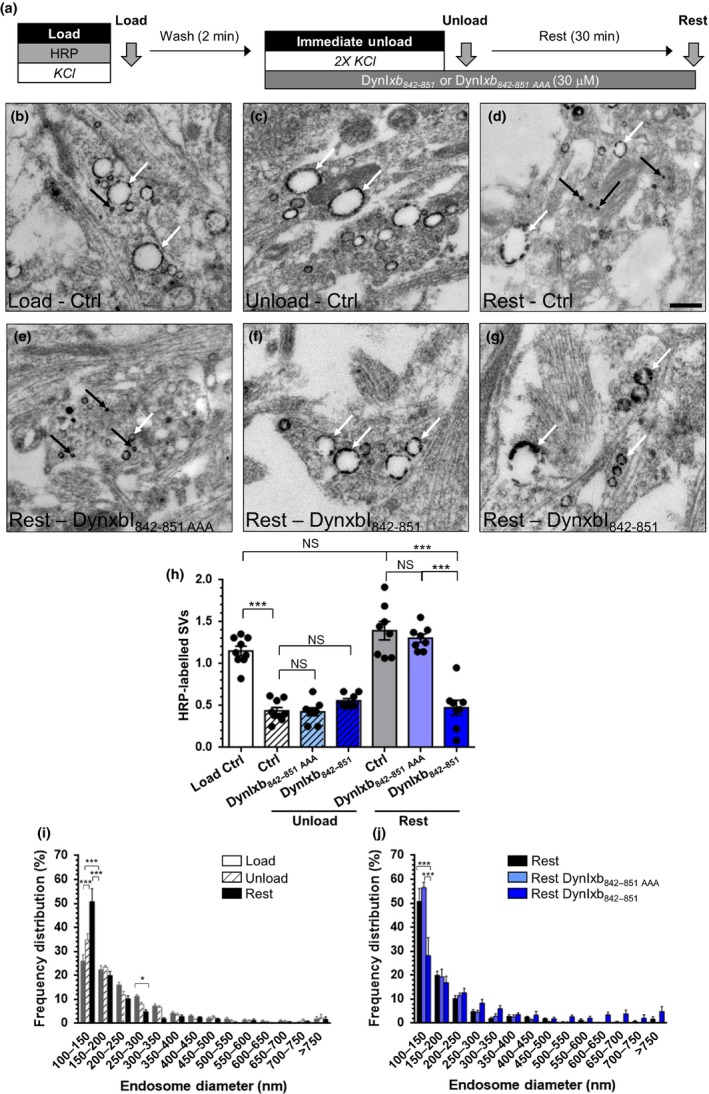
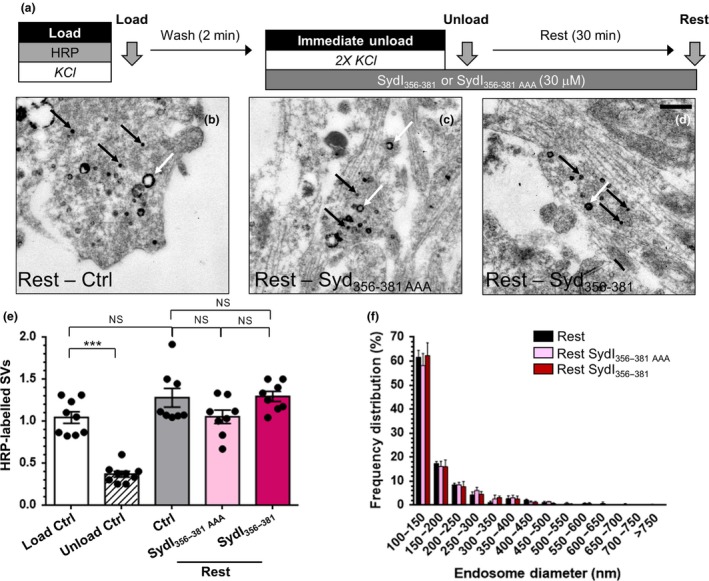
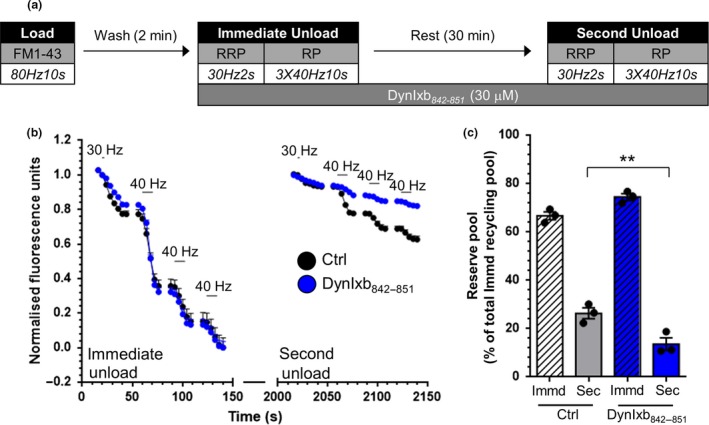
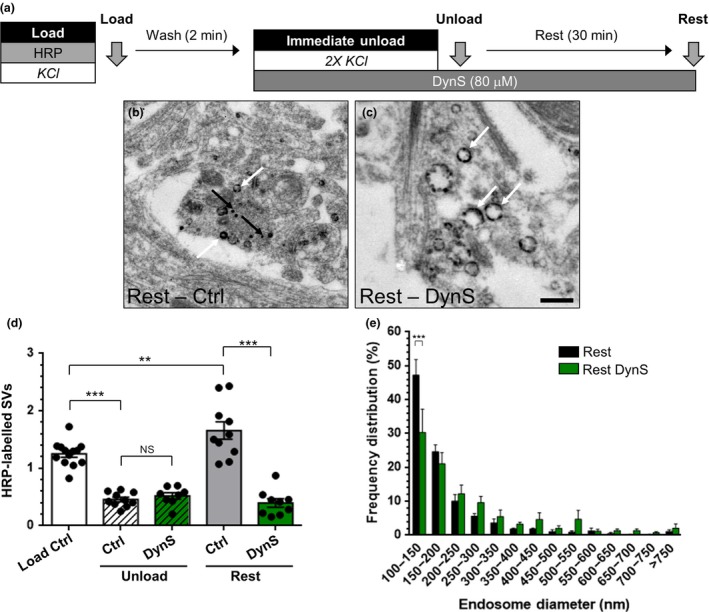
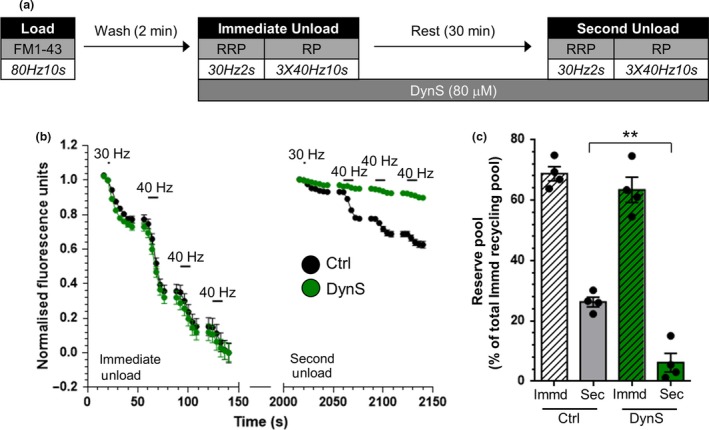
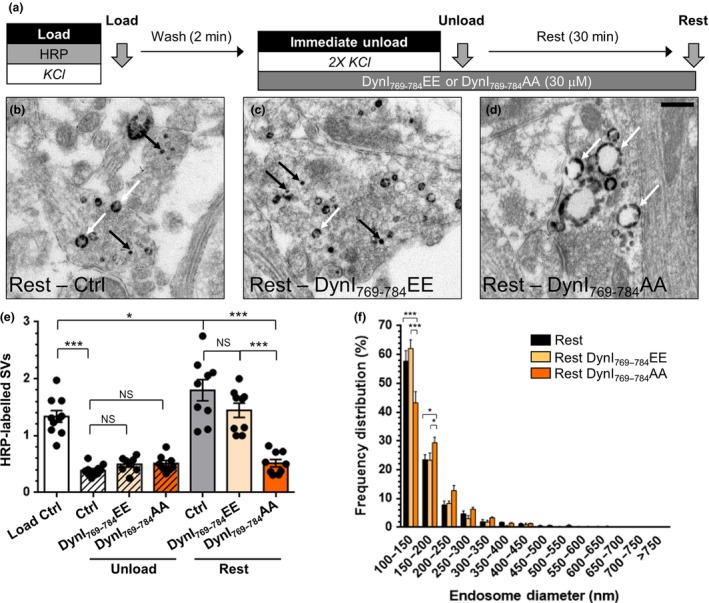
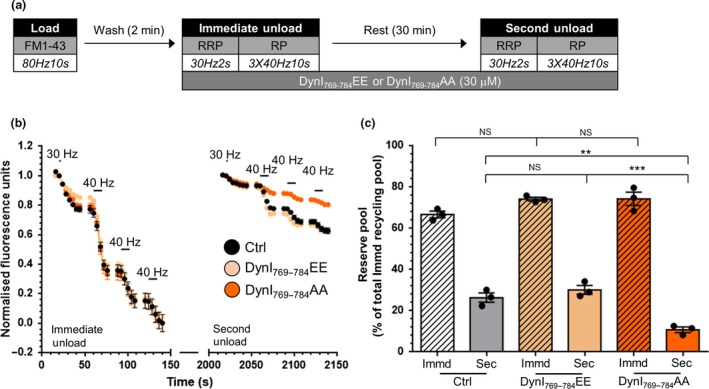
Activity-dependent bulk endocytosis generates synaptic vesicles (SVs) during intense neuronal activity via a two-step process. First, bulk endosomes are formed direct from the plasma membrane from which SVs are then generated. SV generation from bulk endosomes requires the efflux of previously accumulated calcium and activation of the protein phosphatase calcineurin. However, it is still unknown how calcineurin mediates SV generation. We addressed this question using a series of acute interventions that decoupled the generation of SVs from bulk endosomes in rat primary neuronal culture. This was achieved by either disruption of protein-protein interactions via delivery of competitive peptides, or inhibition of enzyme activity by known inhibitors. SV generation was monitored using either a morphological horseradish peroxidase assay or an optical assay that monitors the replenishment of the reserve SV pool. We found that SV generation was inhibited by, (i) peptides that disrupt calcineurin interactions, (ii) an inhibitor of dynamin I GTPase activity and (iii) peptides that disrupt the phosphorylation-dependent dynamin I-syndapin I interaction. Peptides that disrupted syndapin I interactions with eps15 homology domain-containing proteins had no effect. This revealed that (i) calcineurin must be localized at bulk endosomes to mediate its effect, (ii) dynamin I GTPase activity is essential for SV fission and (iii) the calcineurin-dependent interaction between dynamin I and syndapin I is essential for SV generation. We therefore propose that a calcineurin-dependent dephosphorylation cascade that requires both dynamin I GTPase and syndapin I lipid-deforming activity is essential for SV generation from bulk endosomes.
活性依赖的胞吞作用通过两步过程在神经元活动剧烈时产生突触小泡(SVs)。首先,从质膜直接形成大胞内体,然后从大胞内体产生 SVs。SV 从大胞内体产生需要先前积累的钙流出和蛋白磷酸酶钙调神经磷酸酶的激活。然而,钙调神经磷酸酶如何介导 SV 的产生仍不清楚。我们使用一系列急性干预措施解决了这个问题,这些干预措施在大鼠原代神经元培养物中使 SV 从大胞内体的产生脱耦联。这是通过递送竞争性肽来破坏蛋白-蛋白相互作用,或者通过已知的抑制剂抑制酶活性来实现的。使用辣根过氧化物酶形态学测定或监测储备 SV 池补充的光学测定来监测 SV 的产生。我们发现 SV 的产生受到以下因素的抑制:(i)破坏钙调神经磷酸酶相互作用的肽,(ii)抑制动力蛋白 I GTP 酶活性的抑制剂,以及(iii)破坏磷酸化依赖的动力蛋白 I-衔接蛋白 I 相互作用的肽。破坏衔接蛋白 I 与含有 eps15 同源结构域的蛋白质相互作用的肽没有效果。这表明(i)钙调神经磷酸酶必须定位于大胞内体才能介导其作用,(ii)动力蛋白 I GTP 酶活性对于 SV 分裂是必需的,以及(iii)钙调神经磷酸酶依赖性动力蛋白 I 和衔接蛋白 I 之间的相互作用对于 SV 的产生是必需的。因此,我们提出了一个钙调神经磷酸酶依赖性去磷酸化级联反应,该级联反应需要动力蛋白 I GTP 酶和衔接蛋白 I 脂质变形活性,对于从大胞内体产生 SV 是必不可少的。