Phan Anh Dao Thi, Chaliha Mridusmita, Sultanbawa Yasmina, Netzel Michael E
ARC Training Centre for Uniquely Australian Foods, Queensland Alliance for Agriculture and Food Innovation, The University of Queensland, Health and Food Sciences Precinct, 39 Kessels Road, Coopers Plains, QLD 4108, Australia.
Foods. 2019 Sep 1;8(9):376. doi: 10.3390/foods8090376.
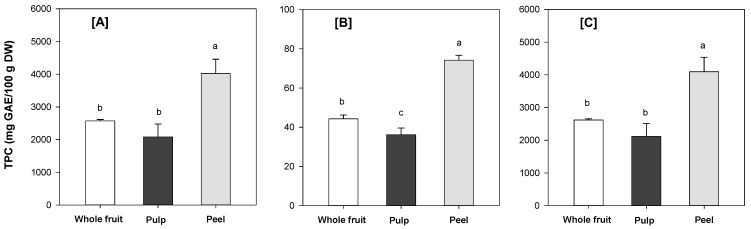
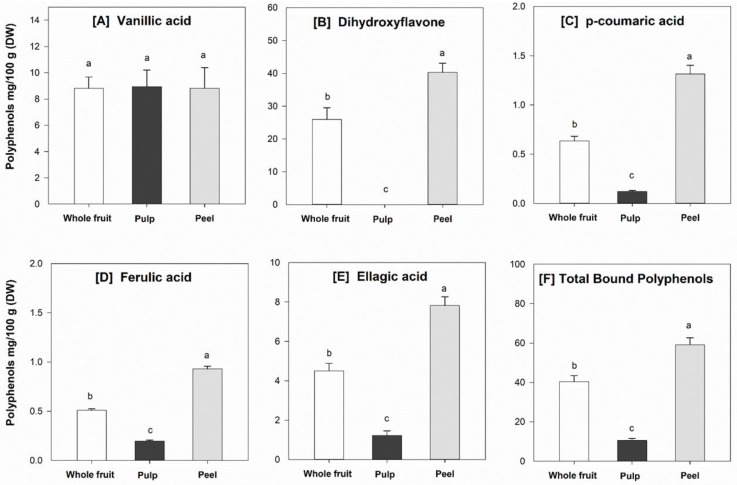
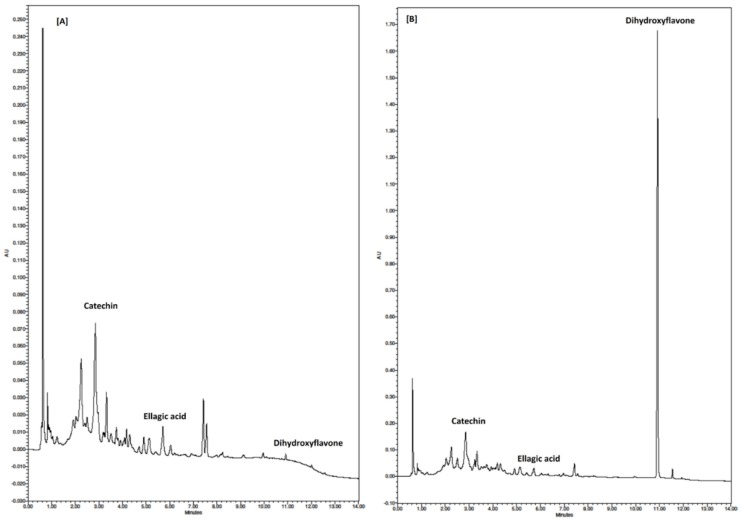
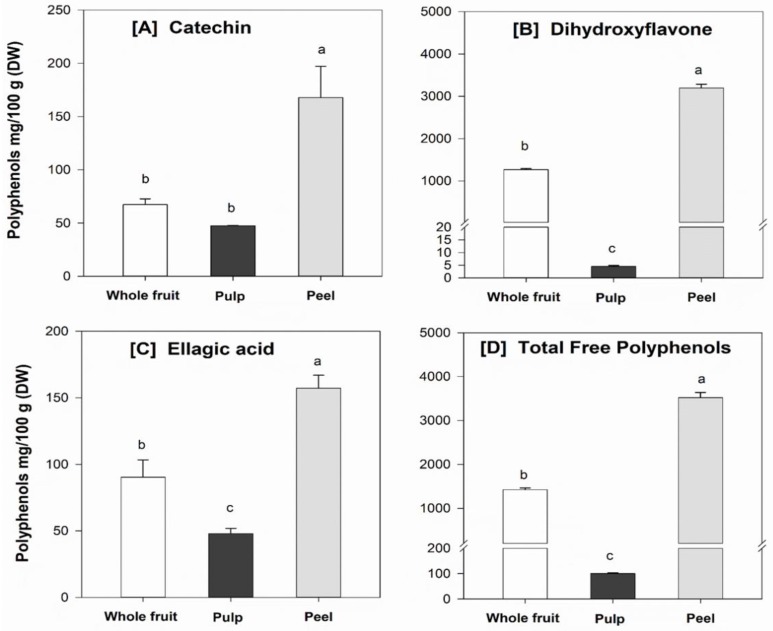
The present study determined the chemical composition, bioactive compounds and biological properties of Australian grown feijoa (), including whole fruit with peel, fruit peel and pulp, in order to assess the nutritional quality and antimicrobial activity of this emerging subtropical fruit. Polyphenolic compounds and vitamins were determined by UHPLC-PDA-MS/MS, showing that the feijoa fruit not only contains high amounts of antioxidant flavonoids, but is also a valuable source of vitamin C (63 mg/100 g FW (fresh weight)) and pantothenic acid (0.2 mg/100 g FW). Feijoa fruit is also a good source of dietary fibre (6.8 g/100 g FW) and potassium (255 mg/100 g FW). The edible fruit peel possesses significantly ( < 0.05) higher amounts of antioxidant flavonoids and vitamin C than the fruit pulp. This is most likely the reason for the observed strong antimicrobial activity of the peel-extracts against a wide-range of food-spoilage microorganism. The consumption of feijoa fruit can deliver a considerable amount of bioactive compounds such as vitamin C, flavonoids and fibre, and therefore, may contribute to a healthy diet. Furthermore, the potential use of feijoa-peel as a natural food perseverative needs to be investigated in follow-up studies.
本研究测定了澳大利亚种植的费约果(包括带皮的整个果实、果皮和果肉)的化学成分、生物活性化合物和生物学特性,以评估这种新兴亚热带水果的营养质量和抗菌活性。通过超高效液相色谱-光电二极管阵列-串联质谱法测定多酚化合物和维生素,结果表明费约果不仅含有大量抗氧化类黄酮,还是维生素C(63毫克/100克鲜重)和泛酸(0.2毫克/100克鲜重)的重要来源。费约果也是膳食纤维(6.8克/100克鲜重)和钾(255毫克/100克鲜重)的良好来源。可食用的果皮中抗氧化类黄酮和维生素C的含量明显(P<0.05)高于果肉。这很可能是观察到果皮提取物对多种食品腐败微生物具有强大抗菌活性的原因。食用费约果可以提供大量生物活性化合物,如维生素C、类黄酮和纤维,因此可能有助于健康饮食。此外,后续研究需要对费约果果皮作为天然食品防腐剂的潜在用途进行研究。