Department of Evolutionary Genetics and Molecular Biology, Federal University of São Carlos, São Carlos, Brazil.
Department of Animal Science, University of São Paulo/ESALQ, Piracicaba, Brazil.
Sci Rep. 2019 Sep 3;9(1):12715. doi: 10.1038/s41598-019-49089-x.
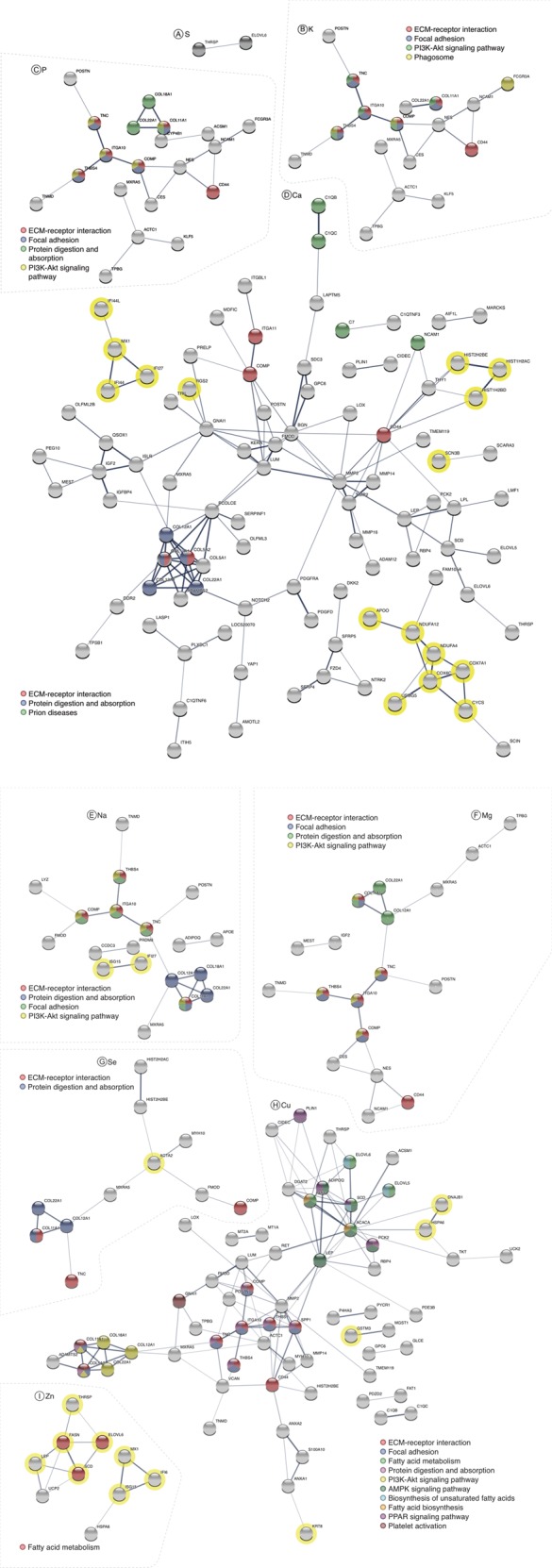
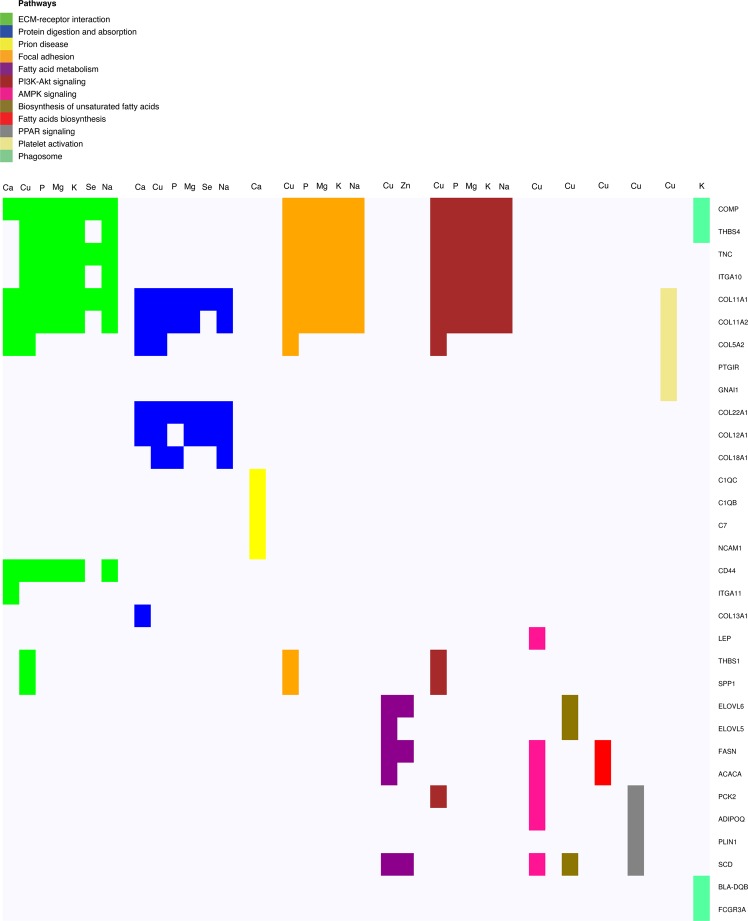
Mineral content affects the biological processes underlying beef quality. Muscle mineral concentration depends not only on intake-outtake balance and muscle type, but also on age, environment, breed, and genetic factors. To unveil the genetic factors involved in muscle mineral concentration, we applied a pairwise differential gene expression analysis in groups of Nelore steers genetically divergent for nine different mineral concentrations. Here, based on significant expression differences between contrasting groups, we presented candidate genes for the genetic regulation of mineral concentration in muscle. Functional enrichment and protein-protein interaction network analyses were carried out to search for gene regulatory processes concerning each mineral. The core genetic regulation for all minerals studied, except Zn, seems to rest on interactions between components of the extracellular matrix. Regulation of adipogenesis-related pathways was also significant in our results. Antagonistic patterns of gene expression for fatty acid metabolism-related genes may explain the Cu and Zn antagonistic effect on fatty acid accumulation. Our results shed light on the role of these minerals on cell function.
矿物质含量影响牛肉质量的生物学过程。肌肉矿物质浓度不仅取决于摄入-排出平衡和肌肉类型,还取决于年龄、环境、品种和遗传因素。为了揭示肌肉矿物质浓度相关的遗传因素,我们在遗传上对 9 种不同矿物质浓度有差异的内罗尔公牛进行了成对差异基因表达分析。在这里,基于对比组之间的显著表达差异,我们提出了候选基因,以对肌肉中矿物质浓度的遗传调控进行研究。进行了功能富集和蛋白质-蛋白质相互作用网络分析,以搜索与每种矿物质相关的基因调控过程。除锌以外,所有研究矿物质的核心遗传调控似乎都依赖于细胞外基质成分之间的相互作用。脂肪生成相关途径的调节在我们的结果中也很重要。脂肪酸代谢相关基因的表达拮抗模式可能解释了铜和锌对脂肪酸积累的拮抗作用。我们的研究结果揭示了这些矿物质在细胞功能中的作用。