Skin Research Institute of Singapore, Agency for Science Technology & Research (A*STAR), Singapore, 138648, Singapore.
Horae Gene Therapy Center, University of Massachusetts Medical School, Worcester, MA, 01605, USA.
Sci Rep. 2019 Sep 3;9(1):12718. doi: 10.1038/s41598-019-49155-4.
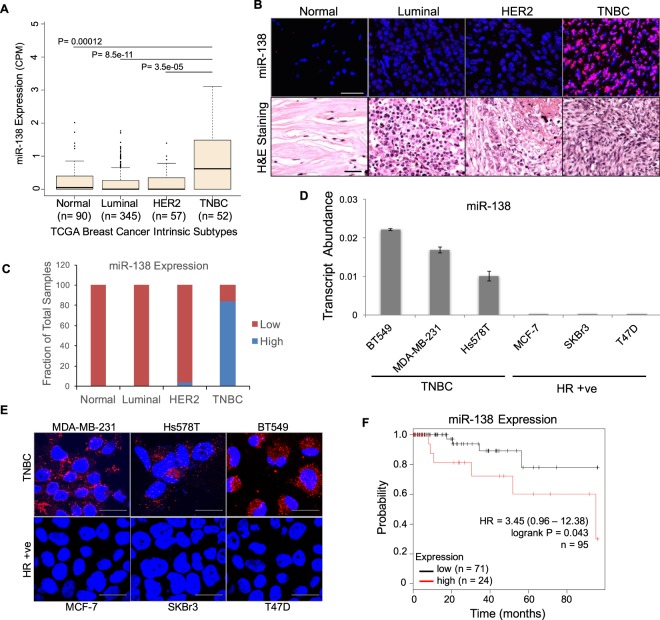
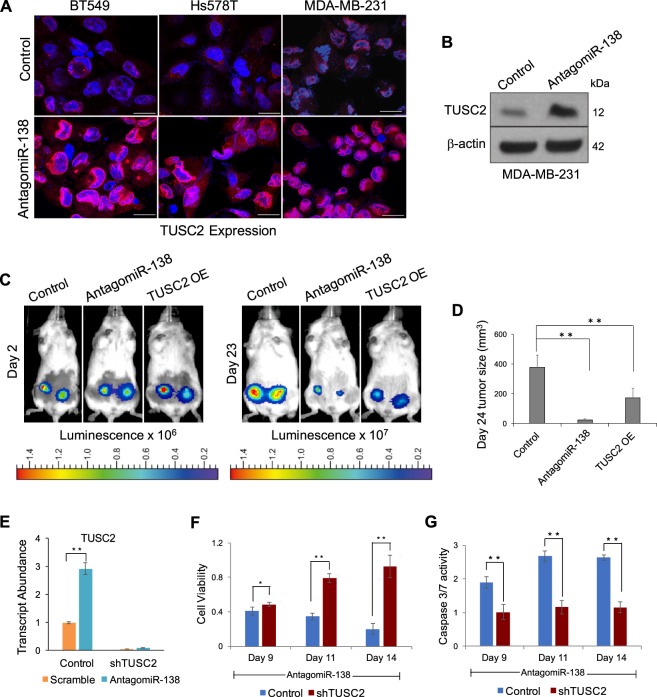
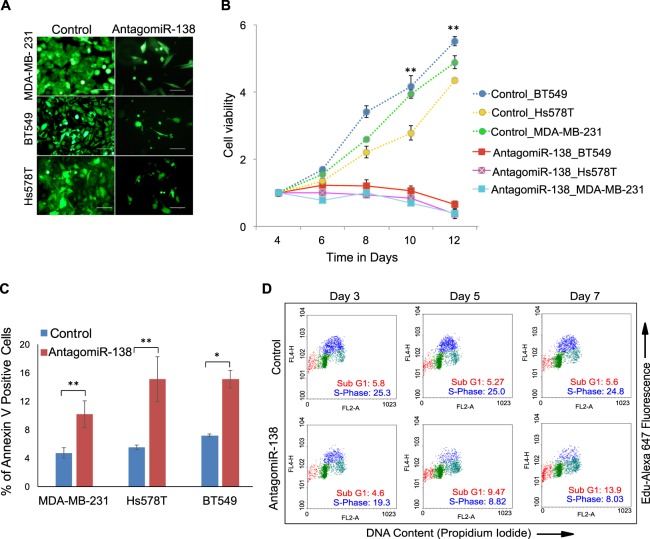
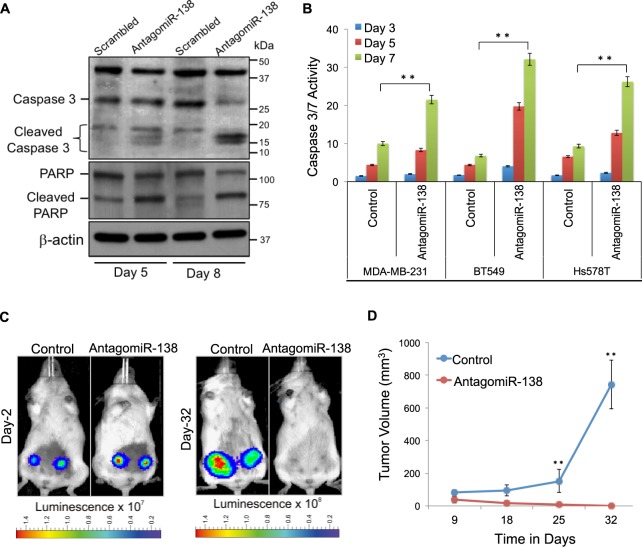
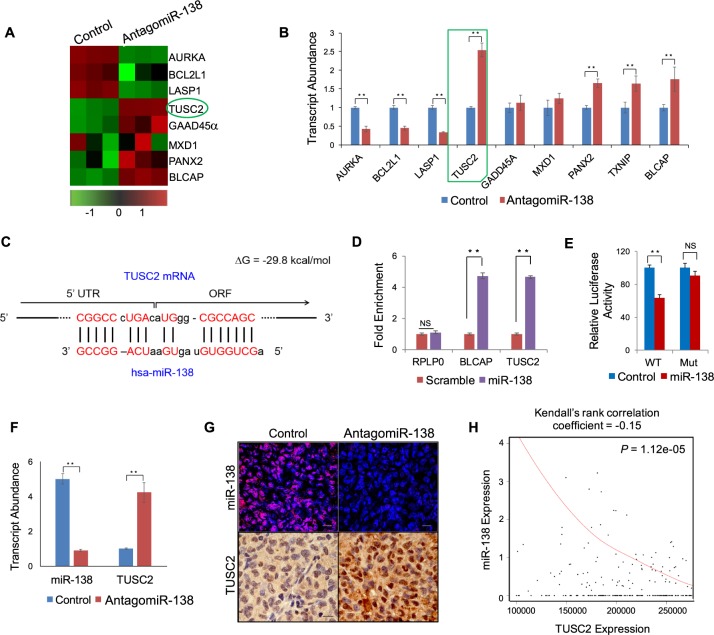
Breast cancer manifests as a spectrum of subtypes with distinct molecular signatures, and different responses to treatment. Of these subtypes, triple-negative breast cancer (TNBC) has the worst prognoses and limited therapeutic options. Here we report aberrant expression of microRNA-138 (miR-138) in TNBC. Increased miR-138 expression is highly specific to this subtype, correlates with poor prognosis in patients, and is functionally relevant to cancer progression. Our findings establish miR-138 as a specific diagnostic and prognostic biomarker for TNBC. OncomiR-138 is pro-survival; sequence-specific miR-138 inhibition blocks proliferation, promotes apoptosis and inhibits tumour growth in-vivo. miR-138 directly targets a suite of pro-apoptotic and tumour suppressive genes, including tumour suppressor candidate 2 (TUSC2). miR-138 silences TUSC2 by binding to a unique 5'-UTR target-site, which overlaps with the translation start-site of the transcript. Over-expression of TUSC2 mimics the phenotype of miR-138 knockdown and functional rescue experiments confirm that TUSC2 is a direct downstream target of miR-138. Our report of miR-138 as an oncogenic driver in TNBC, positions it as a viable target for oligonucleotide therapeutics and we envision the potential value of using antimiR-138 as an adjuvant therapy to alleviate this therapeutically intractable cancer.
乳腺癌表现为具有不同分子特征和不同治疗反应的亚型谱。在这些亚型中,三阴性乳腺癌(TNBC)的预后最差,治疗选择有限。在这里,我们报告了 microRNA-138 (miR-138) 在 TNBC 中的异常表达。miR-138 表达增加高度特异于这种亚型,与患者的不良预后相关,并且与癌症进展具有功能相关性。我们的研究结果确立了 miR-138 作为 TNBC 的特异性诊断和预后生物标志物。OncomiR-138 是促生存的;特异性的 miR-138 抑制可阻断增殖,促进凋亡,并在体内抑制肿瘤生长。miR-138 直接靶向一组促凋亡和肿瘤抑制基因,包括肿瘤抑制候选基因 2 (TUSC2)。miR-138 通过与转录起始位点重叠的独特 5'-UTR 靶位点结合来沉默 TUSC2。TUSC2 的过表达模拟了 miR-138 敲低的表型,功能挽救实验证实 TUSC2 是 miR-138 的直接下游靶标。我们报告 miR-138 是 TNBC 的致癌驱动因子,将其定位为寡核苷酸治疗的可行靶标,我们设想使用抗 miR-138 作为辅助治疗来减轻这种治疗棘手的癌症的潜在价值。