Bayraktar Recep, Pichler Martin, Kanlikilicer Pinar, Ivan Cristina, Bayraktar Emine, Kahraman Nermin, Aslan Burcu, Oguztuzun Serpil, Ulasli Mustafa, Arslan Ahmet, Calin George, Lopez-Berestein Gabriel, Ozpolat Bulent
Department of Experimental Therapeutics, The University of Texas MD Anderson Cancer Center, Houston, Texas, USA.
Department of Medical Biology, School of Medicine, Gaziantep University, Gaziantep, Turkey.
Oncotarget. 2017 Feb 14;8(7):11641-11658. doi: 10.18632/oncotarget.14264.
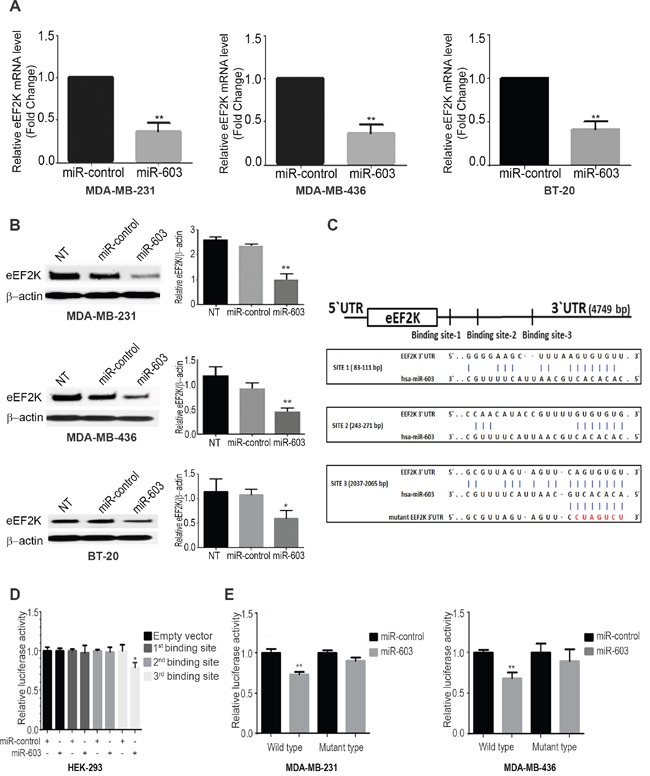
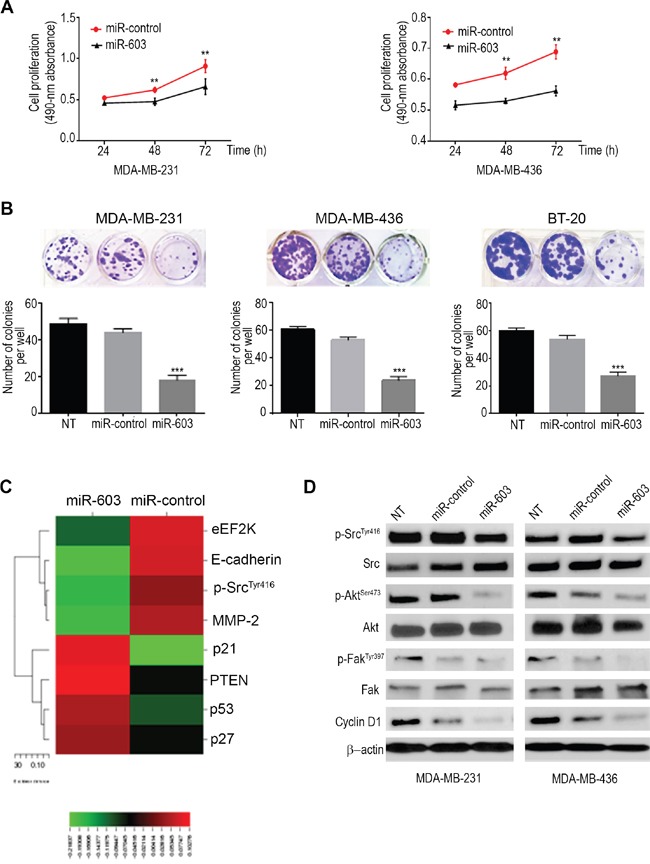
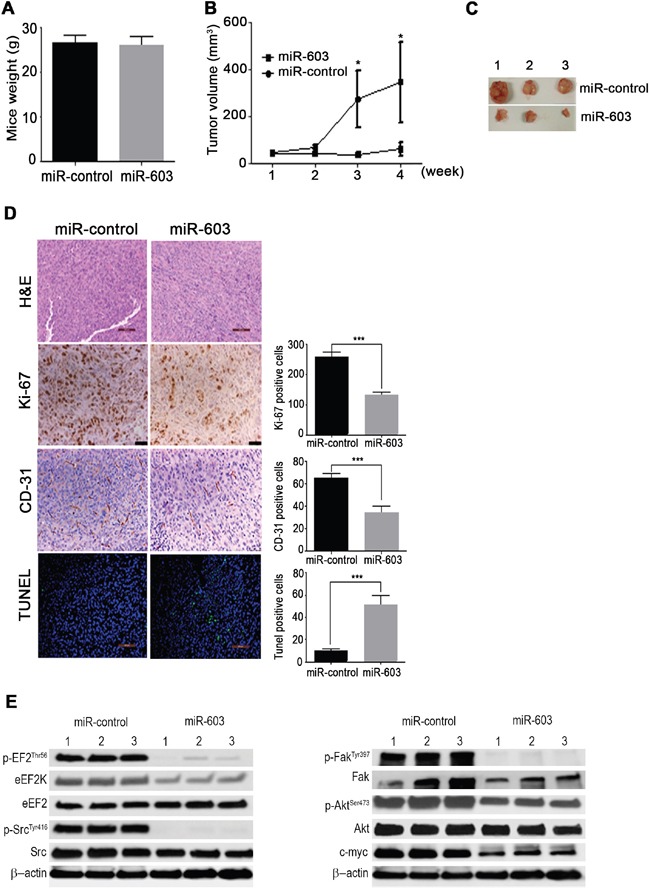
Triple negative breast cancer (TNBC) is an aggressive type of breast cancer characterized by the absence of defined molecular targets, including estrogen receptor (ER), progesterone receptor (PR), human epidermal growth factor receptor 2 (HER2) and is associated with high rates of relapse and distant metastasis despite surgery and adjuvant chemotherapy. The lack of effective targeted therapies for TNBC represents an unmet therapeutic challenge. Eukaryotic elongation factor 2 kinase (eEF2K) is an atypical calcium/calmodulin-dependent serine/threonine kinase that promotes TNBC tumorigenesis, progression, and drug resistance, representing a potential novel molecular target. However, the mechanisms regulating eEF2K expression are unknown. Here, we report that eEF2K protein expression is highly up-regulated in TNBC cells and patient tumors and it is associated with poor patient survival and clinical outcome. We found that loss/reduced expression of miR-603 leads to eEF2K overexpression in TNBC cell lines. Its expression results in inhibition of eEF2K by directly targeting the 3-UTR and the inhibition of tumor cell growth, migration and invasion in TNBC. In vivo therapeutic gene delivery of miR-603 into TNBC xenograft mouse models by systemic administration of miR-603-nanoparticles led to a significant inhibition of eEF2K expression and tumor growth, which was associated with decreased activity of the downstream targets of eEF2K, including Src, Akt, cyclin D1 and c-myc. Our findings suggest that miR-603 functions as a tumor suppressor and loss of miR-603 expression leads to increase in eEF2K expression and contributes to the growth, invasion, and progression of TNBC. Taken together, our data suggest that miR-603-based gene therapy is a potential strategy against TNBC.
三阴性乳腺癌(TNBC)是一种侵袭性乳腺癌,其特征是缺乏明确的分子靶点,包括雌激素受体(ER)、孕激素受体(PR)、人表皮生长因子受体2(HER2),并且尽管进行了手术和辅助化疗,仍具有较高的复发率和远处转移率。TNBC缺乏有效的靶向治疗方法,这是一个尚未满足的治疗挑战。真核生物延伸因子2激酶(eEF2K)是一种非典型的钙/钙调蛋白依赖性丝氨酸/苏氨酸激酶,它促进TNBC的肿瘤发生、进展和耐药性,是一个潜在的新型分子靶点。然而,调节eEF2K表达的机制尚不清楚。在这里,我们报告eEF2K蛋白表达在TNBC细胞和患者肿瘤中高度上调,并且与患者的不良生存和临床结果相关。我们发现miR-603的缺失/表达降低导致TNBC细胞系中eEF2K的过表达。其表达通过直接靶向3'-UTR抑制eEF2K,并抑制TNBC中的肿瘤细胞生长、迁移和侵袭。通过全身给予miR-603纳米颗粒将miR-603体内治疗性基因递送至TNBC异种移植小鼠模型中,导致eEF2K表达和肿瘤生长受到显著抑制,这与eEF2K下游靶点(包括Src、Akt、细胞周期蛋白D1和c-myc)的活性降低有关。我们的研究结果表明,miR-603起着肿瘤抑制因子的作用,miR-603表达的缺失导致eEF2K表达增加,并促进TNBC的生长、侵袭和进展。综上所述,我们的数据表明基于miR-603的基因治疗是一种针对TNBC的潜在策略。