Wang Liang, Du Yan, Xu Bing-Ju, Deng Xu, Liu Qing-Hua, Zhong Qiao-Qiao, Wang Chen-Xiang, Ji Shuai, Guo Meng-Zhe, Tang Dao-Quan
Jiangsu Key Laboratory of New Drug Research and Clinical Pharmacy, School of Pharmacy, Xuzhou Medical University, Xuzhou, China.
Department of Bioinformatics, School of Medical Informatics, Xuzhou Medical University, Xuzhou, China.
Front Pharmacol. 2019 Aug 20;10:928. doi: 10.3389/fphar.2019.00928. eCollection 2019.
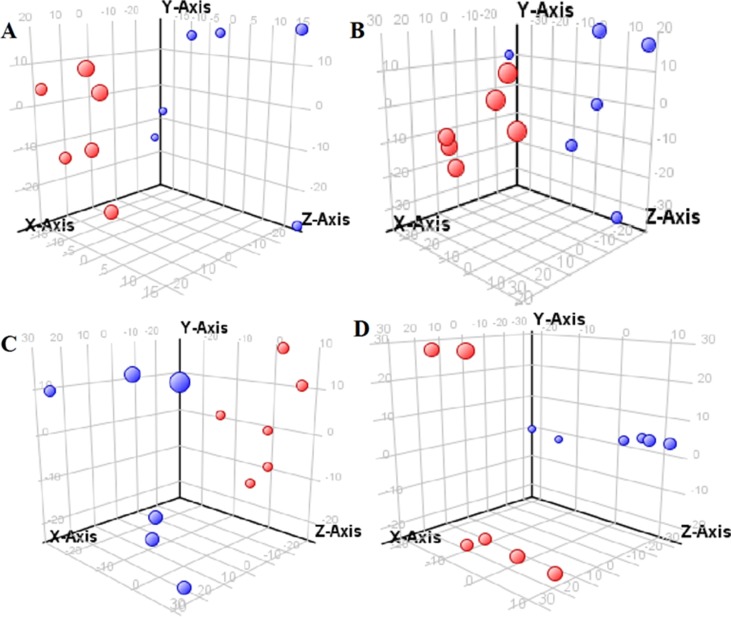
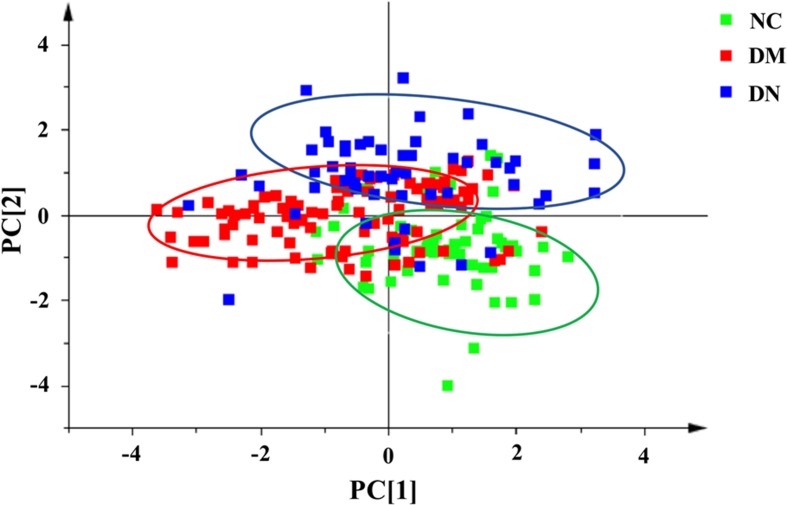
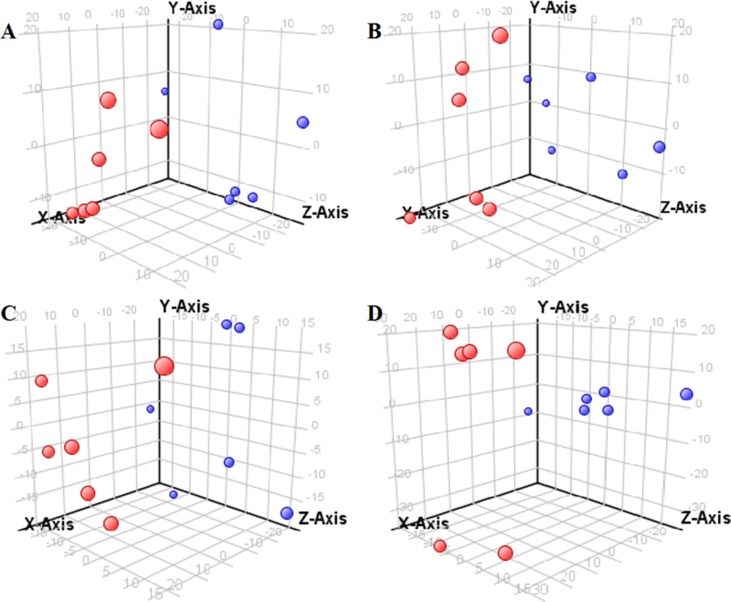
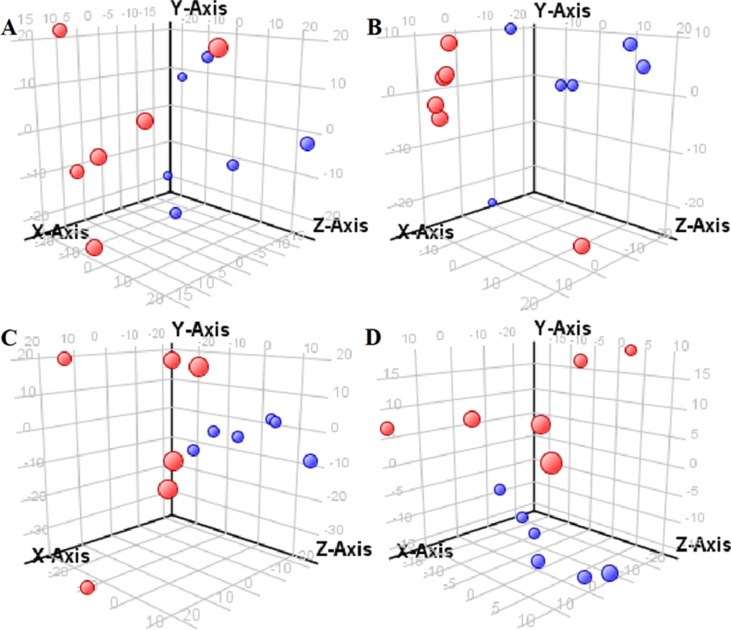
Diabetic nephropathy (DN) is one of the most serious microvascular complications and the leading causes of death in diabetes mellitus (DM). To find biomarkers for prognosing the occurrence and development of DN has significant clinical value for its prevention, diagnosis, and treatment. In this study, a non-targeted cell metabolomics-based ultra-performance liquid chromatography coupled with quadrupole time of flight mass spectrometry and gas chromatography coupled with mass spectrometry was developed and performed the dynamic metabolic profiles of rat renal cells including renal tubular epithelial cells (NRK-52E) and glomerular mesangial cells (HBZY-1) in response to high glucose at time points of 12 h, 24 h, 36 h, and 48 h. Some potential biomarkers were then verified using clinical plasma samples collected from 55 healthy volunteers, 103 DM patients, and 57 DN patients. Statistical methods, such as principal component analysis and partial least squares to latent structure-discriminant analysis were recruited for data analyses. As a result, palmitic acid and linoleic acid (all-cis-9,12) were the potential indicators for the occurrence and development of DN, and valine, leucine, and isoleucine could be used as the prospective biomarkers for DM. In addition, rise and fall of leucine and isoleucine levels in plasma could be used for prognosing DN in DM patients. Through this study, we established a novel non-targeted cell dynamic metabolomics platform and identified potential biomarkers that may be applied for the diagnosis and prognosis of DM and DN.
糖尿病肾病(DN)是糖尿病(DM)最严重的微血管并发症之一,也是糖尿病患者死亡的主要原因。寻找预测DN发生和发展的生物标志物对其预防、诊断和治疗具有重要的临床价值。在本研究中,我们建立了一种基于非靶向细胞代谢组学的超高效液相色谱-四极杆飞行时间质谱联用技术以及气相色谱-质谱联用技术,并对大鼠肾细胞(包括肾小管上皮细胞(NRK-52E)和肾小球系膜细胞(HBZY-1))在12小时、24小时、36小时和48小时时间点对高糖的动态代谢谱进行了分析。随后,我们使用从55名健康志愿者、103名DM患者和57名DN患者收集的临床血浆样本对一些潜在的生物标志物进行了验证。我们采用主成分分析和偏最小二乘判别分析等统计方法进行数据分析。结果表明,棕榈酸和亚油酸(全顺式-9,12)是DN发生和发展的潜在指标,缬氨酸、亮氨酸和异亮氨酸可作为DM的前瞻性生物标志物。此外,血浆中亮氨酸和异亮氨酸水平的升降可用于预测DM患者的DN。通过本研究,我们建立了一个新型的非靶向细胞动态代谢组学平台,并鉴定了可能应用于DM和DN诊断及预后的潜在生物标志物。