Faculty of Allied Health Sciences, Chettinad Academy of Research and Education (CARE), Kelambakkam, 603103, India.
Drug Discovery Lab, Faculty of Allied Health Sciences, Chettinad Hospital & Research Institute (CHRI), Chettinad Academy of Research and Education (CARE), Kelambakkam, 603103, India.
Sci Rep. 2019 Sep 4;9(1):12732. doi: 10.1038/s41598-019-49124-x.
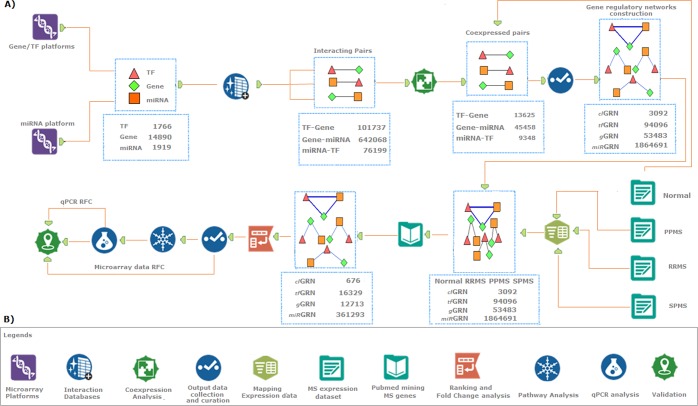
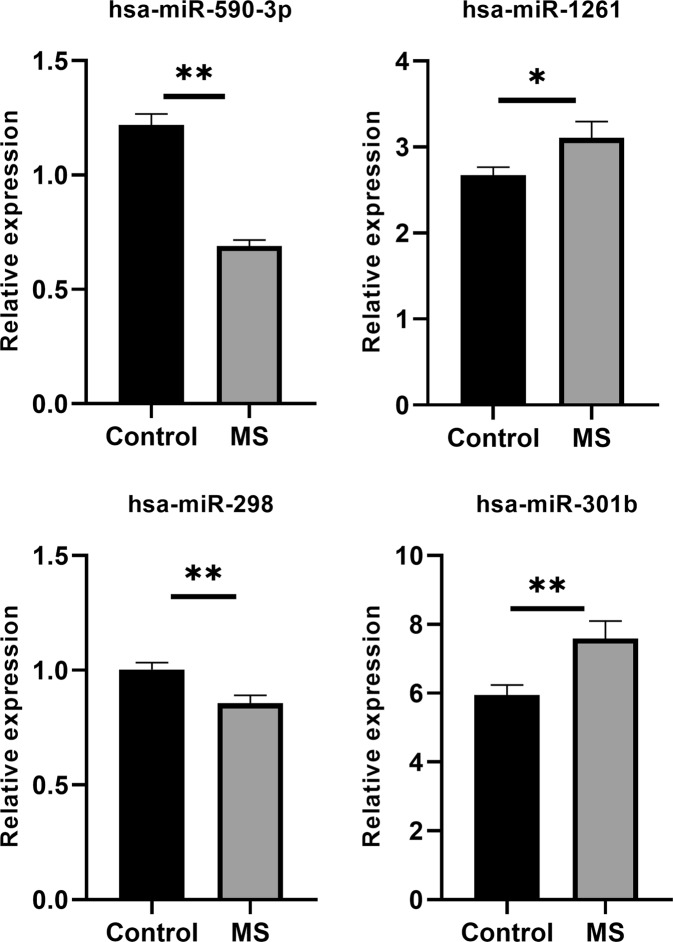
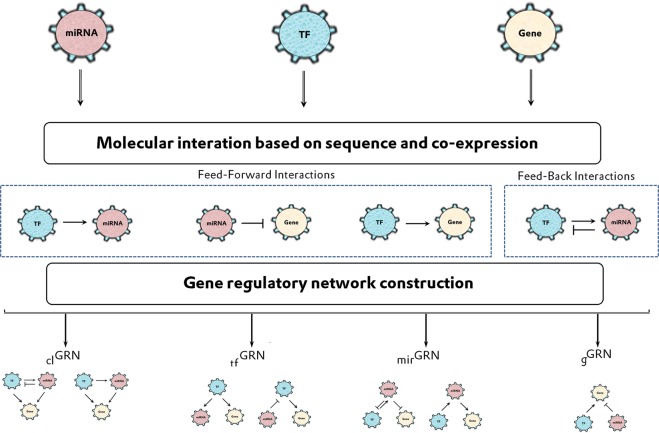
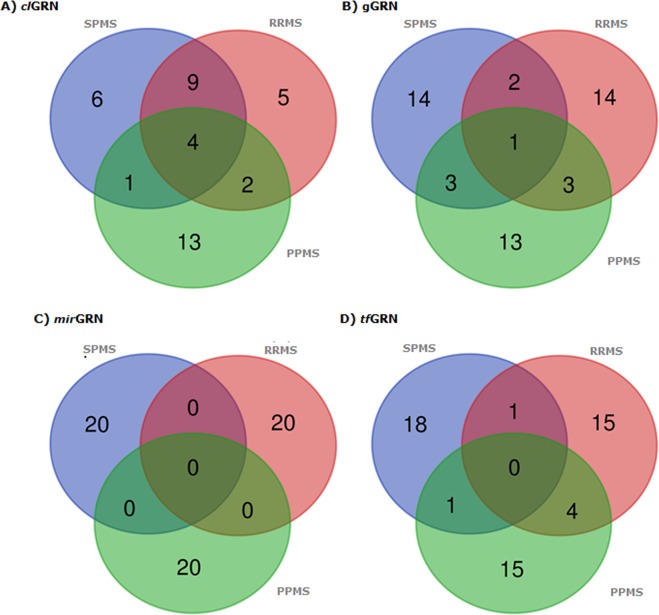
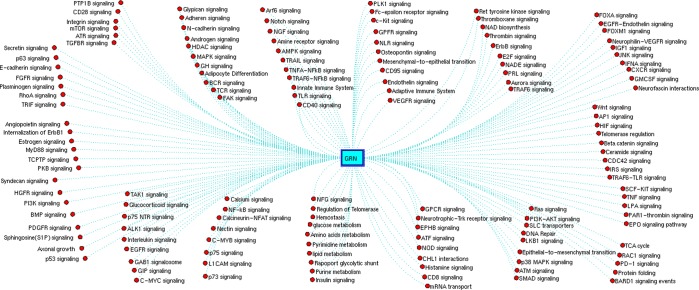
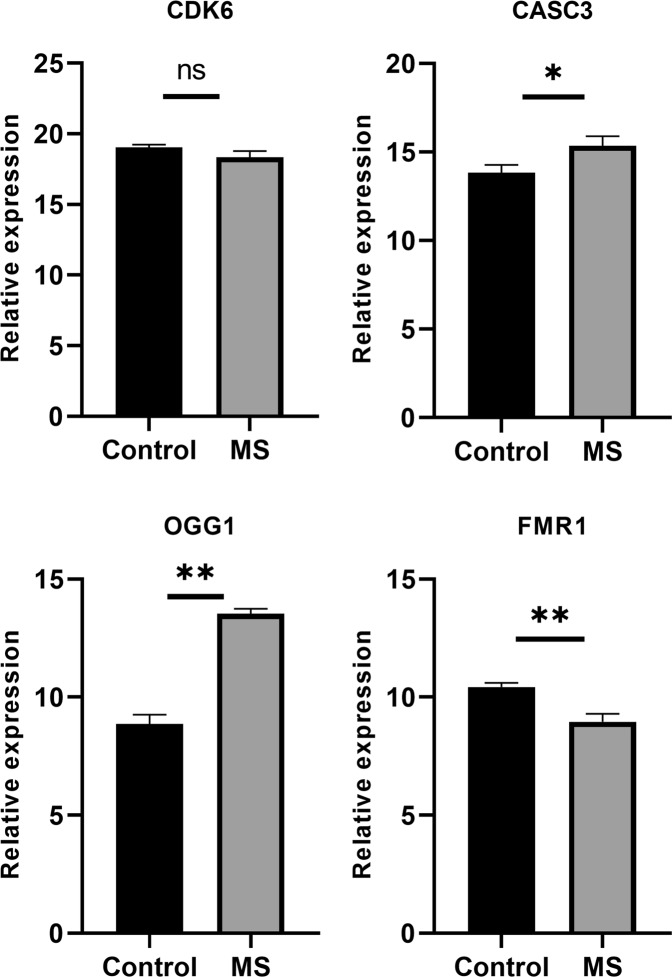
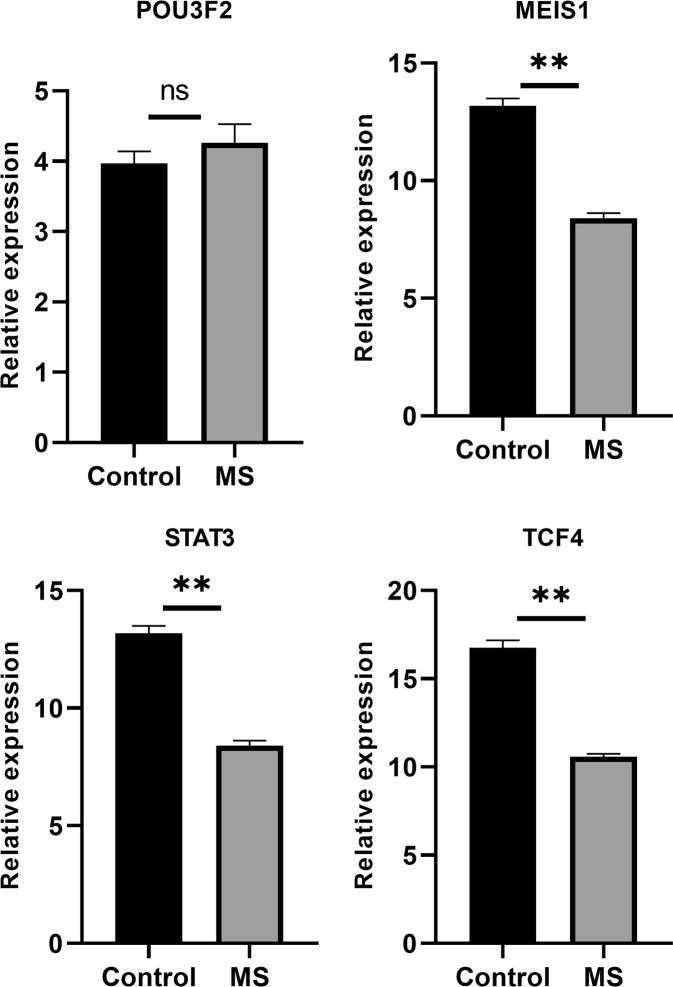
Multiple sclerosis (MS) is a complex, demyelinating disease with the involvement of autoimmunity and neurodegeneration. Increasing efforts have been made towards identifying the diagnostic markers to differentiate the classes of MS from other similar neurological conditions. Using a systems biology approach, we constructed four types of gene regulatory networks (GRNs) involved in peripheral blood mononuclear cells (PBMCs). The regulatory strength of each GRN across primary progressive MS (PPMS), relapsing-remitting MS (RRMS), secondary progressive MS (SPMS), and control were evaluated by an integrity algorithm. Among the constructed GRNs (referred as TF_gene_miRNA), POU3F2_CDK6_hsa-miR-590-3p, MEIS1_CASC3_hsa-miR-1261, STAT3_OGG1_hsa-miR-298, and TCF4_FMR1_hsa-miR-301b were top-ranked and differentially regulated in all classes of MS compared to control. These GRNs showed potential involvement in regulating various molecular pathways such as interleukin, integrin, glypican, sphingosine phosphate, androgen, and Wnt signaling pathways. For validation, the qPCR analysis of the GRN components (TFs, gene, and miRNAs) in PBMCs of healthy controls (n = 30), RRMS (n = 14), PPMS (n = 13) and SPMS (n = 12) were carried out. Real-time expression analysis of GRNs showed a similar regulatory pattern as derived from our systems biology approach. Also, our study provided several novel GRNs that regulate unique and common molecular mechanisms between MS conditions. Hence, these regulatory components of GRNs will help to understand the disease mechanism across MS classes and further insight may though light towards diagnosis.
多发性硬化症(MS)是一种复杂的脱髓鞘疾病,涉及自身免疫和神经退行性变。人们已经做出了越来越多的努力来确定诊断标志物,以将 MS 与其他类似的神经疾病区分开来。我们使用系统生物学方法构建了涉及外周血单核细胞(PBMCs)的四种类型的基因调控网络(GRN)。通过完整性算法评估每个 GRN 在原发性进展型 MS(PPMS)、复发缓解型 MS(RRMS)、继发性进展型 MS(SPMS)和对照组中的调节强度。在所构建的 GRN(称为 TF_gene_miRNA)中,POU3F2_CDK6_hsa-miR-590-3p、MEIS1_CASC3_hsa-miR-1261、STAT3_OGG1_hsa-miR-298 和 TCF4_FMR1_hsa-miR-301b 在所有 MS 类别中与对照组相比均被上调且差异调节。这些 GRN 显示出在调节各种分子途径(如白细胞介素、整合素、聚糖、磷酸神经鞘氨醇、雄激素和 Wnt 信号通路)方面具有潜在的作用。为了验证,我们对健康对照组(n=30)、RRMS(n=14)、PPMS(n=13)和 SPMS(n=12)的 PBMC 中的 GRN 组件(TF、基因和 miRNA)进行了 qPCR 分析。GRN 的实时表达分析显示出与我们的系统生物学方法得出的相似的调节模式。此外,我们的研究还提供了几个新的 GRN,这些 GRN 调节 MS 状况之间独特和共同的分子机制。因此,这些 GRN 的调节成分将有助于了解跨 MS 类别疾病的发病机制,并进一步深入了解诊断。