Sir William Dunn School of Pathology, University of Oxford, Oxford, UK.
Division of Structural Biology, Wellcome Centre for Human Genetics, University of Oxford, Oxford, UK.
Nature. 2019 Sep;573(7773):287-290. doi: 10.1038/s41586-019-1530-7. Epub 2019 Sep 4.
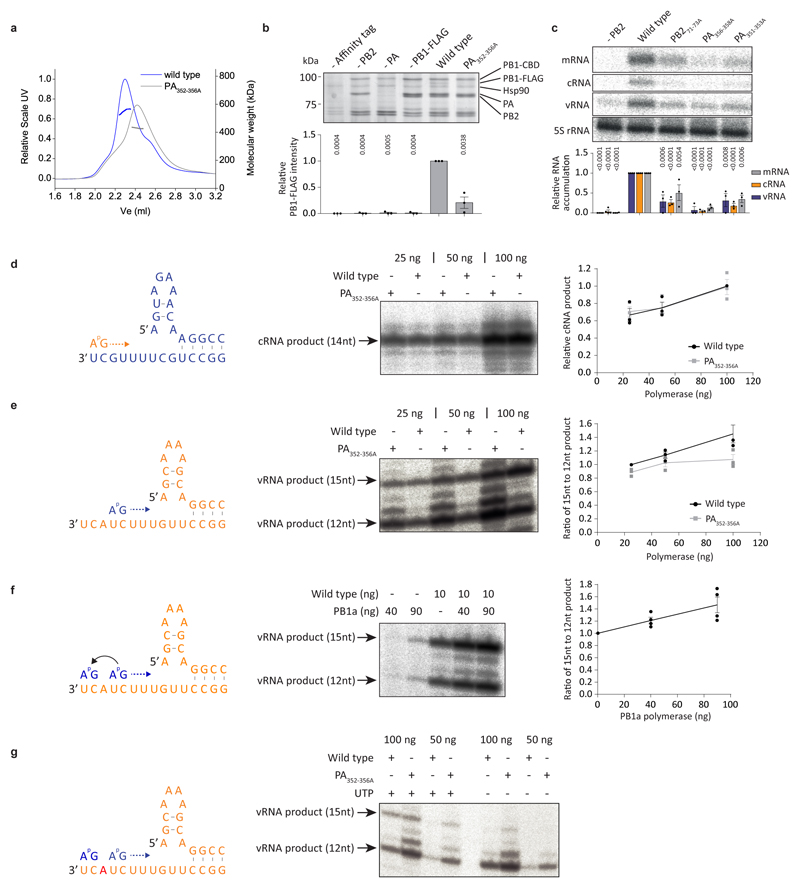
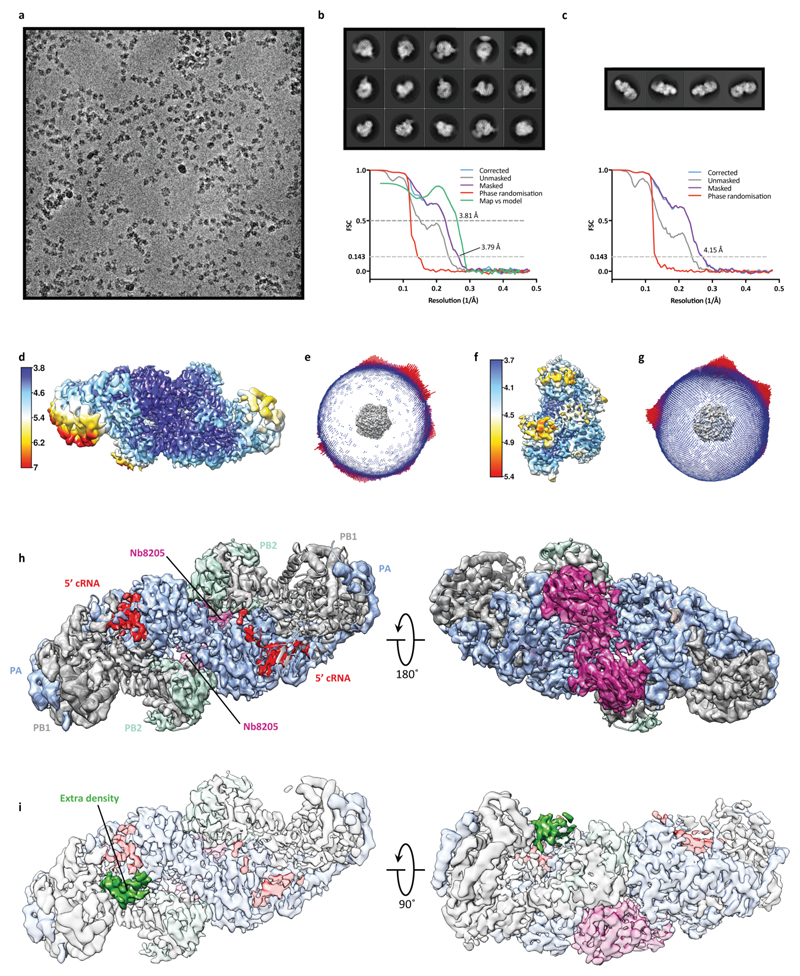
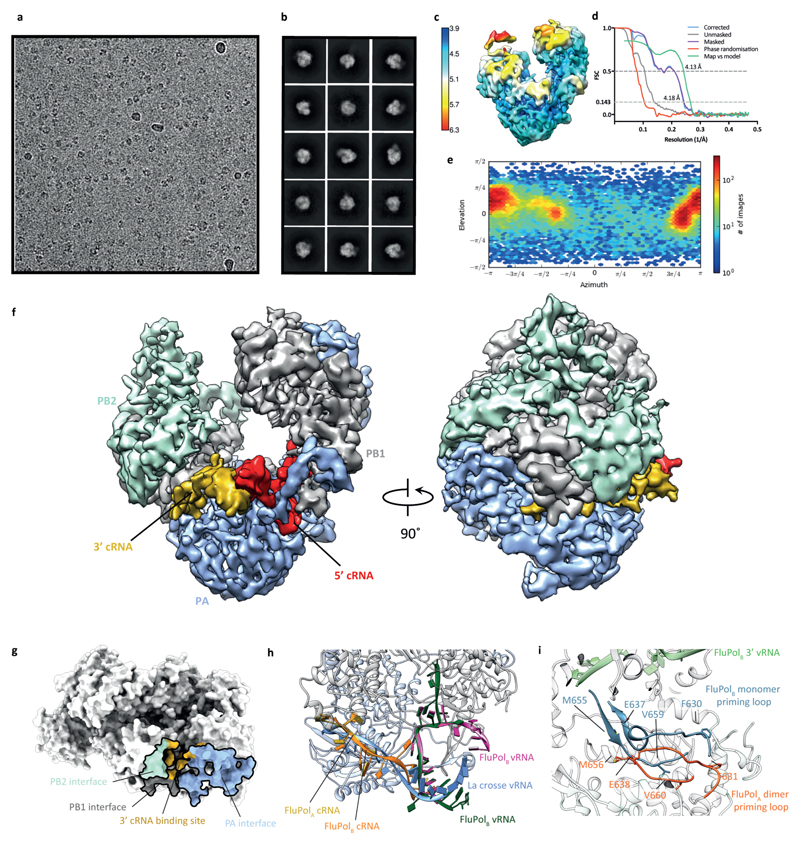
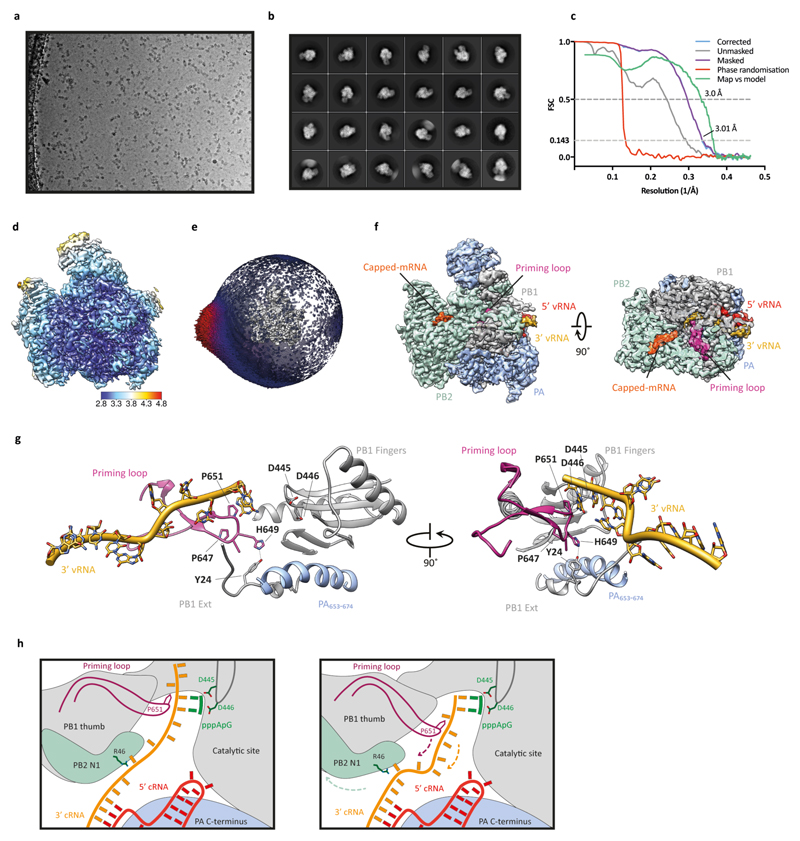
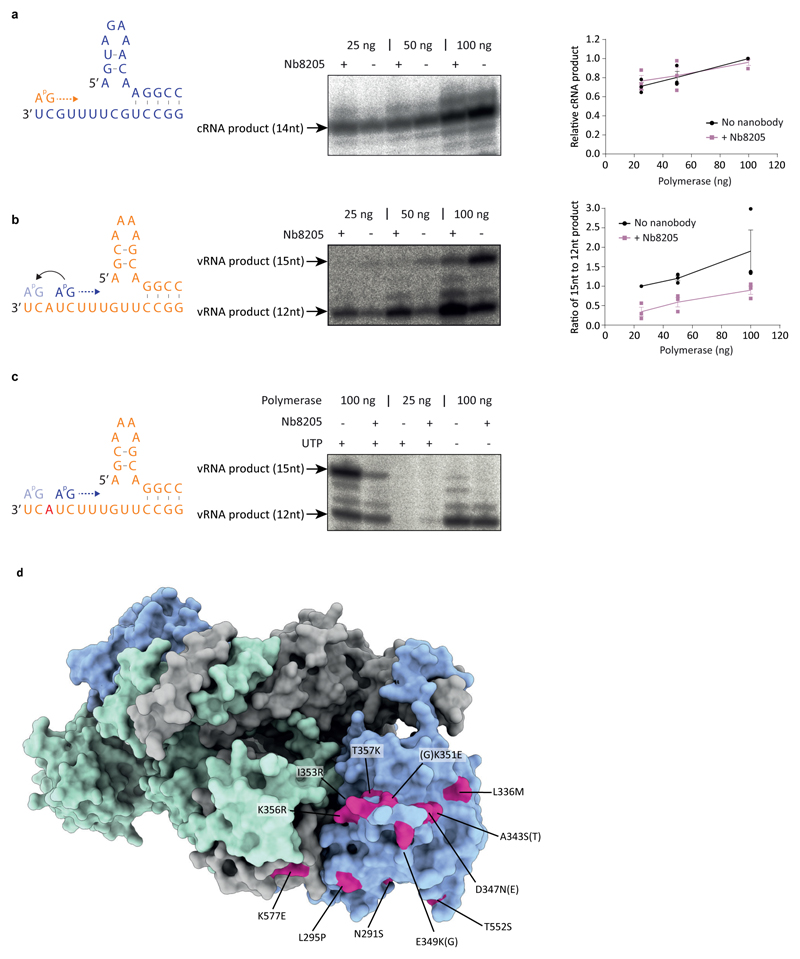
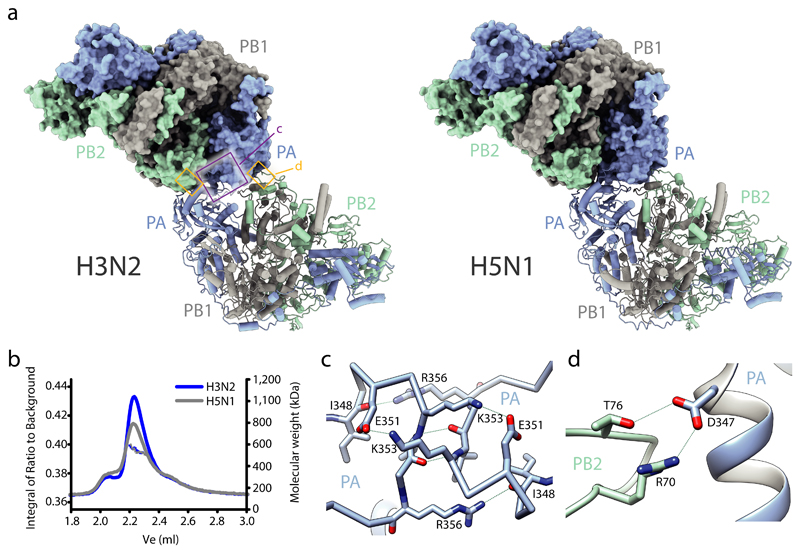
Influenza A viruses are responsible for seasonal epidemics, and pandemics can arise from the transmission of novel zoonotic influenza A viruses to humans. Influenza A viruses contain a segmented negative-sense RNA genome, which is transcribed and replicated by the viral-RNA-dependent RNA polymerase (FluPol) composed of PB1, PB2 and PA subunits. Although the high-resolution crystal structure of FluPol of bat influenza A virus has previously been reported, there are no complete structures available for human and avian FluPol. Furthermore, the molecular mechanisms of genomic viral RNA (vRNA) replication-which proceeds through a complementary RNA (cRNA) replicative intermediate, and requires oligomerization of the polymerase-remain largely unknown. Here, using crystallography and cryo-electron microscopy, we determine the structures of FluPol from human influenza A/NT/60/1968 (H3N2) and avian influenza A/duck/Fujian/01/2002 (H5N1) viruses at a resolution of 3.0-4.3 Å, in the presence or absence of a cRNA or vRNA template. In solution, FluPol forms dimers of heterotrimers through the C-terminal domain of the PA subunit, the thumb subdomain of PB1 and the N1 subdomain of PB2. The cryo-electron microscopy structure of monomeric FluPol bound to the cRNA template reveals a binding site for the 3' cRNA at the dimer interface. We use a combination of cell-based and in vitro assays to show that the interface of the FluPol dimer is required for vRNA synthesis during replication of the viral genome. We also show that a nanobody (a single-domain antibody) that interferes with FluPol dimerization inhibits the synthesis of vRNA and, consequently, inhibits virus replication in infected cells. Our study provides high-resolution structures of medically relevant FluPol, as well as insights into the replication mechanisms of the viral RNA genome. In addition, our work identifies sites in FluPol that could be targeted in the development of antiviral drugs.
甲型流感病毒可引发季节性流行,而新型人畜共患甲型流感病毒向人类传播可引发大流行。甲型流感病毒包含一个分段的负义 RNA 基因组,该基因组由 PB1、PB2 和 PA 亚基组成的病毒 RNA 依赖性 RNA 聚合酶(FluPol)转录和复制。虽然此前已报道过蝙蝠流感 A 病毒 FluPol 的高分辨率晶体结构,但目前还没有人类和禽源 FluPol 的完整结构。此外,基因组病毒 RNA(vRNA)复制的分子机制——该过程通过互补 RNA(cRNA)复制中间体进行,并且需要聚合酶的寡聚化——在很大程度上仍然未知。在这里,我们使用晶体学和 cryo-EM 技术,在存在或不存在 cRNA 或 vRNA 模板的情况下,以 3.0-4.3Å 的分辨率,确定了来自人源流感 A/NT/60/1968(H3N2)和禽流感 A/duck/Fujian/01/2002(H5N1)病毒的 FluPol 的结构。在溶液中,FluPol 通过 PA 亚基的 C 末端结构域、PB1 的拇指结构域和 PB2 的 N1 结构域形成三聚体异源二聚体。单体 FluPol 与 cRNA 模板结合的 cryo-EM 结构揭示了二聚体界面上的 3' cRNA 结合位点。我们使用基于细胞的和体外测定的组合表明,在病毒基因组复制过程中,FluPol 二聚体的界面对于 vRNA 合成是必需的。我们还表明,一种纳米抗体(单域抗体)干扰 FluPol 二聚化会抑制 vRNA 的合成,并因此抑制感染细胞中的病毒复制。我们的研究提供了具有医学意义的 FluPol 的高分辨率结构,并深入了解了病毒 RNA 基因组的复制机制。此外,我们的工作确定了 FluPol 中可作为抗病毒药物开发靶点的位点。