Institute of Microbiology, Department of Biology, ETH Zurich, Zurich, Switzerland.
Institute of Integrative Biology, Department of Environmental Systems Science, ETH Zurich, Zurich, Switzerland.
Nature. 2019 Sep;573(7773):276-280. doi: 10.1038/s41586-019-1521-8. Epub 2019 Sep 4.
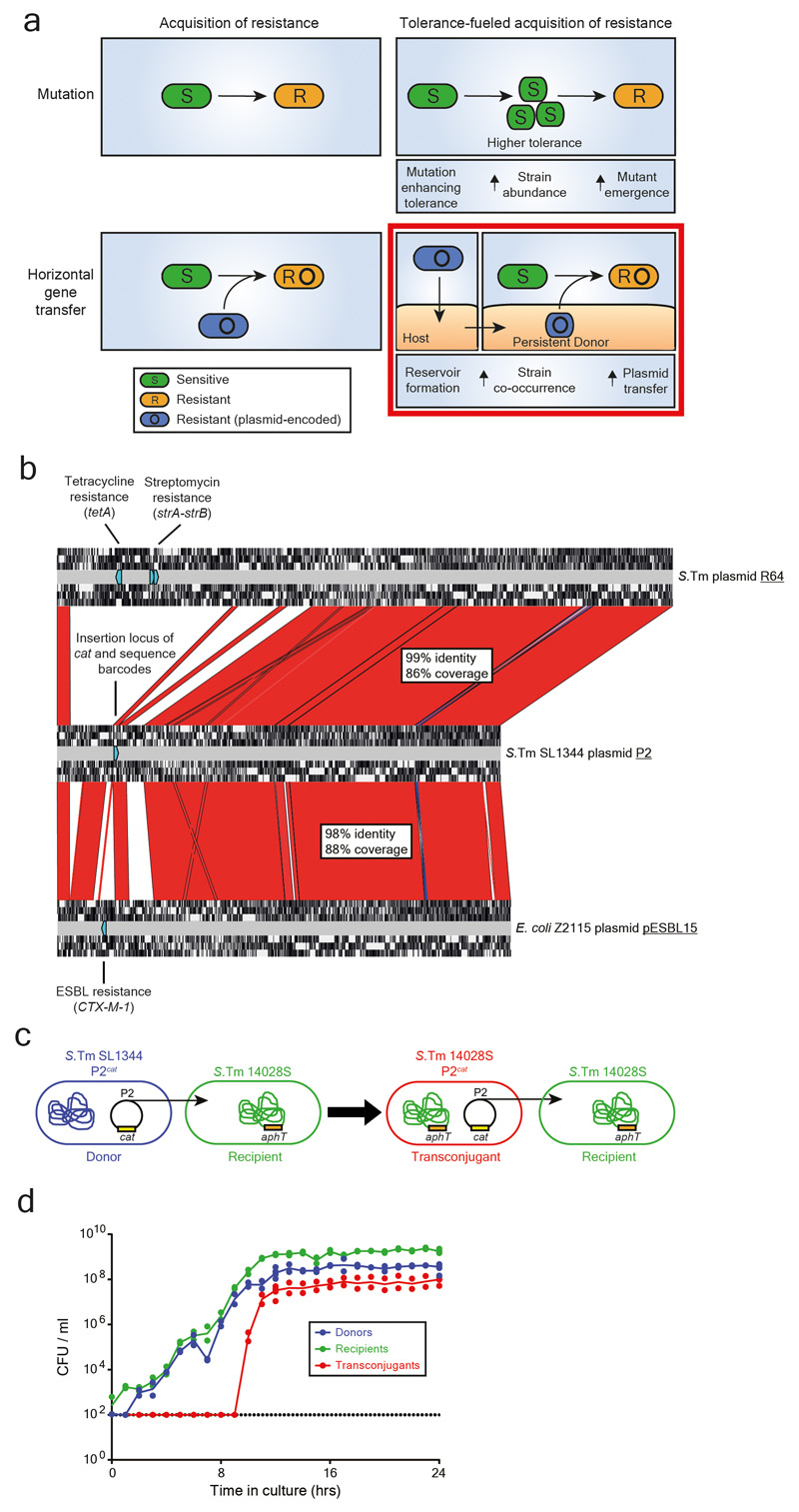
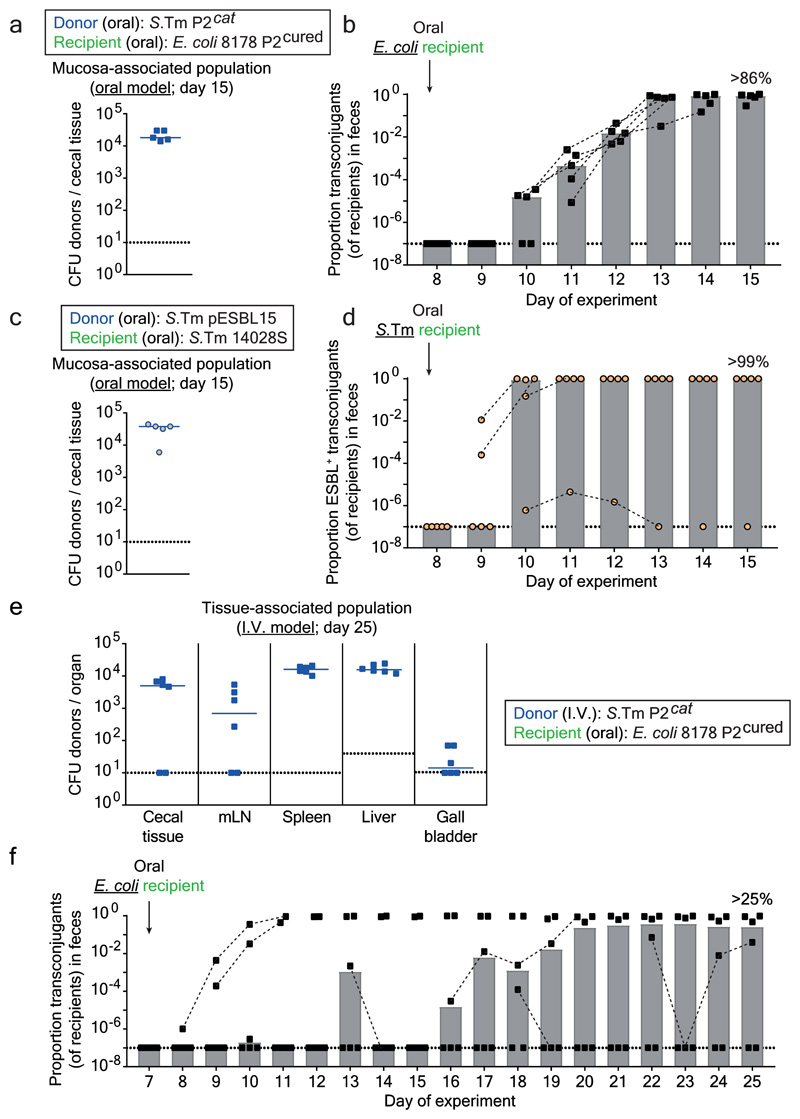
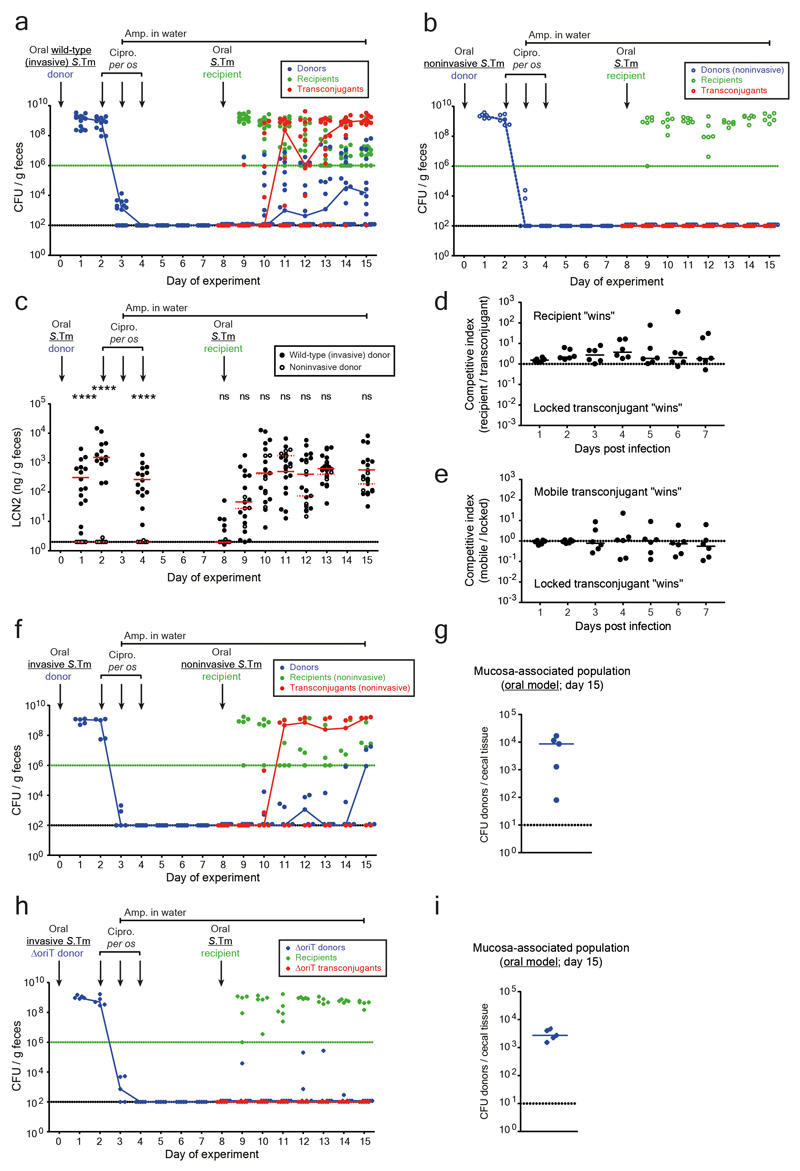
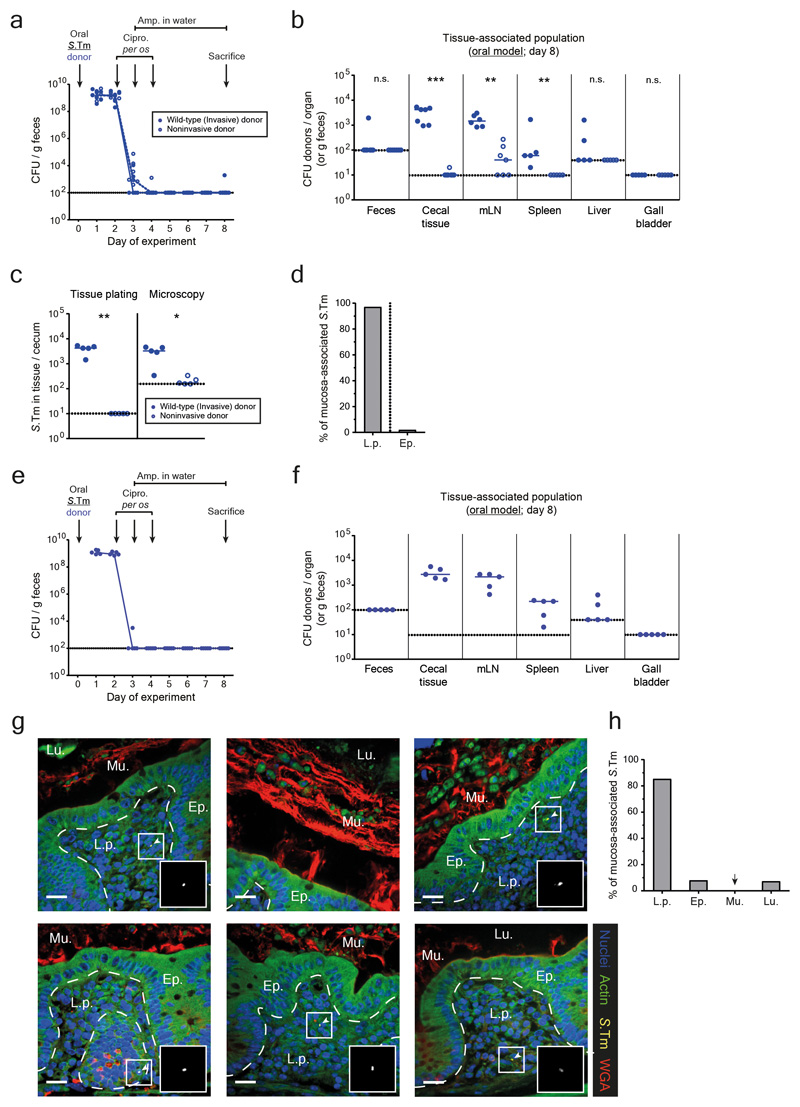
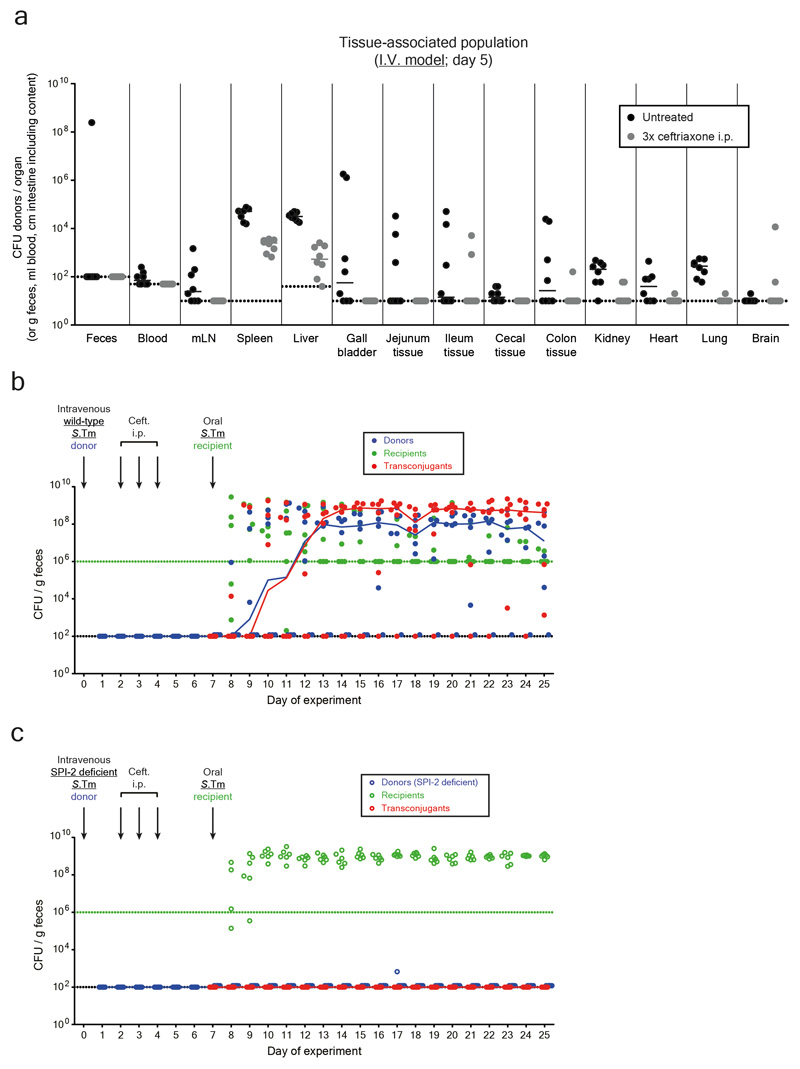
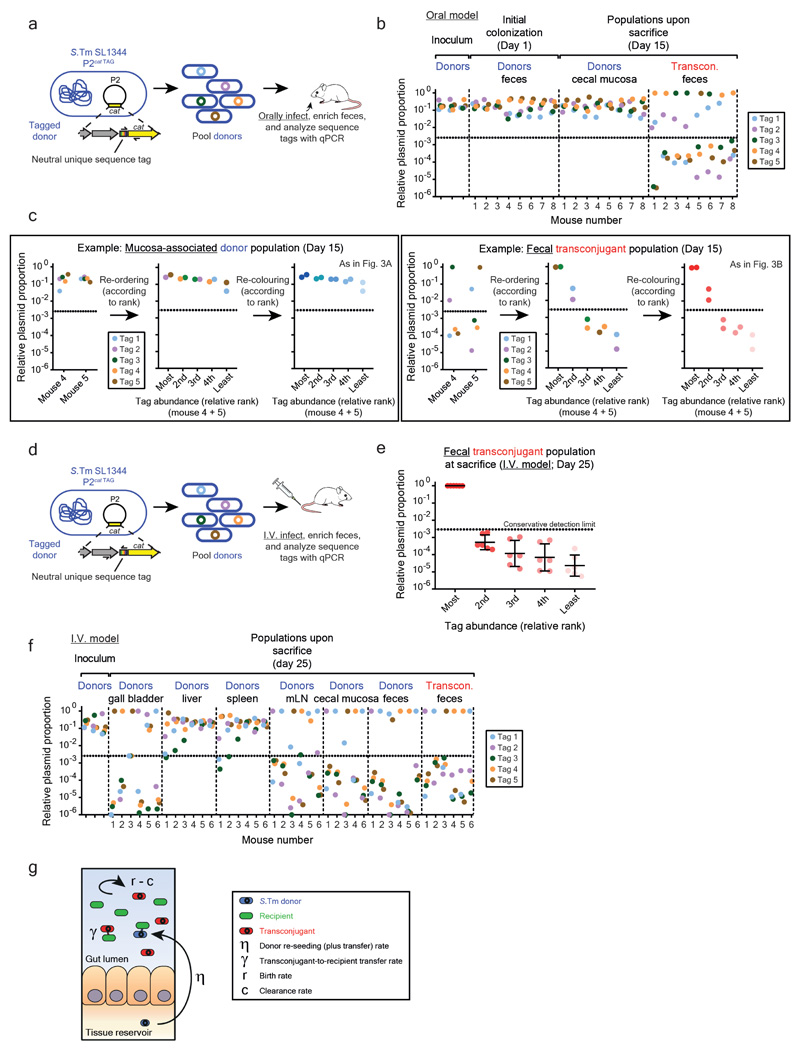
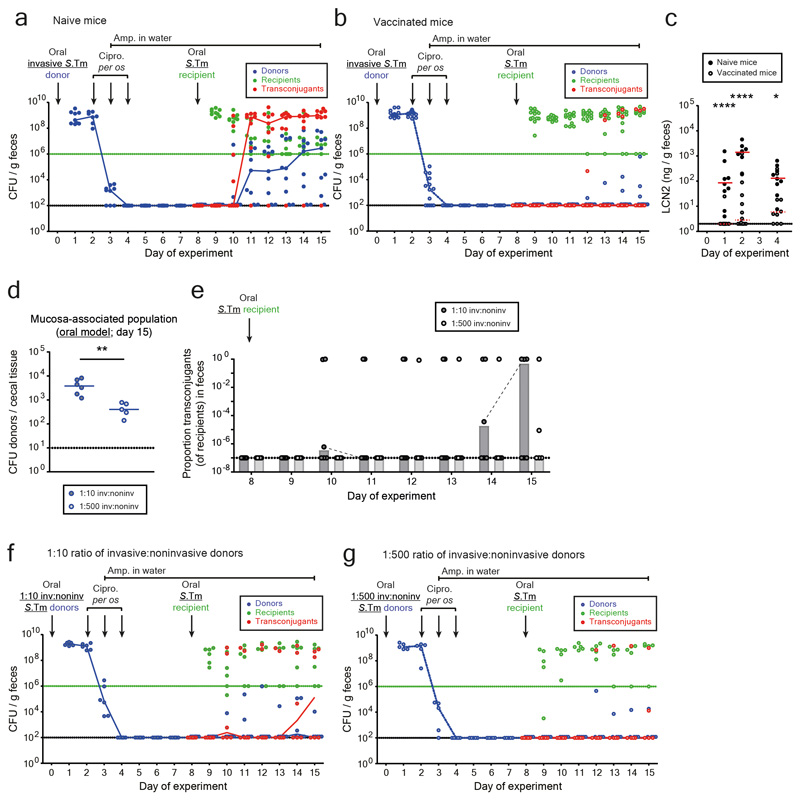
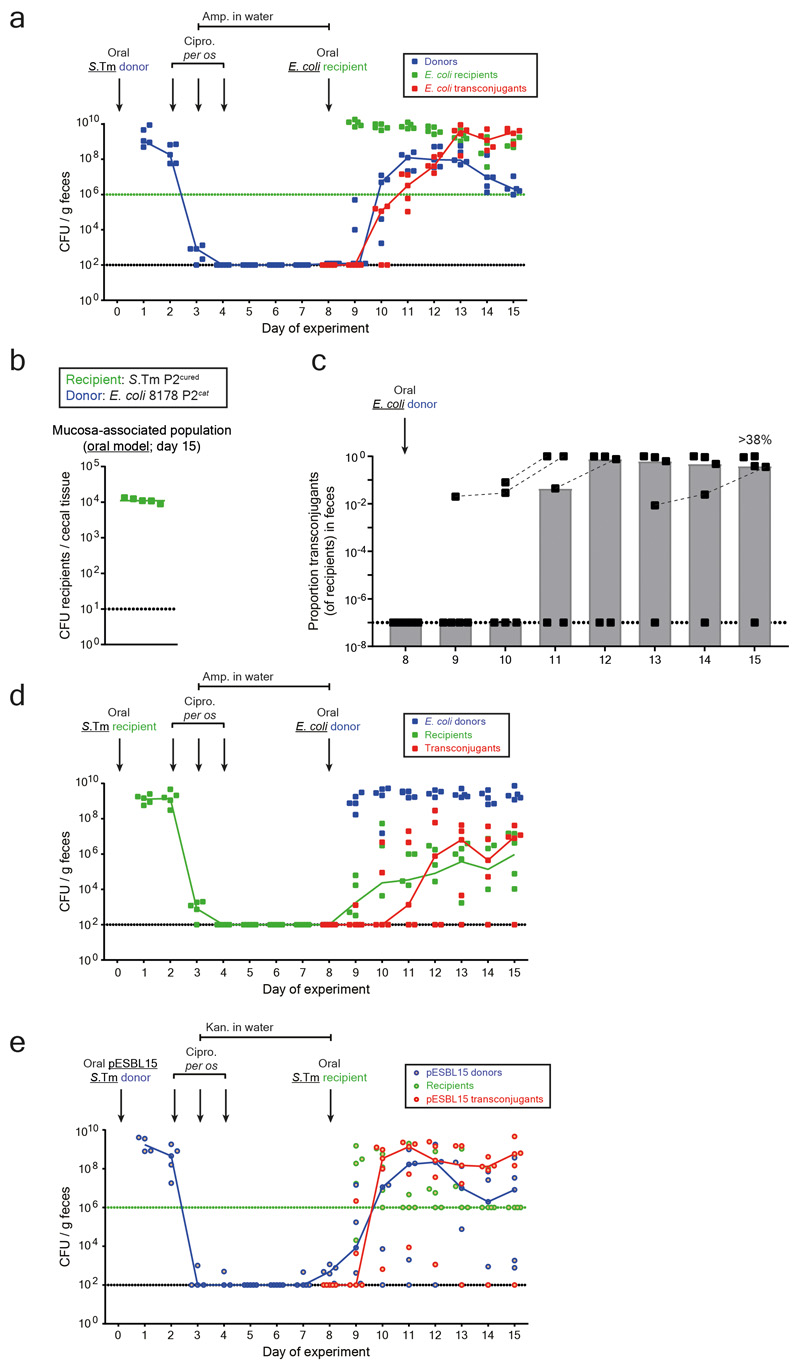
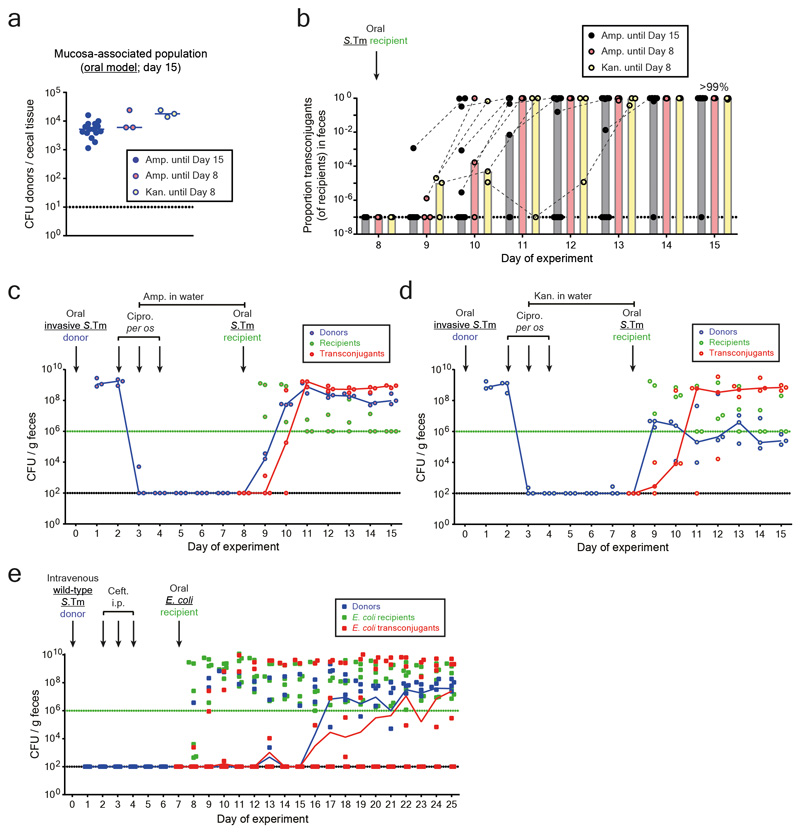
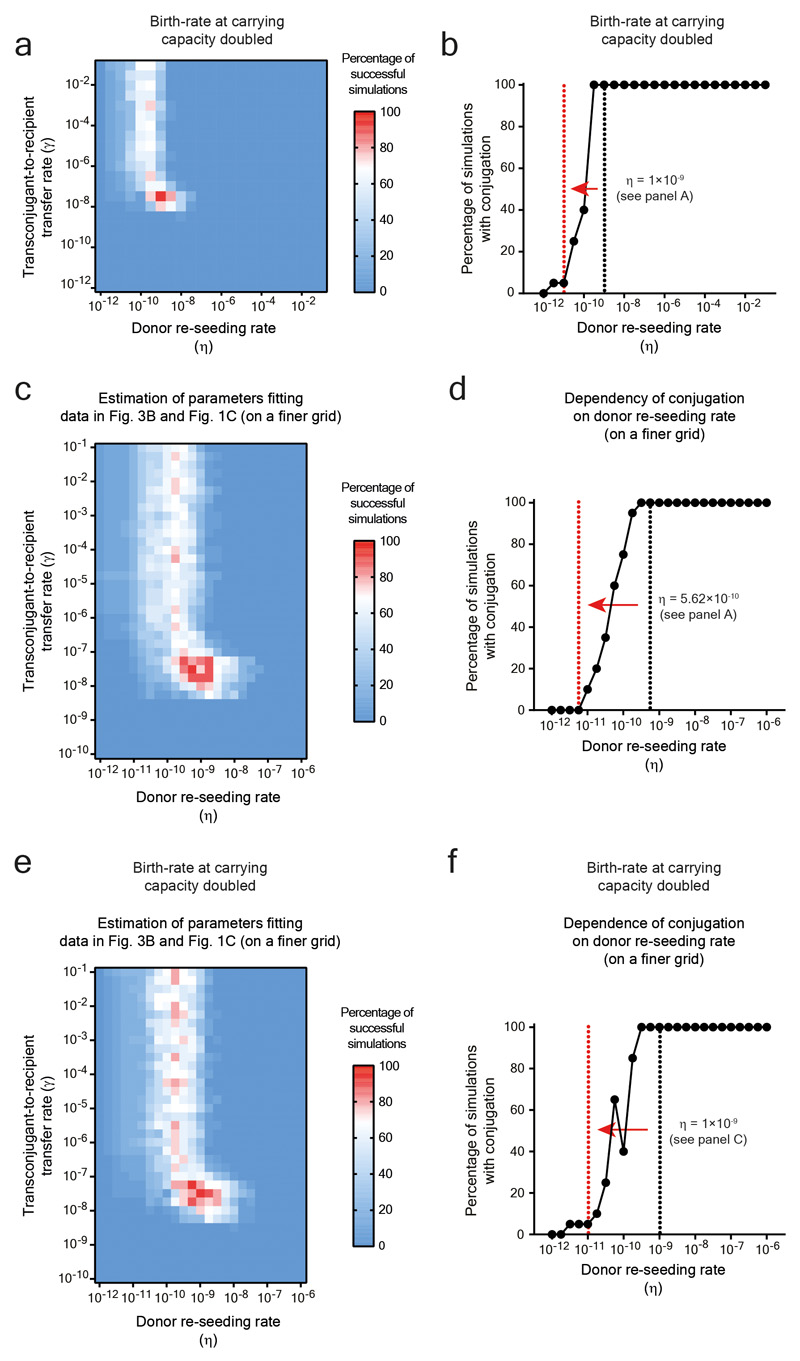
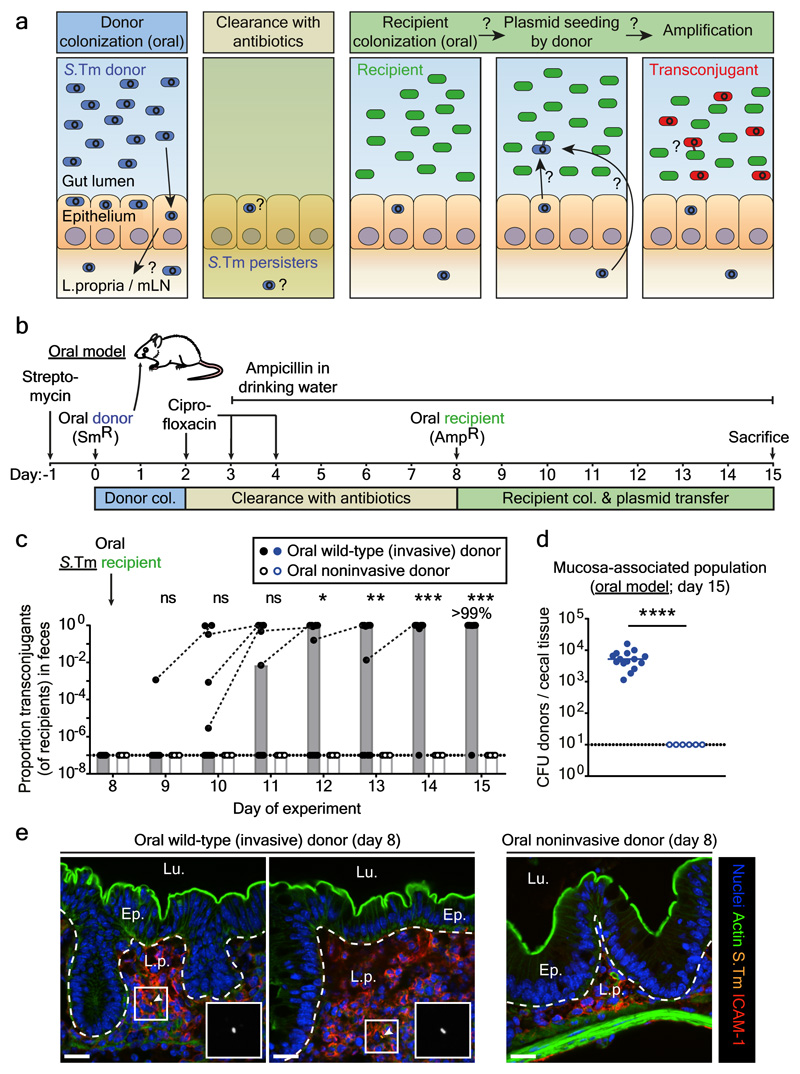
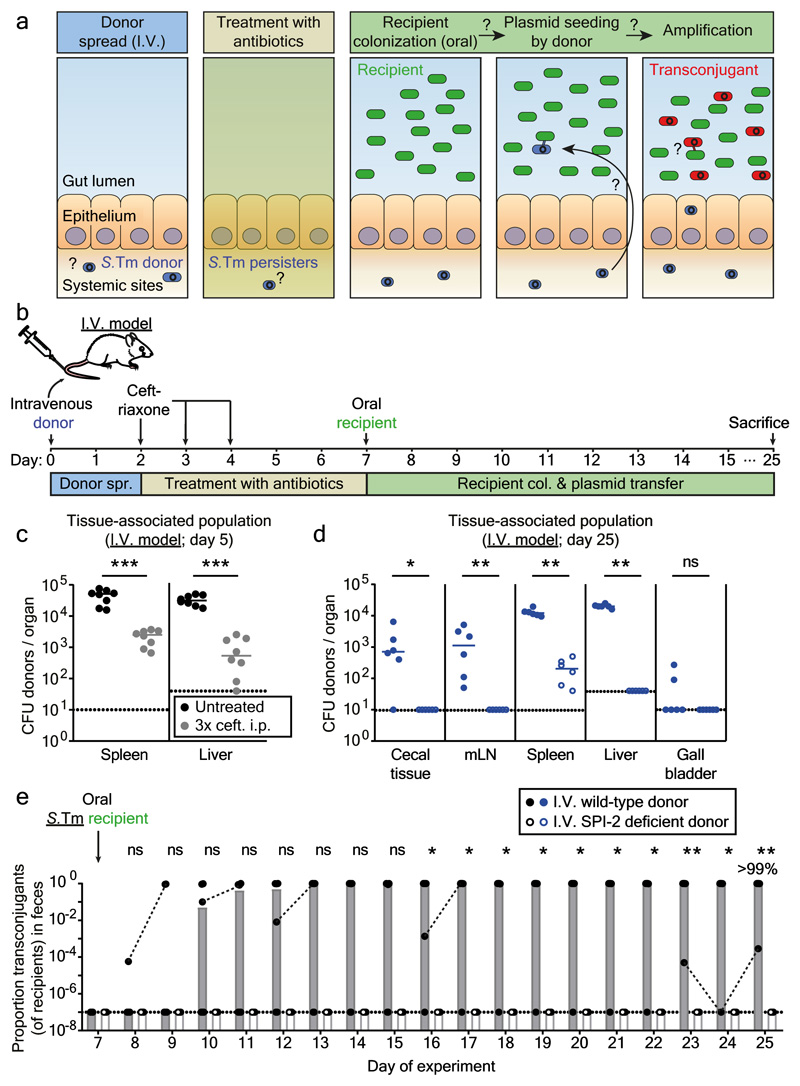
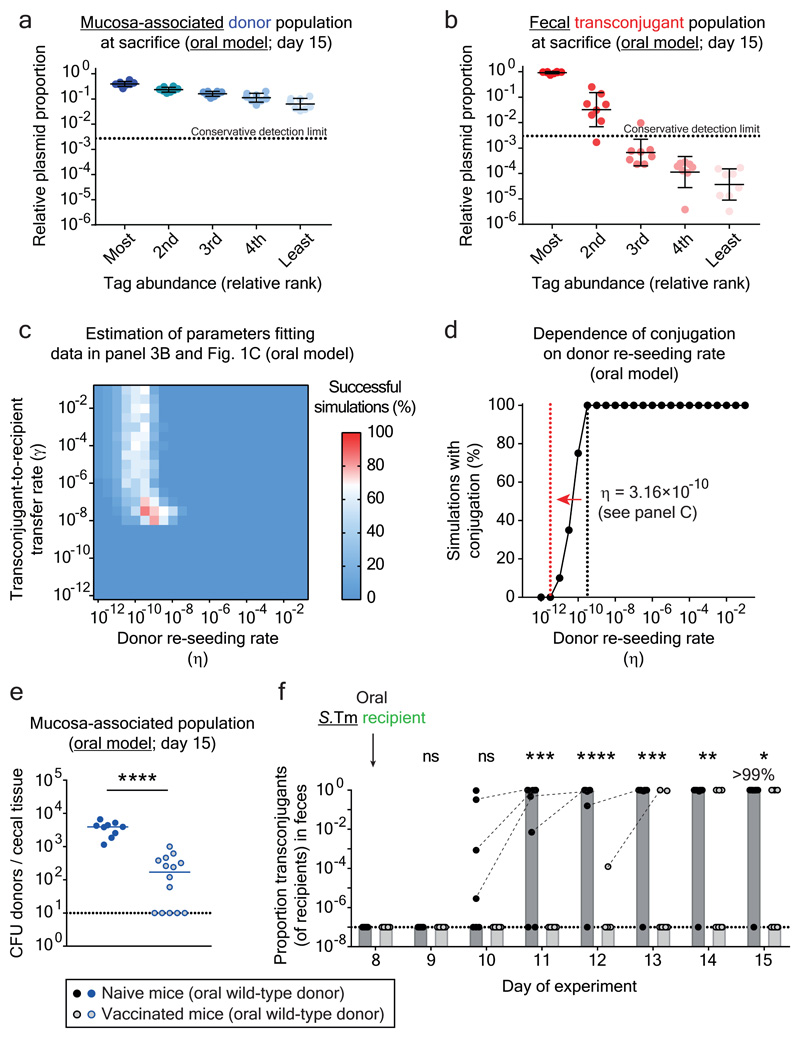
The emergence of antibiotic-resistant bacteria through mutations or the acquisition of genetic material such as resistance plasmids represents a major public health issue. Persisters are subpopulations of bacteria that survive antibiotics by reversibly adapting their physiology, and can promote the emergence of antibiotic-resistant mutants. We investigated whether persisters can also promote the spread of resistance plasmids. In contrast to mutations, the transfer of resistance plasmids requires the co-occurrence of both a donor and a recipient bacterial strain. For our experiments, we chose the facultative intracellular entero-pathogen Salmonella enterica serovar Typhimurium (S. Typhimurium) and Escherichia coli, a common member of the microbiota. S. Typhimurium forms persisters that survive antibiotic therapy in several host tissues. Here we show that tissue-associated S. Typhimurium persisters represent long-lived reservoirs of plasmid donors or recipients. The formation of reservoirs of S. Typhimurium persisters requires Salmonella pathogenicity island (SPI)-1 and/or SPI-2 in gut-associated tissues, or SPI-2 at systemic sites. The re-seeding of these persister bacteria into the gut lumen enables the co-occurrence of donors with gut-resident recipients, and thereby favours plasmid transfer between various strains of Enterobacteriaceae. We observe up to 99% transconjugants within two to three days of re-seeding. Mathematical modelling shows that rare re-seeding events may suffice for a high frequency of conjugation. Vaccination reduces the formation of reservoirs of persisters after oral infection with S. Typhimurium, as well as subsequent plasmid transfer. We conclude that-even without selection for plasmid-encoded resistance genes-small reservoirs of pathogen persisters can foster the spread of promiscuous resistance plasmids in the gut.
抗生素耐药细菌的出现是一个主要的公共卫生问题,其通过突变或获得遗传物质(如耐药质粒)而产生。持留菌是指细菌的亚群,它们通过可逆地改变其生理学来对抗生素产生适应性,从而存活下来,并且可以促进抗生素耐药突变体的出现。我们研究了持留菌是否也可以促进耐药质粒的传播。与突变不同,耐药质粒的转移需要供体和受体细菌菌株同时存在。对于我们的实验,我们选择了兼性细胞内病原体鼠伤寒沙门氏菌(Salmonella enterica serovar Typhimurium,S. Typhimurium)和大肠杆菌,这是微生物群的常见成员。S. Typhimurium 形成的持留菌可以在几种宿主组织中存活抗生素治疗。在这里,我们表明,组织相关的 S. Typhimurium 持留菌是质粒供体或受体的长期存在的储存库。组织相关的 S. Typhimurium 持留菌储存库的形成需要肠道相关组织中的沙门氏菌致病岛(Salmonella pathogenicity island,SPI)-1 和/或 SPI-2,或系统部位的 SPI-2。将这些持留菌重新播种到肠道腔中可以使供体与肠道常驻受体同时存在,从而有利于各种肠杆菌科菌株之间的质粒转移。我们观察到重新播种后两到三天内,转导子的比例高达 99%。数学模型表明,罕见的重新播种事件可能足以实现高频率的转导。接种疫苗可减少 S. Typhimurium 口服感染后持留菌储存库的形成,以及随后的质粒转移。我们的结论是,即使没有选择质粒编码的耐药基因,病原体持留菌的小储存库也可以促进肠道中广泛耐药质粒的传播。