Sher Azam A, Whitehead-Tillery Charles E, Peer Ashley M, Bell Julia A, Vocelle Daniel B, Dippel Joshua T, Zhang Lixin, Mansfield Linda S
Comparative Enteric Diseases Laboratory, Departments of Large Animal Clinical Sciences and Microbiology, Genetics and Immunology, East Lansing, MI 48824, USA.
Comparative Medicine and Integrative Biology Graduate Program, College of Veterinary Medicine, Michigan State University, East Lansing, MI 48824, USA.
Antibiotics (Basel). 2025 Feb 4;14(2):152. doi: 10.3390/antibiotics14020152.
Antibiotic-resistant (AR) bacteria pose an increasing threat to public health, but the dynamics of antibiotic resistance gene (ARG) spread in complex microbial communities are poorly understood. Conjugation is a predominant direct cell-to-cell mechanism for the horizontal gene transfer (HGT) of ARGs. We hypothesized that commensal donor strains would mediate the conjugative transfer of ARGs to phylogenetically distinct bacteria without antibiotic selection pressure in gastrointestinal tracts of mice carrying a human-derived microbiota with undetectable levels of . Our objective was to identify a mouse model to study the factors regulating AR transfer by conjugation in the gut.
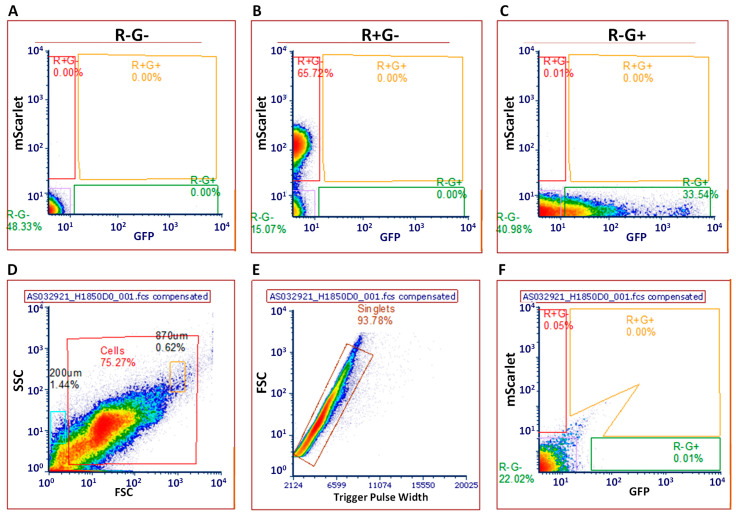
Two donor strains were engineered to carry chromosomally encoded red fluorescent protein, and an ARG- and green fluorescent protein (GFP)-encoding broad host range RP4 conjugative plasmid. Mice were orally gavaged with two donor strains (1) MG1655 or (2) human-derived mouse-adapted LM715-1 and their colonization assessed by culture over time. Fluorescence-activated cell sorting (FACS) and 16S rDNA sequencing were performed to trace plasmid spread to the microbiota.
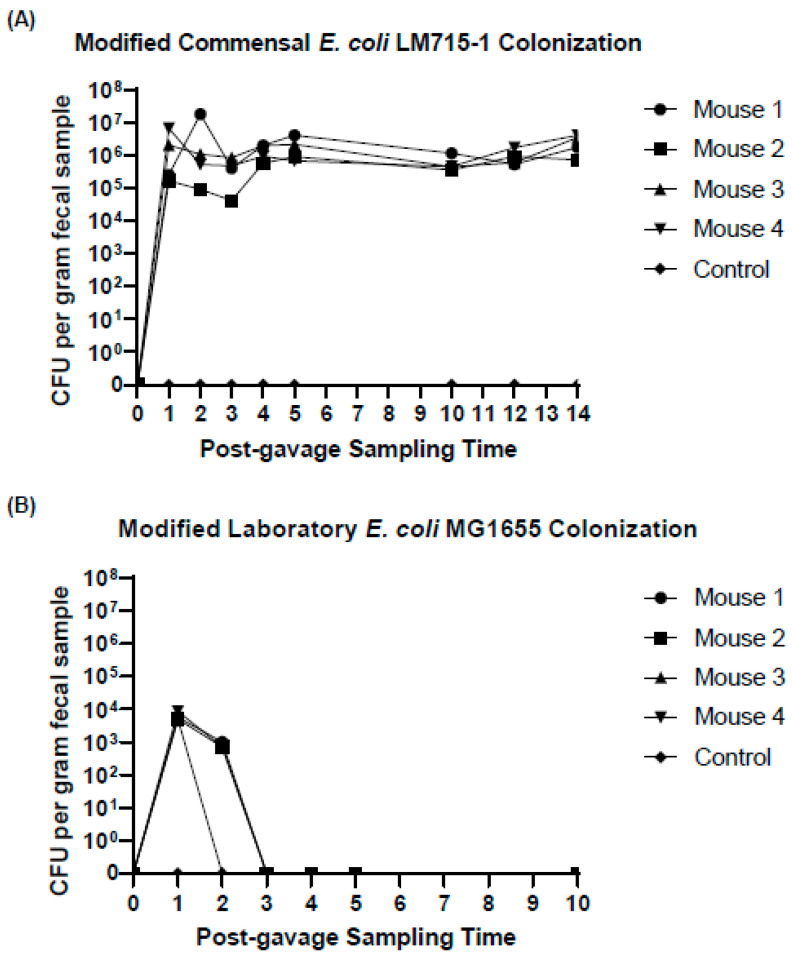
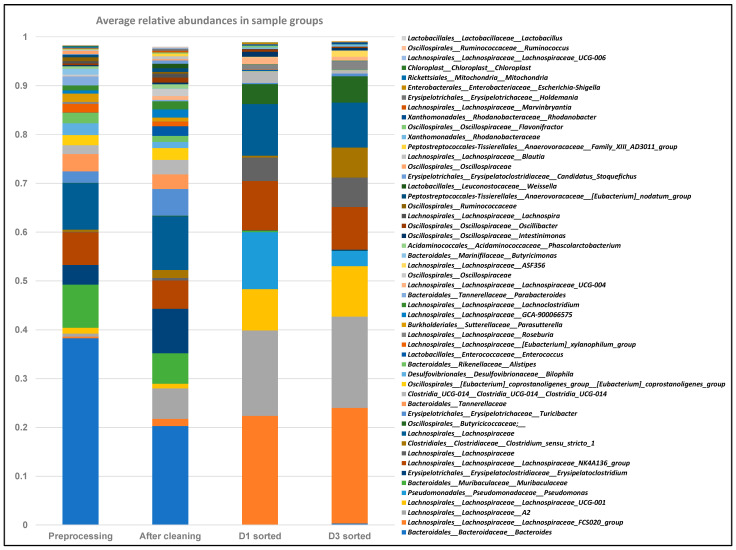
LM715-1 colonized mice for ten days, while MG1655 was not recovered after 72 h. Bacterial cells from fecal samples on days 1 and 3 post inoculation were sorted by FACS. Samples from mice given donor LM715-1 showed an increase in cells expressing green but not red fluorescence compared to pre-inoculation samples. 16S rRNA gene sequencing analysis of FACS GFP positive cells showed that bacterial families Lachnospiraceae, Clostridiaceae, Pseudomonadaceae, Rhodanobacteraceae, Erysipelotrichaceae, Oscillospiraceae, and Butyricicoccaceae were the primary recipients of the RP4 plasmid.
Results show this ARG-bearing conjugative RP4 plasmid spread to diverse human gut bacterial taxa within a live animal where they persisted. These fluorescent marker strategies and human-derived microbiota transplanted mice provided a tractable model for investigating the dynamic spread of ARGs within gut microbiota and could be applied rigorously to varied microbiotas to understand conditions facilitating their spread.
抗生素耐药(AR)细菌对公众健康构成的威胁日益增加,但抗生素耐药基因(ARG)在复杂微生物群落中传播的动态过程却鲜为人知。接合作用是ARG水平基因转移(HGT)的一种主要的直接细胞间机制。我们推测,在携带人类源微生物群且检测不到抗生素的小鼠胃肠道中,共生供体菌株会在无抗生素选择压力的情况下介导ARG向系统发育不同的细菌进行接合转移。我们的目标是确定一种小鼠模型,以研究肠道中通过接合作用调节AR转移的因素。
构建了两种携带染色体编码红色荧光蛋白以及编码ARG和绿色荧光蛋白(GFP)的广宿主范围RP4接合质粒的供体菌株。给小鼠口服两种供体菌株(1)MG1655或(2)人类源小鼠适应株LM715-1,并通过培养随时间评估它们的定殖情况。进行荧光激活细胞分选(FACS)和16S rDNA测序以追踪质粒向微生物群的传播。
LM715-1在小鼠体内定殖了十天,而MG1655在72小时后未被检出。对接种后第1天和第3天粪便样本中的细菌细胞进行FACS分选。与接种前样本相比,给予供体菌株LM715-1的小鼠样本中表达绿色而非红色荧光的细胞有所增加。对FACS GFP阳性细胞进行的16S rRNA基因测序分析表明,毛螺菌科、梭菌科、假单胞菌科、红杆菌科、丹毒丝菌科、颤螺菌科和丁酸球菌科是RP4质粒的主要受体菌。
结果表明,这种携带ARG的接合型RP4质粒在活体动物体内传播到多种人类肠道细菌类群并在其中持续存在。这些荧光标记策略和人类源微生物群移植小鼠为研究ARG在肠道微生物群中的动态传播提供了一个易于处理的模型,并且可以严格应用于各种微生物群,以了解促进其传播的条件。