National Risk Assessment Laboratory for Antimicrobial Resistance of Animal Original Bacteria, College of Veterinary Medicine, South China Agricultural Universitygrid.20561.30, Guangzhou, China.
Guangdong Provincial Key Laboratory of Veterinary Pharmaceutics Development and Safety Evaluation, South China Agricultural Universitygrid.20561.30, Guangzhou, China.
mSystems. 2022 Oct 26;7(5):e0024822. doi: 10.1128/msystems.00248-22. Epub 2022 Aug 30.
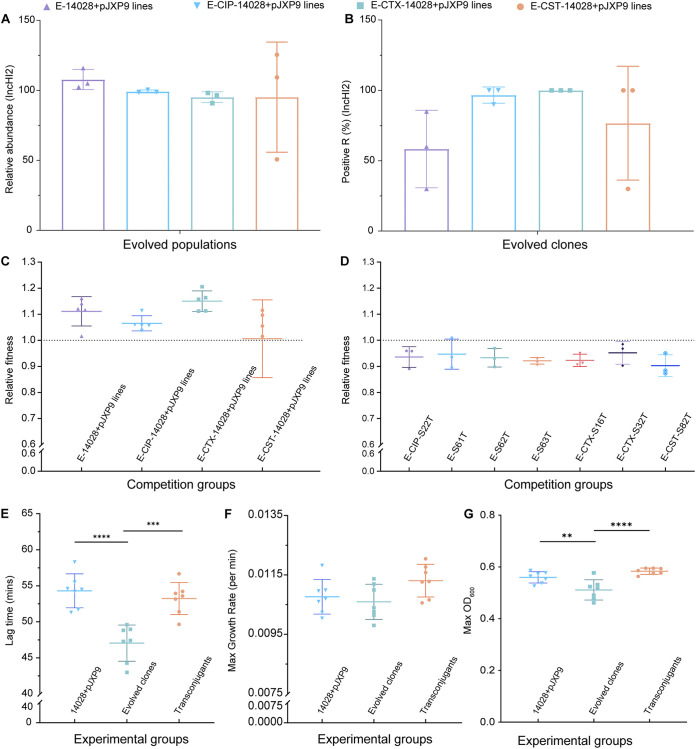
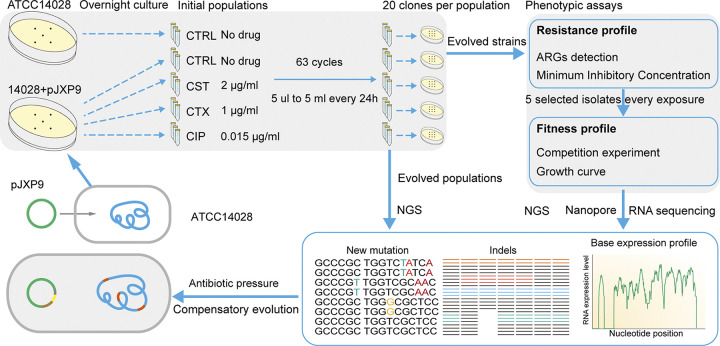
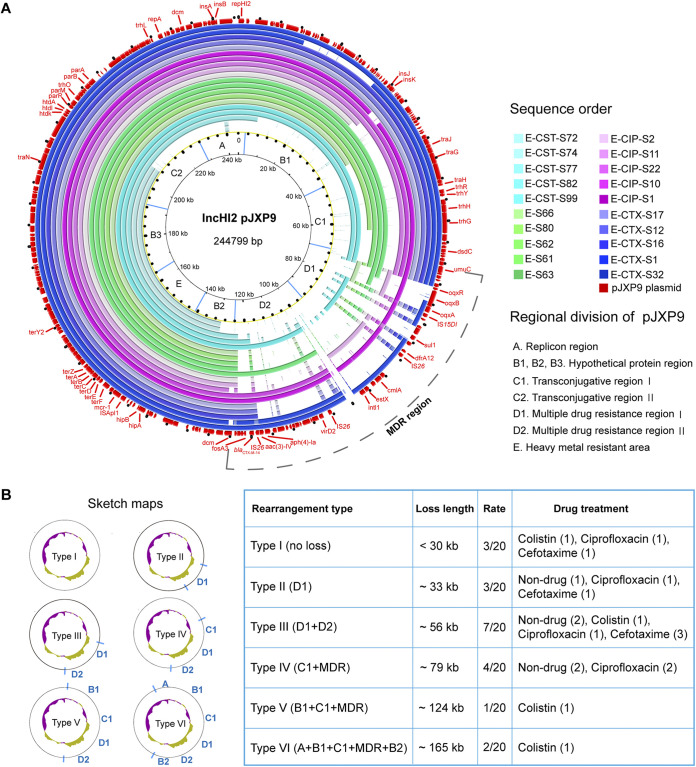
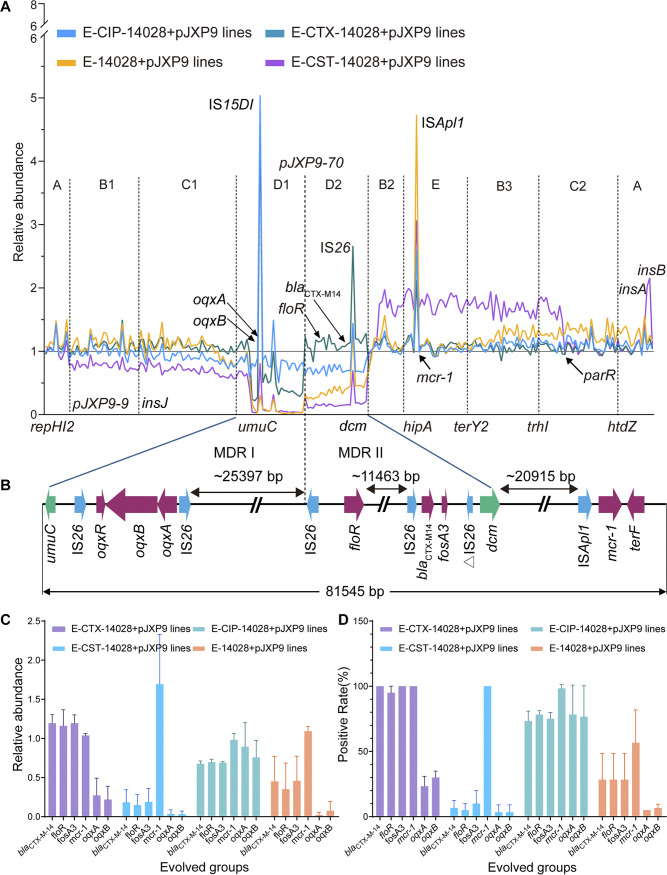
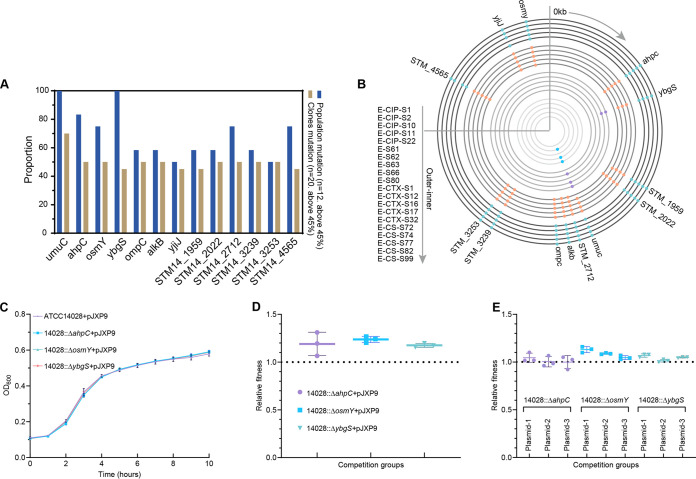
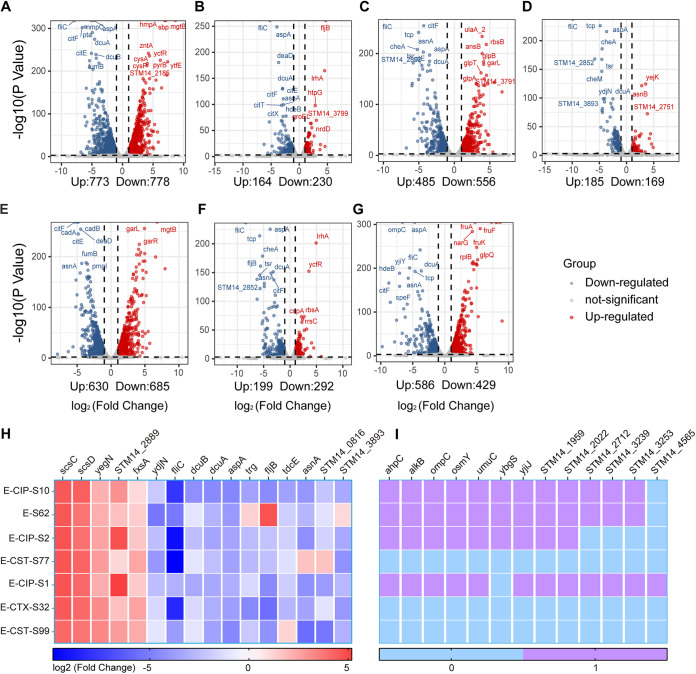
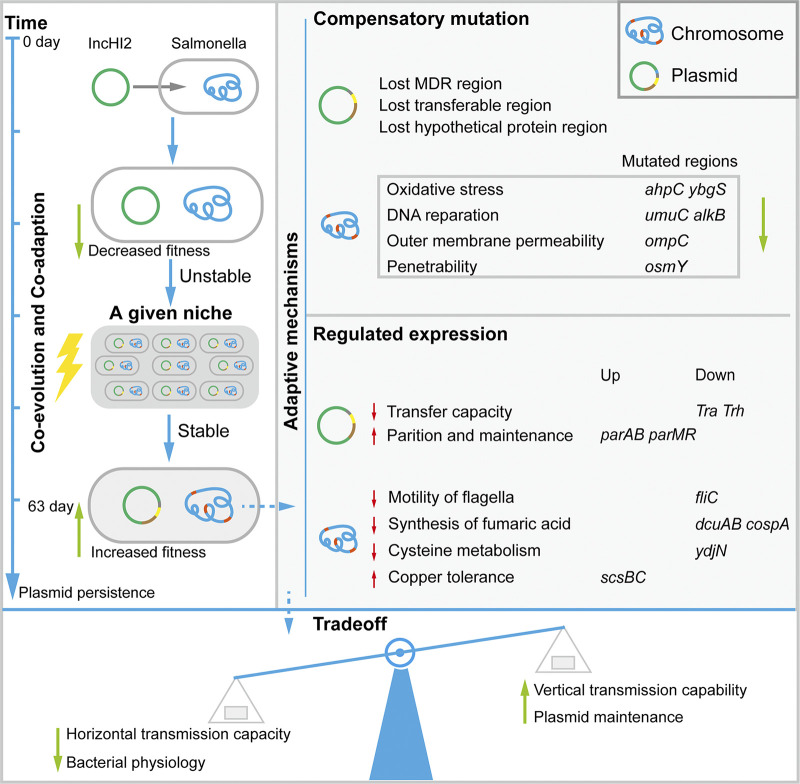
Understanding the fitness costs associated with plasmid carriage is a key to better understanding the mechanisms of plasmid maintenance in bacteria. In the current work, we performed multiple serial passages (63 days, 627.8 generations) to identify the compensatory mechanisms that Salmonella enterica serovar Typhimurium ATCC 14028 utilized to maintain the multidrug-resistant (MDR) IncHI2 plasmid pJXP9 in the presence and absence of antibiotic selection. The plasmid pJXP9 was maintained for hundreds of generations even without drug exposure. Endpoint evolved (the endpoint of evolution) S. Typhimurium bearing evolved plasmids displayed decreased growth lag times and a competitive advantage over ancestral pJXP9 plasmid-carrying ATCC 14028 strains. Genomic and transcriptomic analyses revealed that the fitness costs of carrying pJXP9 were derived from both specific plasmid genes and particularly the MDR regions and conjugation transfer region I and conflicts resulting from chromosome-plasmid gene interactions. Correspondingly, plasmid deletions of these regions could compensate for the fitness cost that was due to the plasmid carriage. The deletion extent and range of large fragments on the evolved plasmids, as well as the trajectory of deletion mutation, were related to the antibiotic treatment conditions. Furthermore, it is also adaptive evolution that chromosomal gene mutations and altered mRNA expression correlated with changed physiological functions of the bacterium, such as decreased flagellar motility, increased oxidative stress, and fumaric acid synthesis but increased Cu resistance in a given niche. Our findings indicated that plasmid maintenance evolves via a plasmid-bacterium adaptative evolutionary process that is a trade-off between vertical and horizontal transmission costs along with associated alterations in host bacterial physiology. The current idea that compensatory evolution processes can account for the "plasmid paradox" phenomenon associated with the maintenance of large costly plasmids in host bacteria has attracted much attention. Although many compensatory mutations have been discovered through various plasmid-host bacterial evolution experiments, the basis of the compensatory mechanisms and the nature of the bacteria themselves to address the fitness costs remain unclear. In addition, the genetic backgrounds of plasmids and strains involved in previous research were limited and clinical drug resistance such as the poorly understood compensatory evolution among clinically dominant multidrug-resistant plasmids or clones was rarely considered. The IncHI2 plasmid is widely distributed in Salmonella Typhimurium and plays an important role in the emergence and rapid spread of its multidrug resistance. In this study, the predominant multidrug-resistant IncHI2 plasmid pJXP9 and the standard Salmonella Typhimurium ATCC 14028 bacteria were used for evolution experiments under laboratory conditions. Our findings indicated that plasmid maintenance through experimental evolution of plasmid-host bacteria is a trade-off between increasing plasmid vertical transmission and impairing its horizontal transmission and bacterial physiological phenotypes, in which compensatory mutations and altered chromosomal expression profiles collectively contribute to alleviating plasmid-borne fitness cost. These results provided potential insights into understanding the relationship of coexistence between plasmids encoding antibiotic resistance and their bacterial hosts and provided a clue to the adaptive forces that shaped the evolution of these plasmids within bacteria and to predicting the evolution trajectory of antibiotic resistance.
了解与质粒携带相关的适应代价是更好地理解细菌中质粒维持机制的关键。在目前的工作中,我们进行了多次连续传代(63 天,627.8 代),以确定鼠伤寒沙门氏菌血清型 Typhimurium ATCC 14028 用于在存在和不存在抗生素选择的情况下维持多药耐药(MDR)IncHI2 质粒 pJXP9 所利用的补偿机制。即使没有药物暴露,pJXP9 质粒也能维持数百代。进化终点(进化的终点)携带进化质粒的鼠伤寒沙门氏菌表现出生长滞后时间缩短和相对于携带原始 pJXP9 质粒的 ATCC 14028 菌株的竞争优势。基因组和转录组分析表明,携带 pJXP9 的适应代价既来自特定的质粒基因,也来自 MDR 区域和接合转移区 I,以及来自染色体-质粒基因相互作用的冲突。相应地,这些区域的质粒缺失可以弥补由于质粒携带而导致的适应代价。进化质粒上大片段的缺失程度和范围,以及缺失突变的轨迹,与抗生素处理条件有关。此外,与细菌生理功能改变相关的染色体基因突变和 mRNA 表达的改变,如鞭毛运动能力降低、氧化应激增加、富马酸合成增加和特定小生境中铜抗性增加,也是适应性进化的结果。我们的研究结果表明,质粒维持通过质粒-细菌适应性进化过程进化,该过程是垂直和水平传播成本之间的权衡,同时伴随着宿主细菌生理功能的改变。目前认为,补偿进化过程可以解释与宿主细菌中大型昂贵质粒维持相关的“质粒悖论”现象,这一观点引起了广泛关注。尽管通过各种质粒-宿主细菌进化实验发现了许多补偿突变,但补偿机制的基础和细菌本身的性质仍不清楚,以解决适应代价问题。此外,以前研究中涉及的质粒和菌株的遗传背景有限,并且很少考虑临床耐药性,例如临床上占主导地位的多药耐药质粒或克隆之间补偿进化的了解甚少。IncHI2 质粒广泛分布于鼠伤寒沙门氏菌中,在其多药耐药性的出现和快速传播中起重要作用。在这项研究中,使用主要的多药耐药 IncHI2 质粒 pJXP9 和标准鼠伤寒沙门氏菌 ATCC 14028 细菌在实验室条件下进行了进化实验。我们的研究结果表明,通过质粒-宿主细菌的实验进化来维持质粒是增加质粒垂直传播和损害其水平传播和细菌生理表型之间的权衡,其中补偿突变和改变的染色体表达谱共同有助于减轻质粒携带的适应代价。这些结果为理解编码抗生素耐药性的质粒与其细菌宿主共存的关系提供了潜在的见解,并为塑造这些质粒在细菌内进化的适应性力量提供了线索,并预测了抗生素耐药性的进化轨迹。