Department of Internal Medicine, General University Hospital of Alicante, calle Pintor Baeza, 12, 03010, Alicante, Spain.
Department of Clinical Medicine, Miguel Hernandez University of Elche de Elche, Sant Joan d'Alacant, Alicante, Spain.
BMC Med Res Methodol. 2019 Sep 5;19(1):184. doi: 10.1186/s12874-019-0819-4.
This article describes a bibliometric review of the scientific production, geographical distribution, collaboration, impact, and subject area focus of pneumonia research indexed on the Web of Science over a 15-year period.
We searched the Web of Science database using the Medical Subject Heading (MeSH) of "Pneumonia" from January 1, 2001 to December 31, 2015. The only document types we studied were original articles and reviews, analyzing descriptive indicators by five-year periods and the scientific production by country, adjusting for population, economic, and research-related parameters.
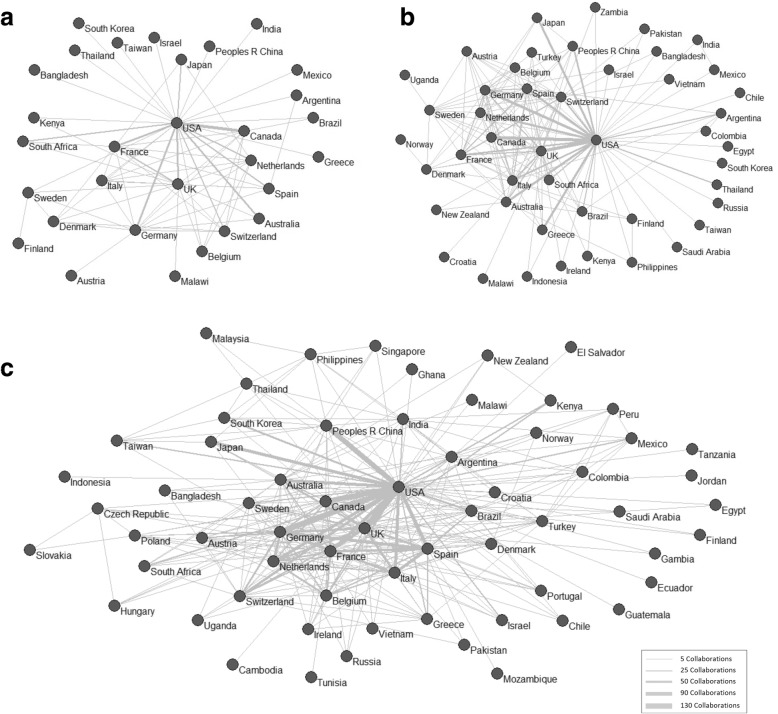
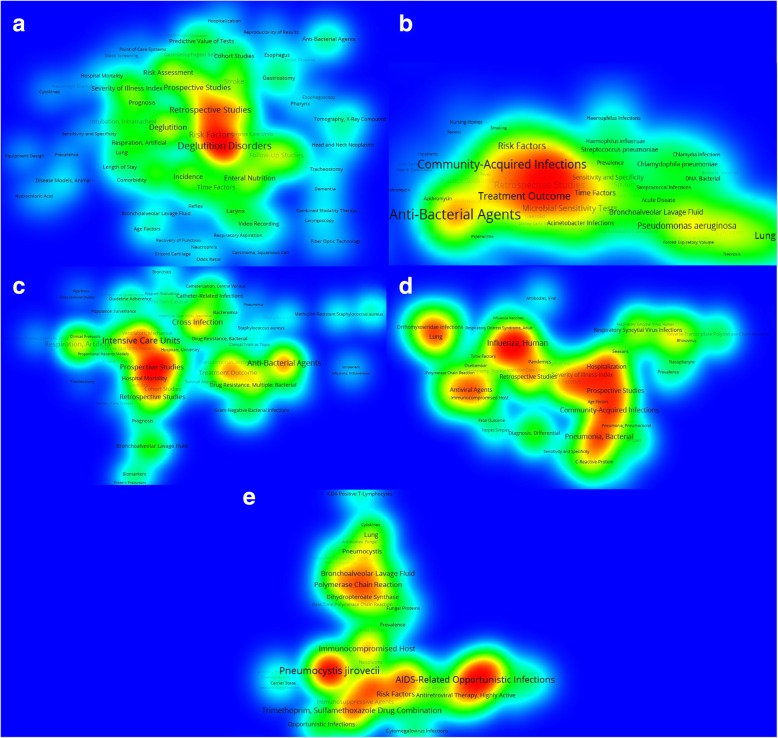
A total of 22,694 references were retrieved. The number of publications increased steadily over time, from 981 publications in 2001 to 1977 in 2015 (R = 0.956). The most productive country was the USA (38.49%), followed by the UK (7.18%) and Japan (5.46%). Research production from China increased by more than 1000%. By geographical area, North America (42.08%) and Europe (40.79%) were most dominant. Scientific production in low- and middle-income countries more than tripled, although their overall contribution to the field remained limited (< 15%). Overall, 18.8% of papers were the result of an international collaboration, although this proportion was much higher in sub-Saharan Africa (46.08%) and South Asia (23.43%). According to the specific MeSH terms used, articles focused mainly on "Pneumonia, Bacterial" (19.99%), followed by "Pneumonia, Pneumococcal" (7.02%) and "Pneumonia, Ventilator-Associated" (6.79%).
Pneumonia research increased steadily over the 15-year study period, with Europe and North America leading scientific production. About a fifth of all papers reflected international collaborations, and these were most evident in papers from sub-Saharan Africa and South Asia.
本文描述了一项文献计量学综述,对 2001 年 1 月 1 日至 2015 年 12 月 31 日期间在 Web of Science 上索引的肺炎研究的科学产出、地理分布、合作、影响和主题领域重点进行了描述。
我们使用医学主题词(MeSH)“肺炎”在 Web of Science 数据库中进行搜索,时间范围为 2001 年 1 月 1 日至 2015 年 12 月 31 日。我们仅研究了原始文章和综述这两种文献类型,通过五年期和国家的科学产出来分析描述性指标,并根据人口、经济和研究相关参数进行了调整。
共检索到 22694 篇参考文献。随着时间的推移,出版物数量稳步增加,从 2001 年的 981 篇增加到 2015 年的 1977 篇(R=0.956)。最具生产力的国家是美国(38.49%),其次是英国(7.18%)和日本(5.46%)。中国的研究产出增长了 1000%以上。按地理区域划分,北美(42.08%)和欧洲(40.79%)占据主导地位。中低收入国家的科学产出增加了两倍多,尽管它们在该领域的总体贡献仍然有限(<15%)。总体而言,18.8%的论文是国际合作的结果,尽管在撒哈拉以南非洲(46.08%)和南亚(23.43%)这一比例要高得多。根据使用的特定 MeSH 术语,文章主要关注“细菌性肺炎”(19.99%),其次是“肺炎球菌性肺炎”(7.02%)和“呼吸机相关性肺炎”(6.79%)。
在 15 年的研究期间,肺炎研究的数量稳步增加,欧洲和北美处于领先地位。大约五分之一的论文反映了国际合作,在撒哈拉以南非洲和南亚的论文中表现得最为明显。