School of Biology, Faculty of Biological Sciences, University of Leeds, Leeds, LS2 9JT, UK.
Institute for Global Food Security, School of Biological Sciences, Queens University, Belfast, BT7 1NN, UK.
BMC Biol. 2019 Sep 5;17(1):70. doi: 10.1186/s12915-019-0689-6.
Strigolactones (SLs) are an important class of carotenoid-derived signalling molecule in plants, which function both as exogenous signals in the rhizosphere and as endogenous plant hormones. In flowering plants, SLs are synthesized by a core pathway of four enzymes and are perceived by the DWARF14 (D14) receptor, leading to degradation of SMAX1-LIKE7 (SMXL7) target proteins in a manner dependent on the SCF ubiquitin ligase. The evolutionary history of SLs is poorly understood, and it is not clear whether SL synthesis and signalling are present in all land plant lineages, nor when these traits evolved.
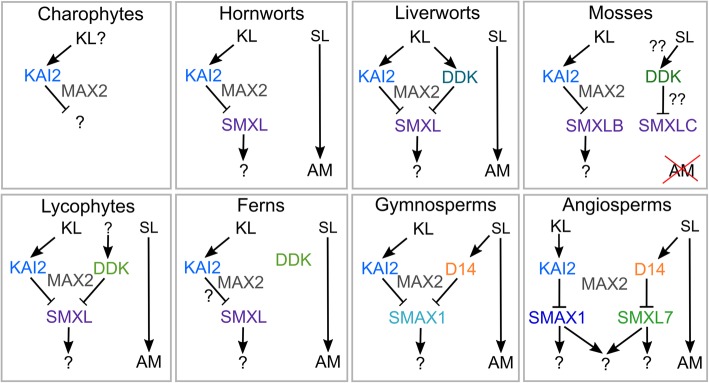
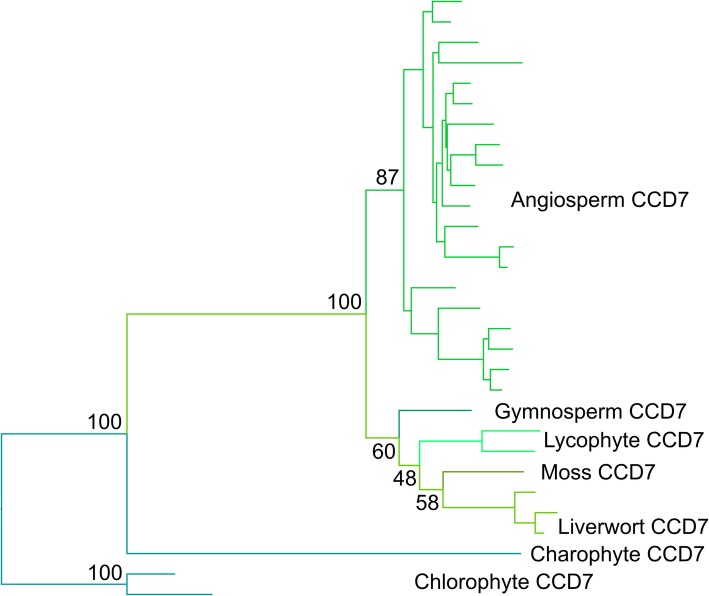
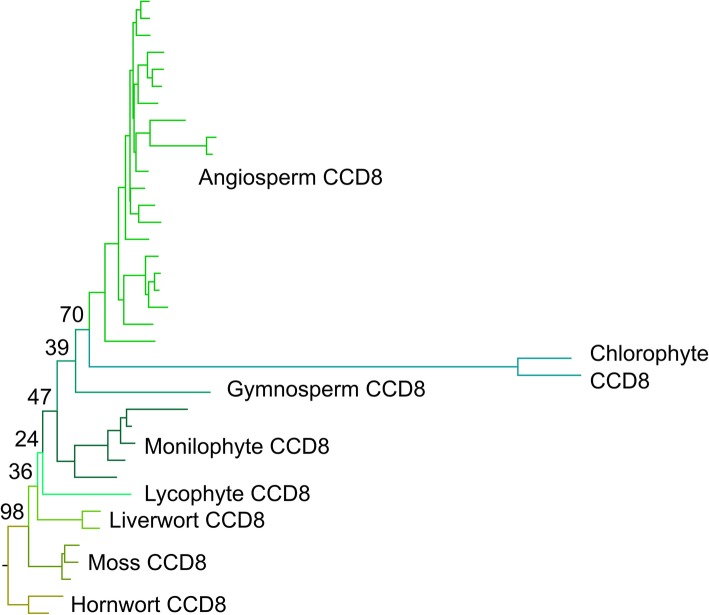
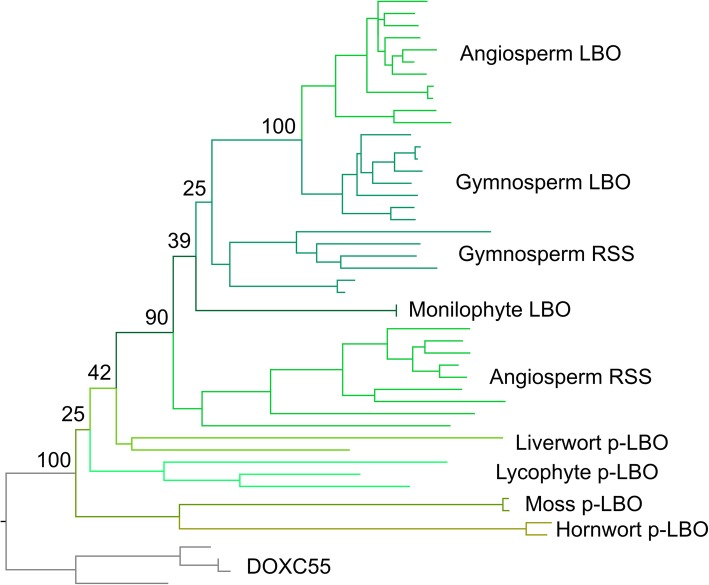
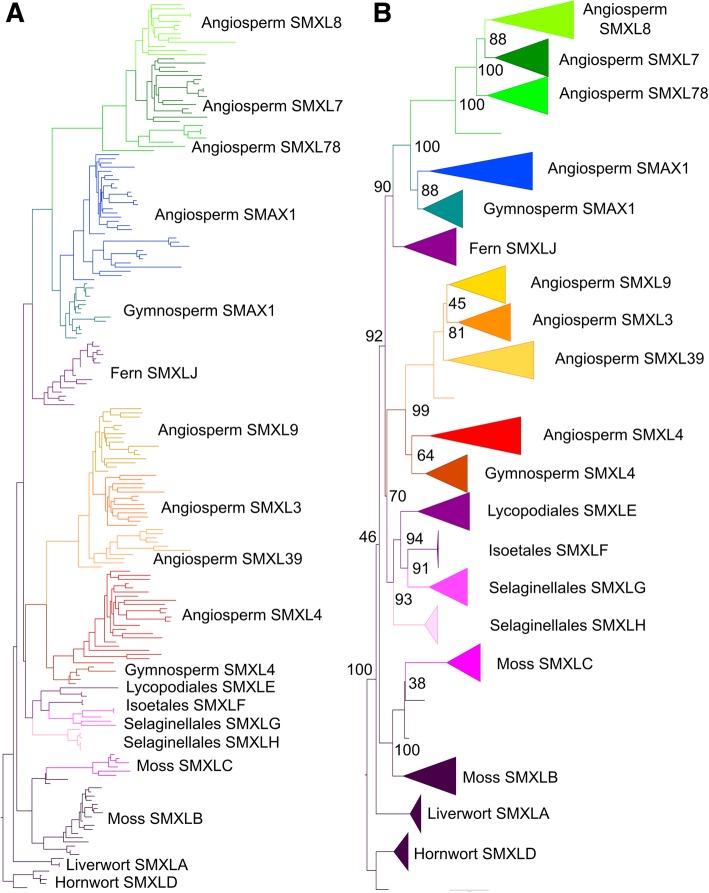
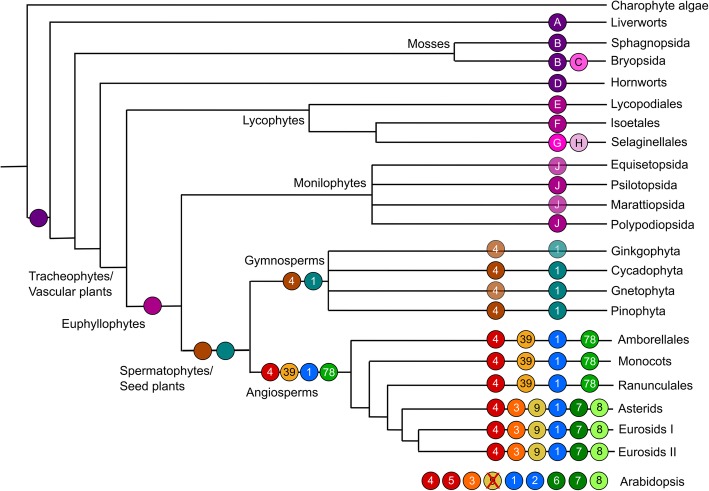
We have utilized recently-generated genomic and transcriptomic sequences from across the land plant clade to resolve the origin of each known component of SL synthesis and signalling. We show that all enzymes in the core SL synthesis pathway originated at or before the base of land plants, consistent with the previously observed distribution of SLs themselves in land plant lineages. We also show that the late-acting enzyme LATERAL BRANCHING OXIDOREDUCTASE (LBO) may be considerably more ancient than previously thought. We perform a detailed phylogenetic analysis of SMXL proteins and show that specific SL target proteins only arose in flowering plants. We also assess diversity and protein structure in the SMXL family, identifying several previously unknown clades.
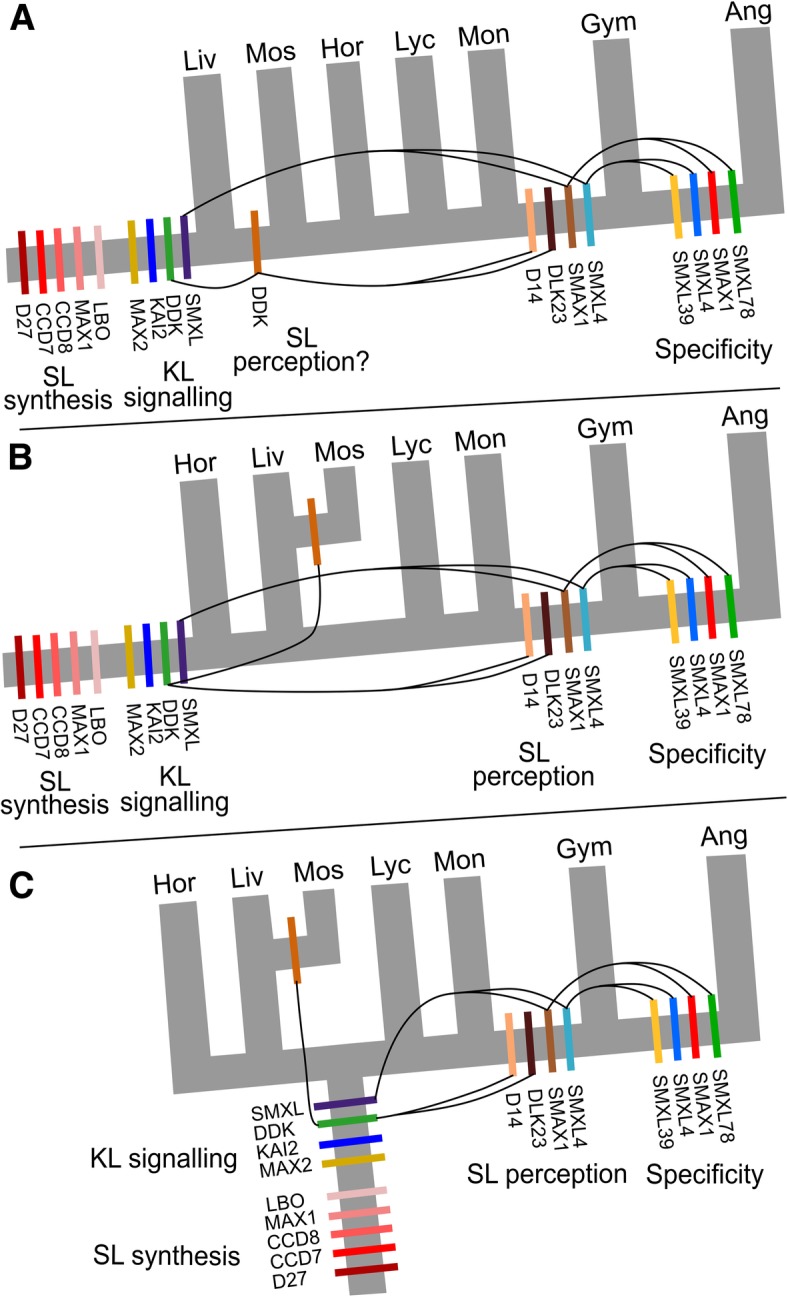
Overall, our results suggest that SL synthesis is much more ancient than canonical SL signalling, consistent with the idea that SLs first evolved as rhizosphere signals and were only recruited much later as hormonal signals.
独脚金内酯(SLs)是植物中一类重要的类胡萝卜素衍生信号分子,它既是根际的外源性信号,又是内源性植物激素。在开花植物中,SLs 由四个酶的核心途径合成,并被 DWARF14(D14)受体感知,导致 SMAX1-LIKE7(SMXL7)靶蛋白在依赖于 SCF 泛素连接酶的方式中降解。SLs 的进化历史知之甚少,目前尚不清楚 SL 合成和信号转导是否存在于所有陆地植物谱系中,也不清楚这些特征何时进化而来。
我们利用陆地植物进化枝中最新生成的基因组和转录组序列,解决了已知 SL 合成和信号转导的每个成分的起源问题。我们表明,核心 SL 合成途径中的所有酶都起源于或早于陆地植物的基础,这与 SL 本身在陆地植物谱系中的分布一致。我们还表明,晚期作用的酶侧支分支氧化还原酶(LBO)可能比以前认为的要古老得多。我们对 SMXL 蛋白进行了详细的系统发育分析,并表明特定的 SL 靶蛋白仅在开花植物中出现。我们还评估了 SMXL 家族的多样性和蛋白质结构,确定了几个以前未知的分支。
总的来说,我们的结果表明,SL 合成比典型的 SL 信号转导要古老得多,这与 SL 首先作为根际信号进化,然后作为激素信号被招募的观点一致。