De Luca Daniele, Kooistra Wiebe H C F, Sarno Diana, Gaonkar Chetan C, Piredda Roberta
Department of Integrative Marine Ecology, Stazione Zoologica Anton Dohrn, Napoli, Italy.
Department of Oceanography, Texas A&M University, College Station, TX, United States of America.
PeerJ. 2019 Aug 19;7:e7410. doi: 10.7717/peerj.7410. eCollection 2019.
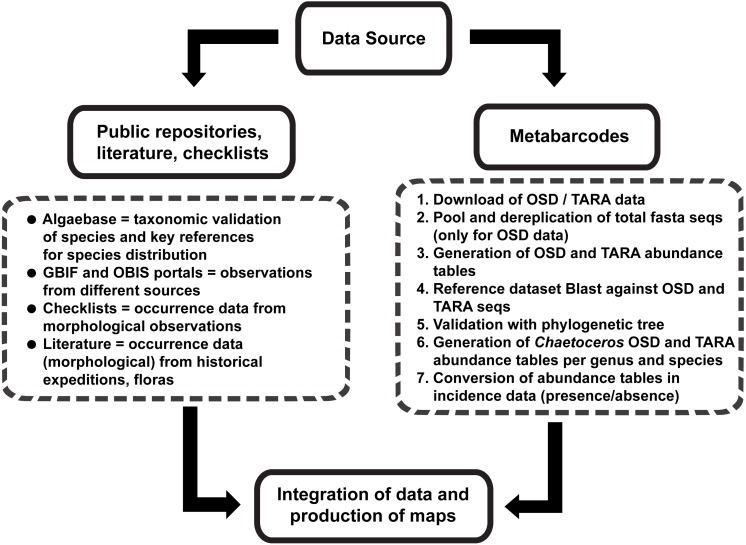
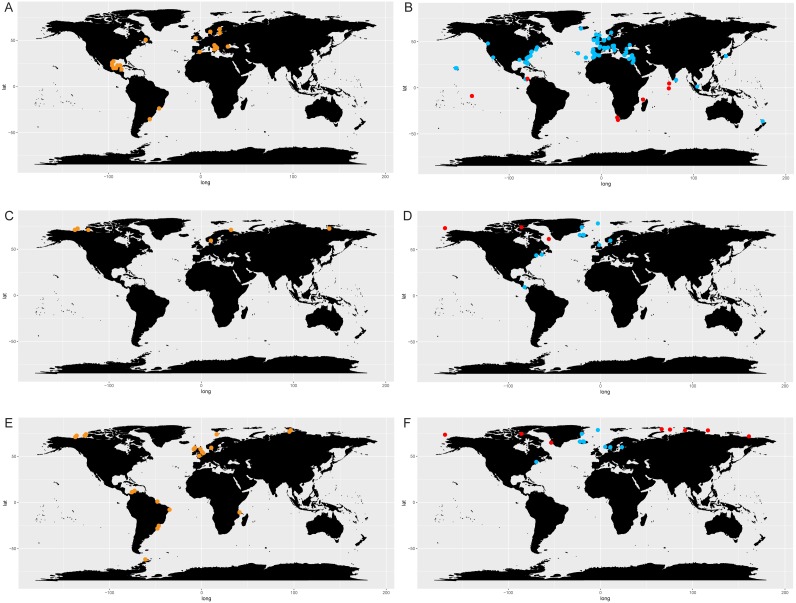
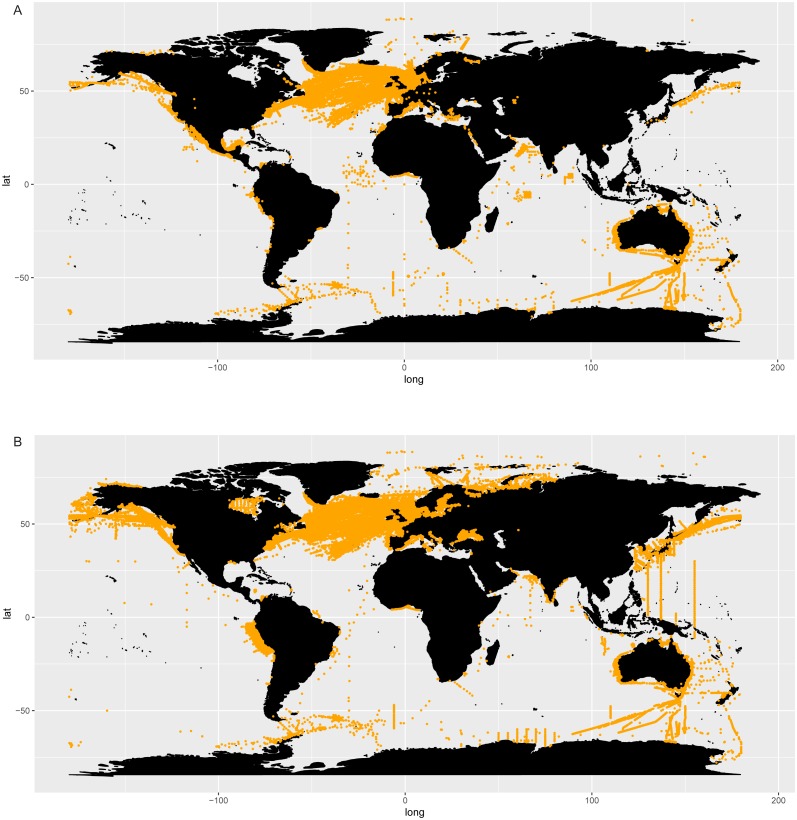
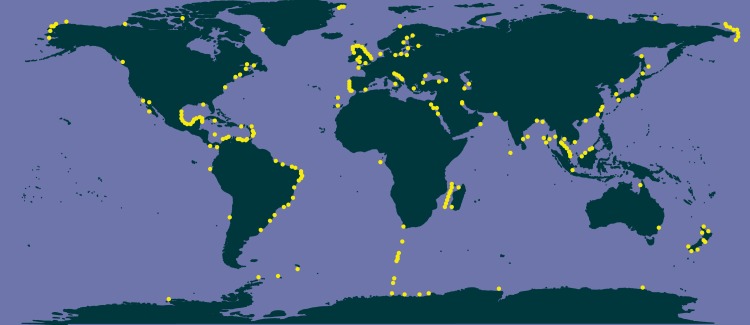
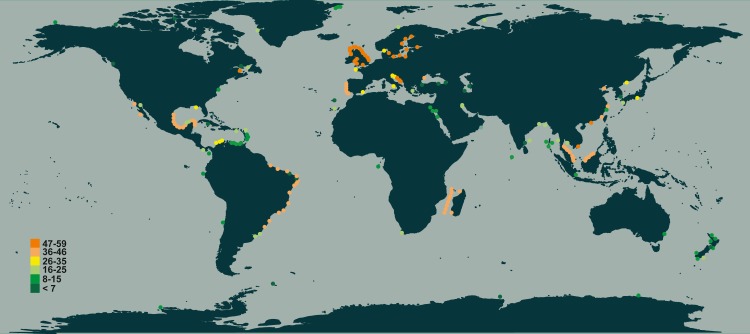
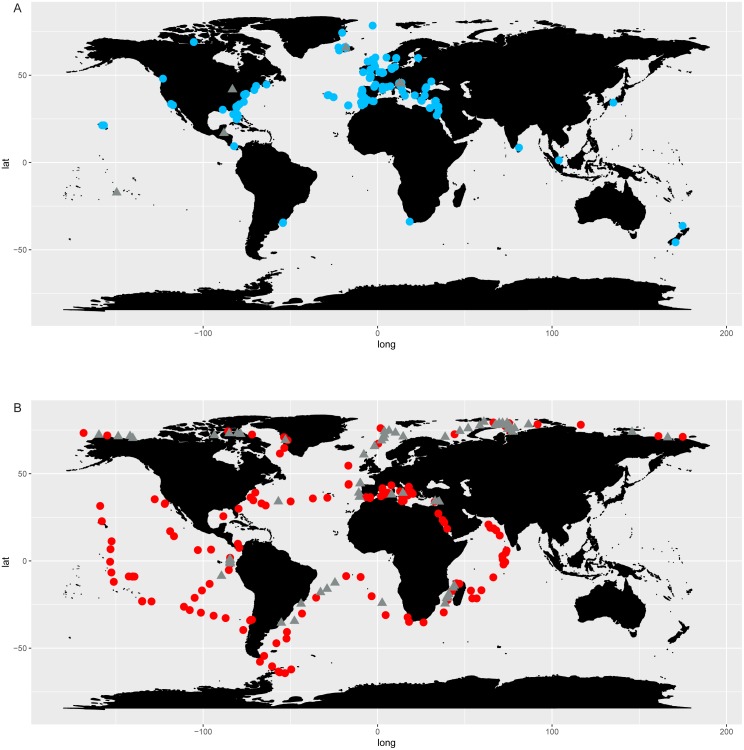
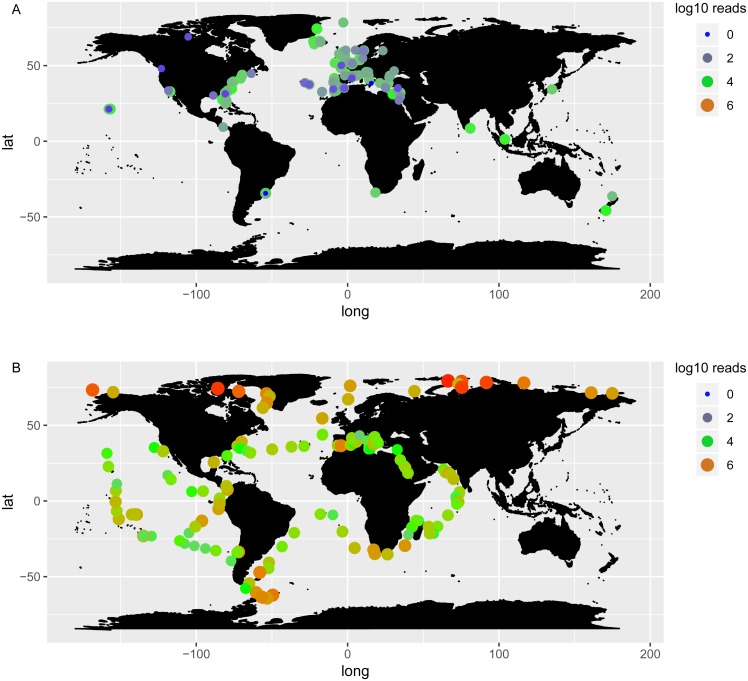
Information on taxa distribution is a prerequisite for many research fields, and biological records are a major source of data contributing to biogeographic studies. The Global Biodiversity Information Facility (GBIF) and the Ocean Biogeographic Information System (OBIS) are important infrastructures facilitating free and open access to classical biological data from several sources in both temporal and spatial scales. Over the last ten years, high throughput sequencing (HTS) metabarcoding data have become available, which constitute a great source of detailed occurrence data. Among the global sampling projects that have contributed to such data are Tara Oceans and the Ocean Sampling Day (OSD). Integration of classical and metabarcoding data may aid a more comprehensive assessment of the geographic range of species, especially of microscopic ones such as protists. Rare, small and cryptic species are often ignored in surveys or mis-assigned with the classical approaches. Here we show how integration of data from various sources can contribute to insight in the biogeography and diversity at the genus- and species-level using as study system one of the most diverse and abundant genera among marine planktonic diatoms. records were extracted from GBIF and OBIS and literature data were collected by means of a Google Scholar search. references barcodes where mapped against the metabarcode datasets of Tara Oceans (210 sites) and OSD (144 sites). We compared the resolution of different data sources in determining the global distribution of the genus and provided examples, at the species level, of detection of cryptic species, endemism and cosmopolitan or restricted distributions. Our results highlighted at genus level a comparable picture from the different sources but a more complete assessment when data were integrated. Both the importance of the integration but also the challenges related to it were illustrated. data collected in this study are organised and available in the form of tables and maps, providing a powerful tool and a baseline for further research in e.g., ecology, conservation and evolutionary biology.
分类群分布信息是许多研究领域的先决条件,而生物记录是生物地理学研究数据的主要来源。全球生物多样性信息设施(GBIF)和海洋生物地理信息系统(OBIS)是重要的基础设施,有助于在时间和空间尺度上免费开放获取来自多个来源的经典生物数据。在过去十年中,高通量测序(HTS)元条形码数据已经可用,这构成了详细出现数据的重要来源。为这些数据做出贡献的全球采样项目包括塔拉海洋项目和海洋采样日(OSD)。经典数据和元条形码数据的整合可能有助于更全面地评估物种的地理范围,特别是对于原生生物等微观物种。稀有、小型和隐秘物种在调查中往往被忽视,或者用经典方法错误分类。在这里,我们展示了如何通过将来自各种来源的数据整合,以海洋浮游硅藻中最多样化和丰富的属之一作为研究系统,有助于深入了解属和物种水平的生物地理学和多样性。从GBIF和OBIS中提取记录,并通过谷歌学术搜索收集文献数据。将参考文献条形码与塔拉海洋项目(210个站点)和海洋采样日(144个站点)的元条形码数据集进行比对。我们比较了不同数据源在确定该属全球分布方面的分辨率,并在物种水平上提供了隐秘物种、特有性以及世界性或受限分布检测的示例。我们的结果在属水平上突出了不同来源的可比情况,但数据整合时评估更完整。既说明了整合的重要性,也阐述了与之相关的挑战。本研究收集的数据以表格和地图的形式进行整理并可供使用,为例如生态学、保护生物学和进化生物学等进一步研究提供了强大工具和基线。