ICM Institut du Cerveau et de la Moelle épinière, CNRS UMR7225, INSERM U1127, UPMC, Hôpital de la Pitié-Salpêtrière, 47 Bd de l'Hôpital, Paris, France.
ICANalytcis Platforms, Institute of Cardiometabolism and Nutrition ICAN, Paris, France.
EBioMedicine. 2019 Sep;47:518-528. doi: 10.1016/j.ebiom.2019.08.051. Epub 2019 Sep 3.
One of the biggest challenge in Alzheimer's disease (AD) is to identify pathways and markers of disease prediction easily accessible, for prevention and treatment. Here we analysed blood samples from the INveStIGation of AlzHeimer's predicTors (INSIGHT-preAD) cohort of elderly asymptomatic individuals with and without brain amyloid load.
We performed blood RNAseq, and plasma metabolomics and lipidomics using liquid chromatography-mass spectrometry on 48 individuals amyloid positive and 48 amyloid negative (SUVr cut-off of 0·7918). The three data sets were analysed separately using differential gene expression based on negative binomial distribution, non-parametric (Wilcoxon) and parametric (correlation-adjusted Student't) tests. Data integration was conducted using sparse partial least squares-discriminant and principal component analyses. Bootstrap-selected top-ten features from the three data sets were tested for their discriminant power using Receiver Operating Characteristic curve. Longitudinal metabolomic analysis was carried out on a subset of 22 subjects.
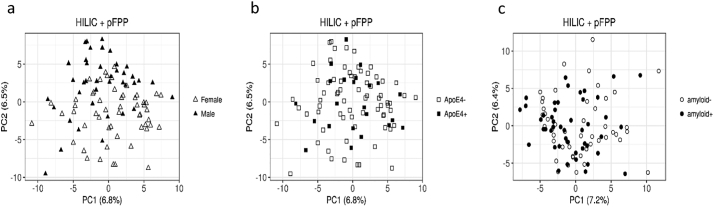
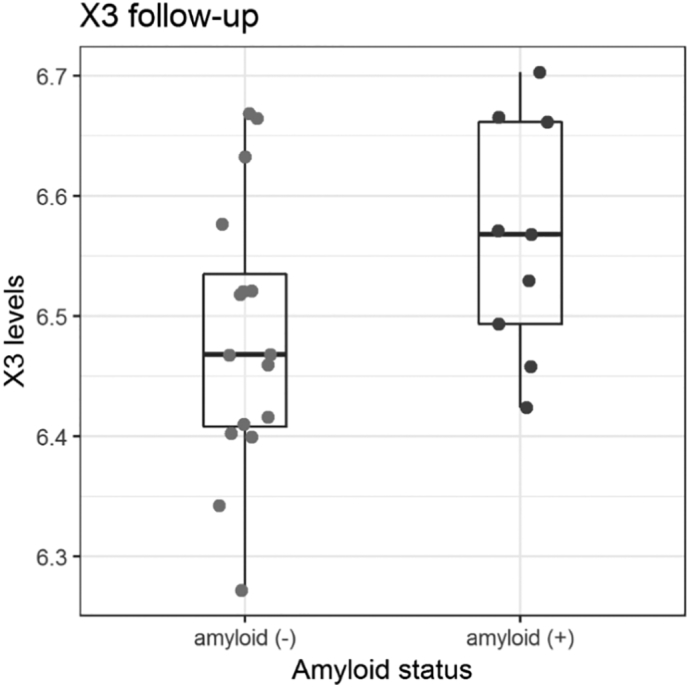
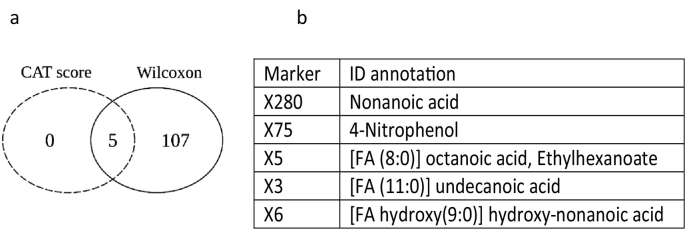
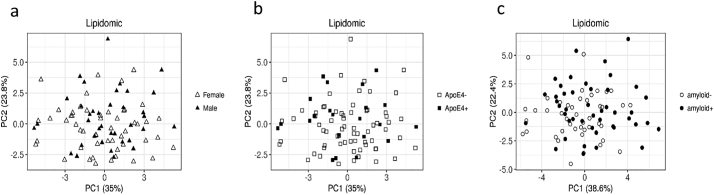
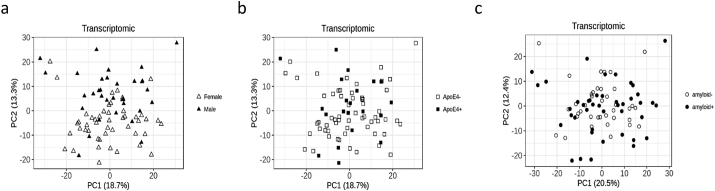
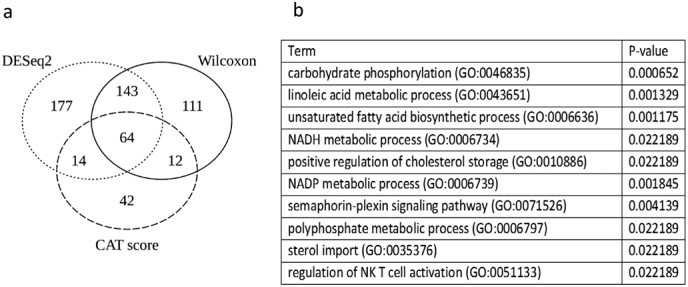
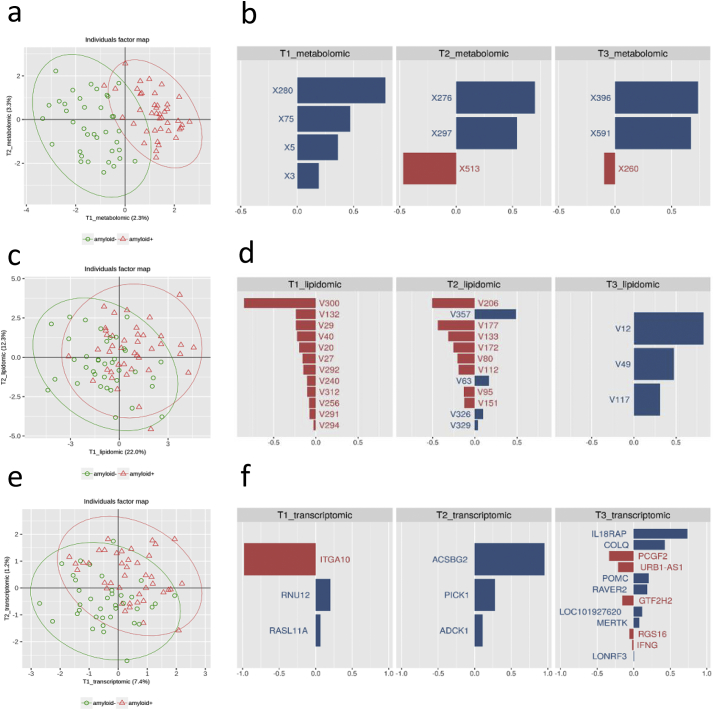
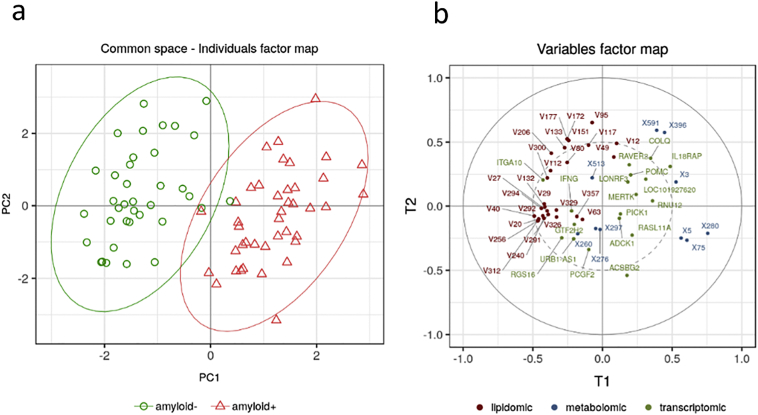
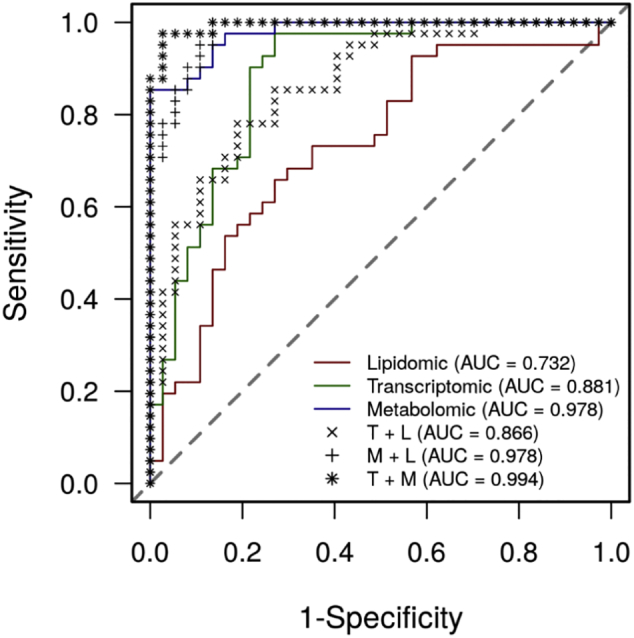
Univariate analyses identified three medium chain fatty acids, 4-nitrophenol and a set of 64 transcripts enriched for inflammation and fatty acid metabolism differentially quantified in amyloid positive and negative subjects. Importantly, the amounts of the three medium chain fatty acids were correlated over time in a subset of 22 subjects (p < 0·05). Multi-omics integrative analyses showed that metabolites efficiently discriminated between subjects according to their amyloid status while lipids did not and transcripts showed trends. Finally, the ten top metabolites and transcripts represented the most discriminant omics features with 99·4% chance prediction for amyloid positivity.
This study suggests a potential blood omics signature for prediction of amyloid positivity in asymptomatic at-risk subjects, allowing for a less invasive, more accessible, and less expensive risk assessment of AD as compared to PET studies or lumbar puncture. FUND: Institut Hospitalo-Universitaire and Institut du Cerveau et de la Moelle Epiniere (IHU-A-ICM), French Ministry of Research, Fondation Alzheimer, Pfizer, and Avid.
阿尔茨海默病(AD)最大的挑战之一是确定易于获得的疾病预测途径和标志物,以进行预防和治疗。在此,我们分析了来自无淀粉样蛋白负荷的无症状老年个体的 INveStIGation of AlzHeimer's predicTors(INSIGHT-preAD)队列的血液样本。
我们对 48 名淀粉样蛋白阳性和 48 名淀粉样蛋白阴性(SUVr 截止值为 0.7918)个体的血液 RNAseq、血浆代谢组学和脂质组学进行了分析,使用液相色谱-质谱。基于负二项分布、非参数(Wilcoxon)和参数(相关调整的学生't)检验,分别对三个数据集进行了差异基因表达分析。使用稀疏偏最小二乘判别和主成分分析对数据进行了整合。使用Receiver Operating Characteristic 曲线对来自三个数据集的 bootstrap 选择的前十名特征进行了判别能力测试。对 22 名受试者的亚组进行了纵向代谢组学分析。
单变量分析确定了三种中链脂肪酸、4-硝基苯酚和一组 64 种转录本,这些转录本在淀粉样蛋白阳性和阴性个体中差异定量,富集了炎症和脂肪酸代谢。重要的是,在 22 名受试者的亚组中,这三种中链脂肪酸的含量随时间呈正相关(p<0.05)。多组学综合分析表明,代谢物根据其淀粉样蛋白状态有效地对受试者进行了区分,而脂质则不能,转录本则显示出趋势。最后,十种最佳代谢物和转录本代表了最具判别力的组学特征,对淀粉样蛋白阳性的预测准确率为 99.4%。
这项研究表明,在无症状高危人群中,存在一种潜在的血液组学标志物可用于预测淀粉样蛋白阳性,与 PET 研究或腰椎穿刺相比,这种标志物可用于更具侵入性、更易获得和更经济的 AD 风险评估。
巴黎医院和脑研究所(IHU-A-ICM),法国研究部,阿尔茨海默病基金会,辉瑞公司和艾维德公司。