Tseng Yu-Hsin, Huang Han-Yau, Xu Wei-Bin, Yang Hsun-An, Peng Ching-I, Liu Yan, Chung Kuo-Fang
Research Museum and Herbarium (HAST), Biodiversity Research Center, Academia Sinica, Taipei, Taiwan.
School of Forestry and Resource Conservation, National Taiwan University, Taipei, Taiwan.
Bot Stud. 2019 Sep 6;60(1):20. doi: 10.1186/s40529-019-0267-9.
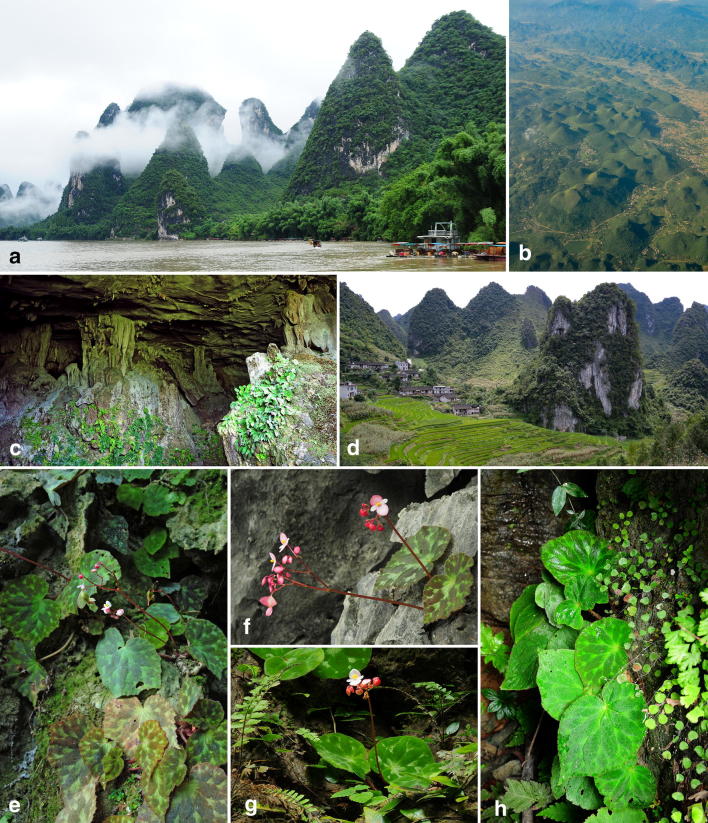
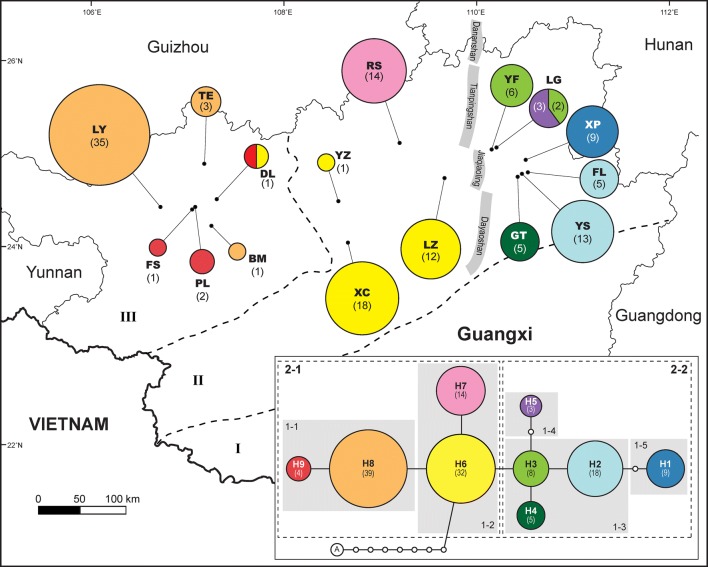
Sino-Vietnamese limestone karsts (SVLK) are a biodiversity hotspot rich in endemic plant species associated with caves and cave-like microhabitats. Based on phylogenetic studies of Begonia sect. Coelocentrum, a species-rich and characteristic SVLK clade, geographic isolation caused by extensive and continuous karstification was proposed as the major driving force triggering population diversification and geographic speciation. To test this proposition, population genetics and phylogeography of Begonia luzhaiensis were investigated using EST-SSR markers and the chloroplast trnC-ycf6 intergenic spacer.
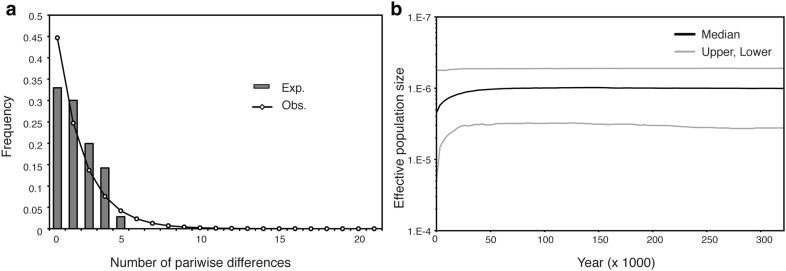
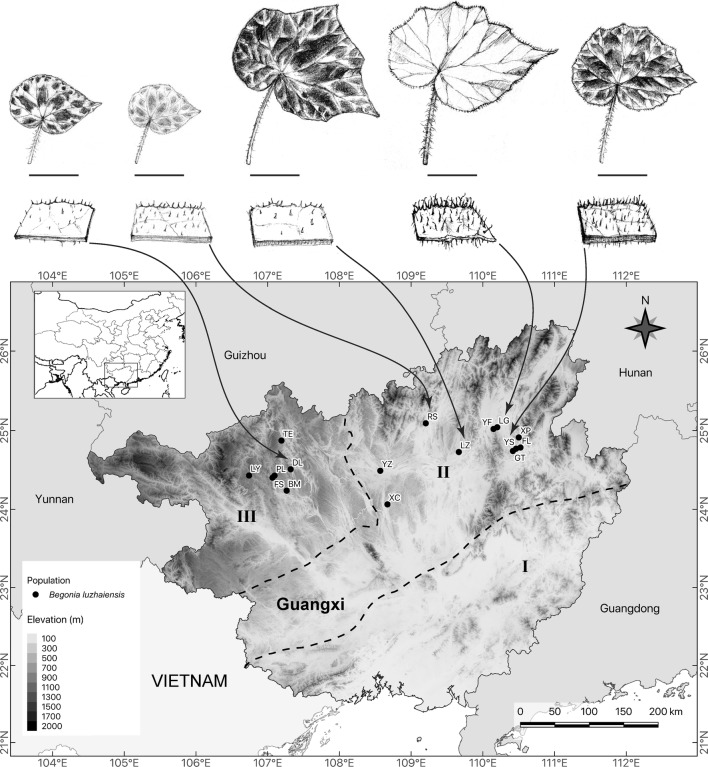
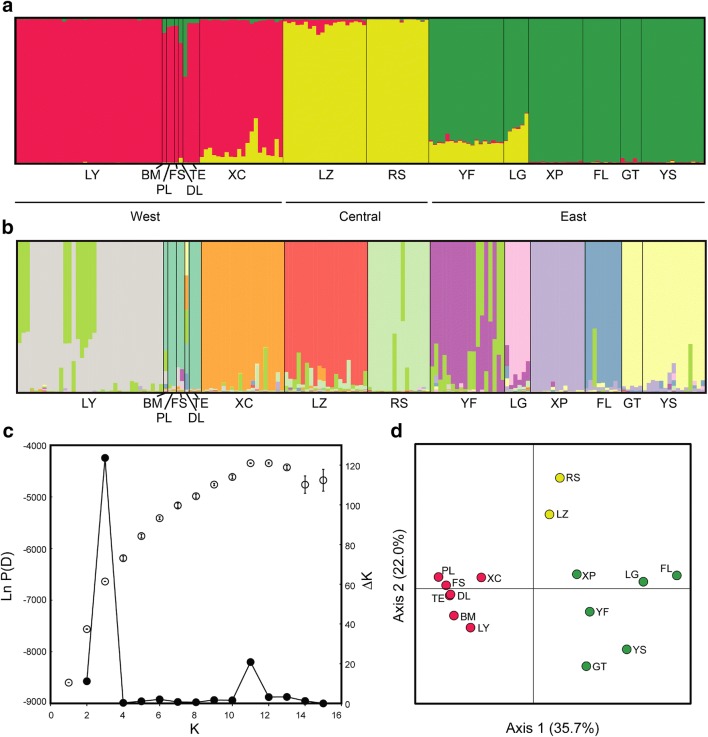
F statistics, Bayesian clustering analysis, AMOVA, and PCoA of both data sets all indicated substantial population differentiation and significant isolation by distance. Nested clade phylogeographic analyses inferred that historical fragmentations have been prominent, congruent with Guangxi's geohistory of karstification as well as suggesting a mountain chain in northeastern Guangxi could have also acted as a major geographic barrier. A Bayesian skyline plot (BSP) indicated a slight decline in effective population size at 75,000 years ago (75 Kya), coinciding with the last glacial period during which the increased aridity in East Asia had retarded karstification, negatively affecting the populations of B. luzhaiensis. However, BSP detected a continuous and further population decline until the present time even though summer monsoons have resumed since the end of the last glacial maximum.
The microevolution patterns of B. luzhaiensis support that limited gene flow would have greatly enhanced the effects of random genetic drift and has been a major factor promoting diversification in Begonia, highly congruent with previous proposition. Based our study, we further propose that the arrival of Paleolithic Homo sapiens whose activities centered around limestone caves could have had further impacts on the populations of B. luzhaiensis, resulting in additional population decline. Further habitat destruction could have resulted from the transition from hunter gathering to food-producing societies ca. 20-10 Kya and the development of agriculture ca. 10 Kya in South China. Implications of the current study for SVLK plant conservation are also discussed.
中越石灰岩喀斯特地区(SVLK)是一个生物多样性热点地区,拥有丰富的与洞穴及类似洞穴微生境相关的特有植物物种。基于对秋海棠属侧膜胎座组的系统发育研究,该组是一个物种丰富且具有代表性的SVLK分支,广泛且持续的喀斯特化导致的地理隔离被认为是触发种群多样化和地理物种形成的主要驱动力。为了验证这一观点,利用EST-SSR标记和叶绿体trnC-ycf6基因间隔区对鹿寨秋海棠进行了种群遗传学和系统地理学研究。
两个数据集的F统计量、贝叶斯聚类分析、AMOVA和PCoA均表明存在显著的种群分化和明显的距离隔离。嵌套分支系统地理学分析推断,历史上的片段化现象很突出,这与广西的喀斯特化地质历史一致,同时表明桂东北的一条山脉也可能是一个主要的地理屏障。贝叶斯天际线图(BSP)显示,在75000年前(距今75千年)有效种群数量略有下降,这与末次冰期相吻合,在此期间东亚地区干旱加剧,喀斯特化进程受阻,对鹿寨秋海棠的种群产生了负面影响。然而,BSP检测到种群数量持续下降直至现在,尽管自末次盛冰期结束以来夏季风已经恢复。
鹿寨秋海棠的微进化模式支持这样的观点,即有限的基因流极大地增强了随机遗传漂变的影响,并且是促进秋海棠属多样化的一个主要因素,这与之前的观点高度一致。基于我们的研究,我们进一步提出,以石灰岩洞穴为活动中心的旧石器时代智人的到来可能对鹿寨秋海棠的种群产生了进一步影响,导致种群数量进一步下降。约20 - 10千年前从狩猎采集社会向粮食生产社会的转变以及约10千年前中国南方农业的发展可能导致了进一步的栖息地破坏。本文还讨论了当前研究对SVLK植物保护的意义。