Department of Microbiology & Immunology, Columbia University Irving Medical Center, New York, NY 10032, USA.
Genome Integrity & Structural Biology Laboratory, NIH/NIEHS, DHHS, Research Triangle Park, NC 27709, USA.
Mol Cell. 2019 Nov 7;76(3):371-381.e4. doi: 10.1016/j.molcel.2019.07.033. Epub 2019 Sep 5.
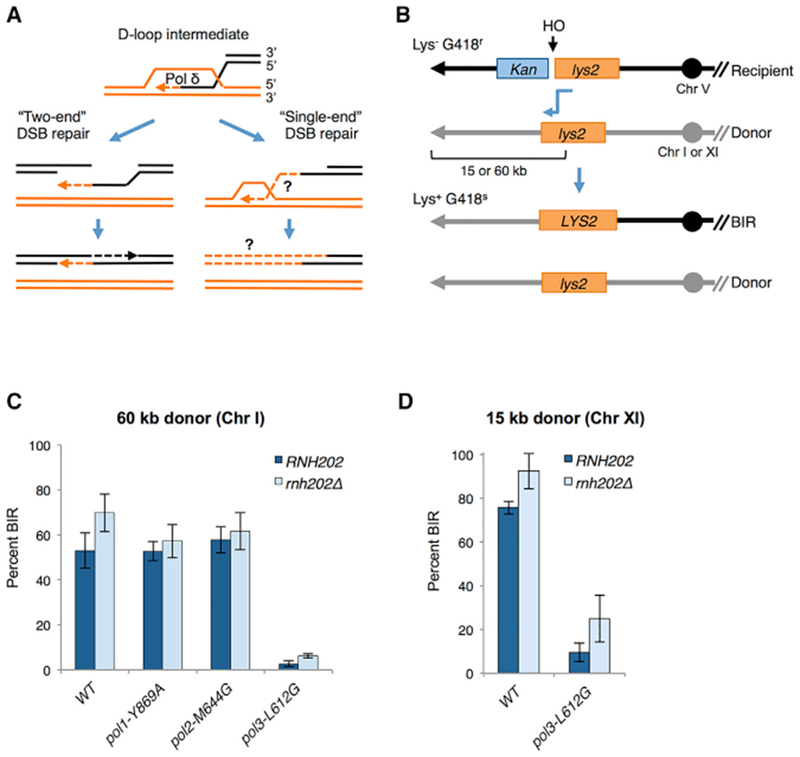
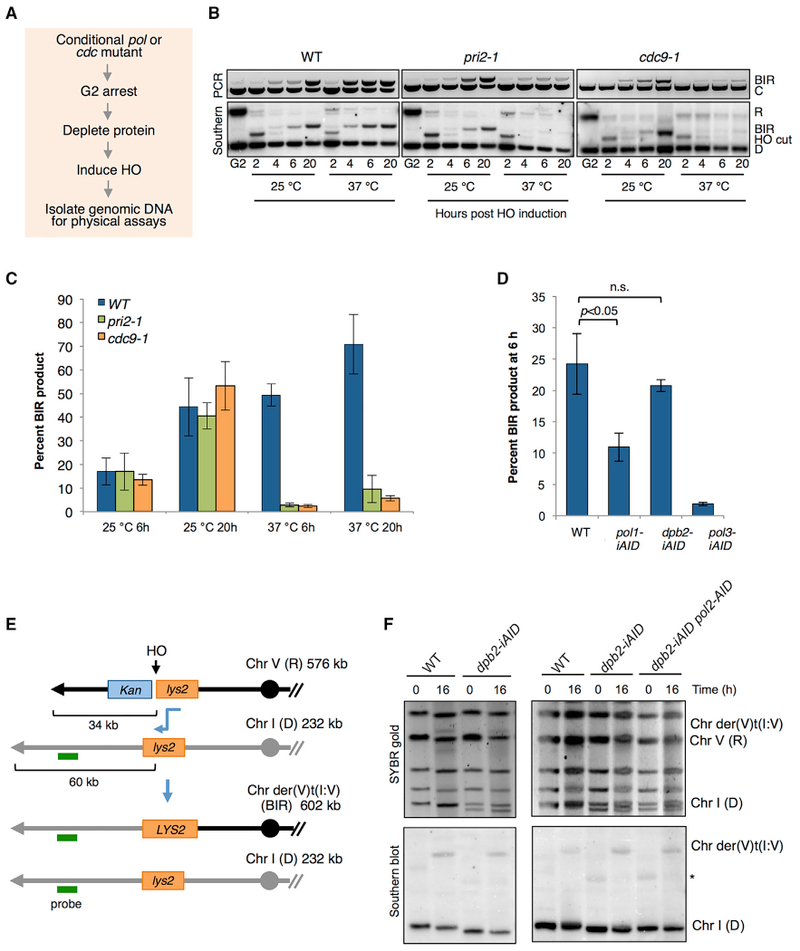
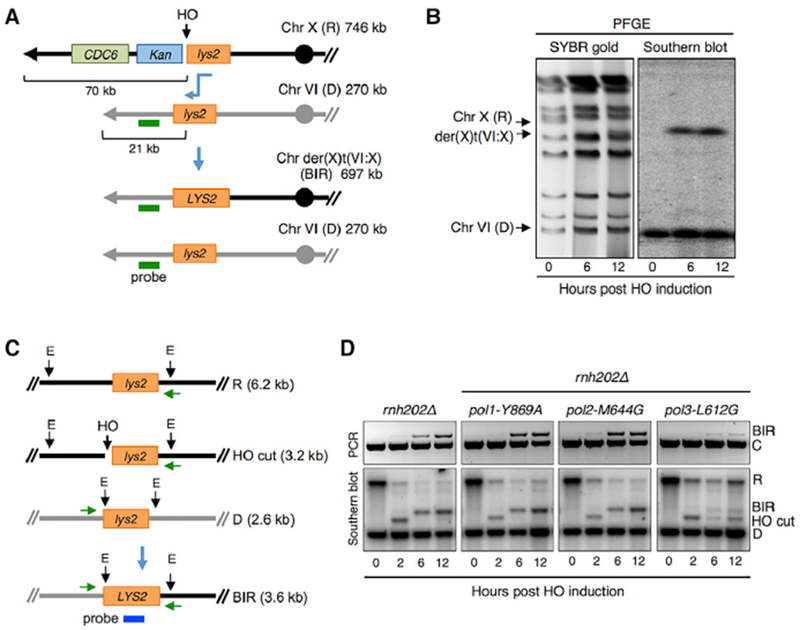
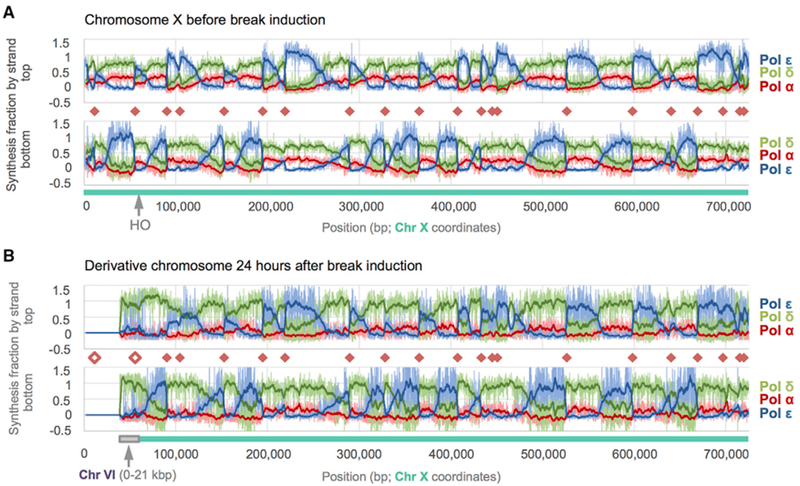
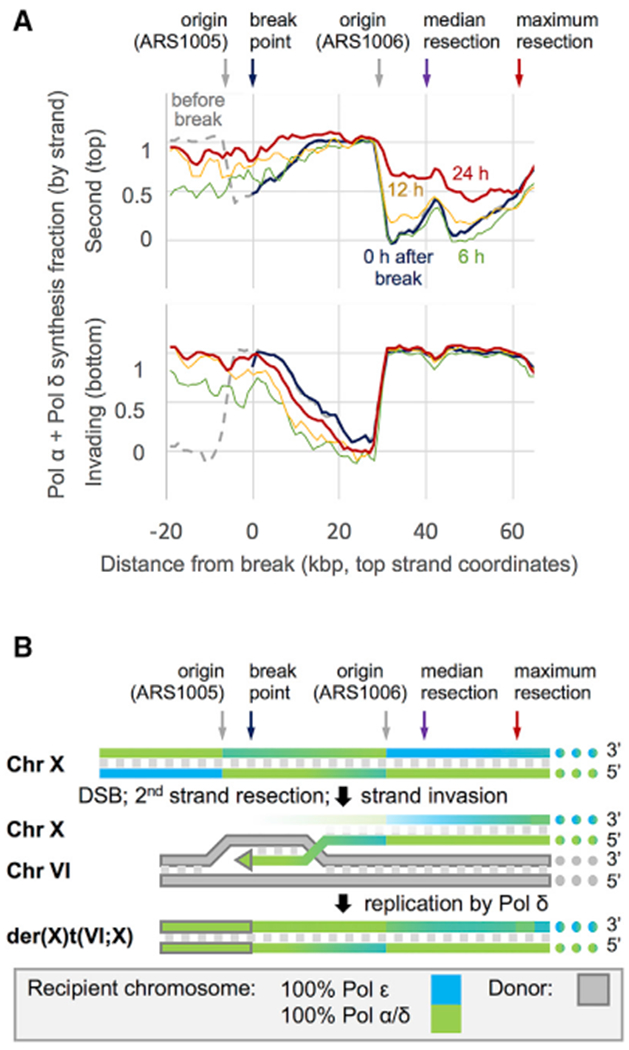
Break-induced replication (BIR) is a pathway of homology-directed repair that repairs one-ended DNA breaks, such as those formed at broken replication forks or uncapped telomeres. In contrast to conventional S phase DNA synthesis, BIR proceeds by a migrating D-loop and results in conservative synthesis of the nascent strands. DNA polymerase delta (Pol δ) initiates BIR; however, it is not known whether synthesis of the invading strand switches to a different polymerase or how the complementary strand is synthesized. By using alleles of the replicative DNA polymerases that are permissive for ribonucleotide incorporation, thus generating a signature of their action in the genome that can be identified by hydrolytic end sequencing, we show that Pol δ replicates both the invading and the complementary strand during BIR. In support of this conclusion, we show that depletion of Pol δ from cells reduces BIR, whereas depletion of Pol ε has no effect.
断裂诱导复制(BIR)是一种同源定向修复途径,可修复单端 DNA 断裂,例如在复制叉断裂或无端粒帽处形成的断裂。与传统的 S 期 DNA 合成不同,BIR 通过迁移的 D 环进行,导致新生链的保守合成。DNA 聚合酶 δ(Pol δ)启动 BIR;然而,尚不清楚入侵链的合成是否切换到另一种聚合酶,以及互补链是如何合成的。通过使用允许核苷酸掺入的复制 DNA 聚合酶的等位基因,从而在基因组中产生其作用的特征,该特征可以通过水解末端测序来识别,我们表明 Pol δ 在 BIR 过程中复制入侵链和互补链。为了支持这一结论,我们表明从细胞中耗尽 Pol δ 会减少 BIR,而耗尽 Pol ε 则没有影响。