Vichaya Elisabeth G, Vermeer Daniel W, Budac David, Lee Anna, Grossberg Aaron, Vermeer Paola D, Lee John H, Dantzer Robert
Department of Symptom Research, The University of Texas MD Anderson Cancer Center, Houston, TX, USA.
Cancer Biology Research Center, Sanford Research, Sioux Falls, SD, USA.
Int J Tryptophan Res. 2019 Aug 28;12:1178646919872508. doi: 10.1177/1178646919872508. eCollection 2019.
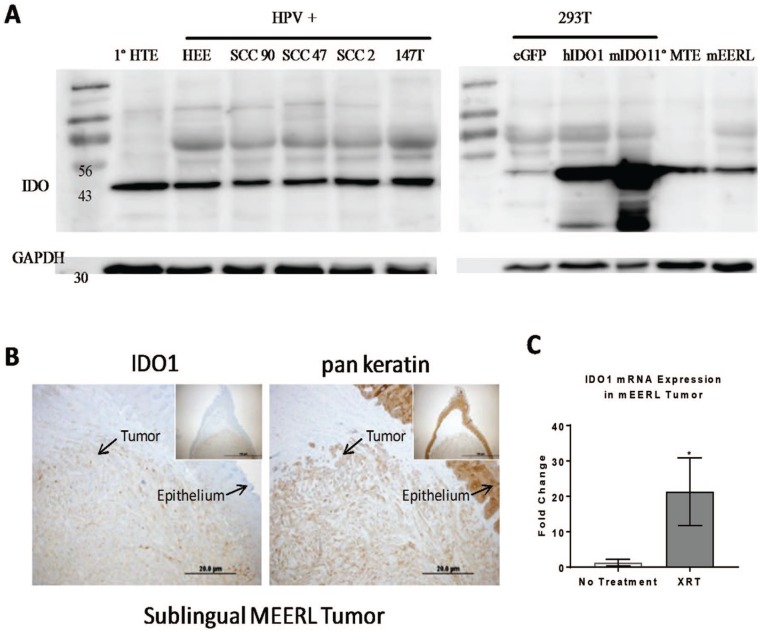
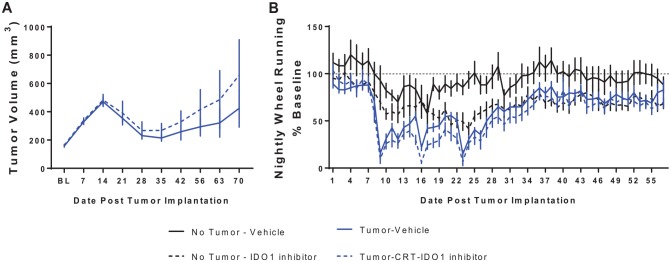
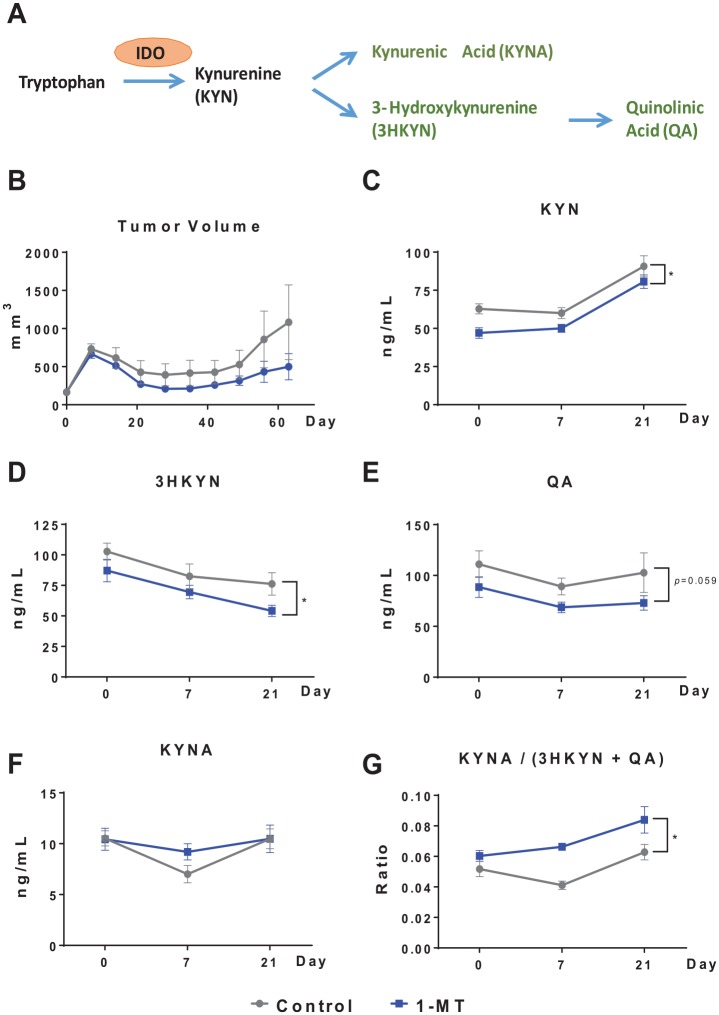
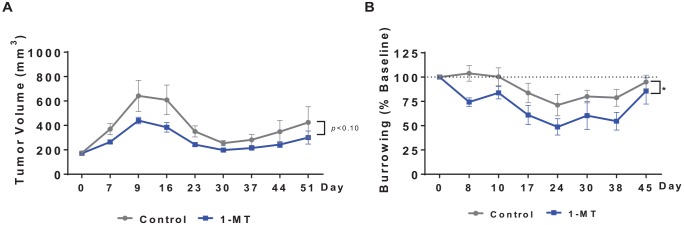
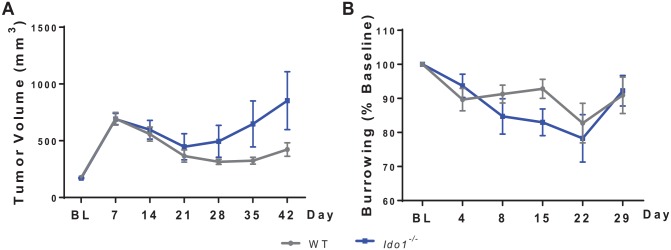
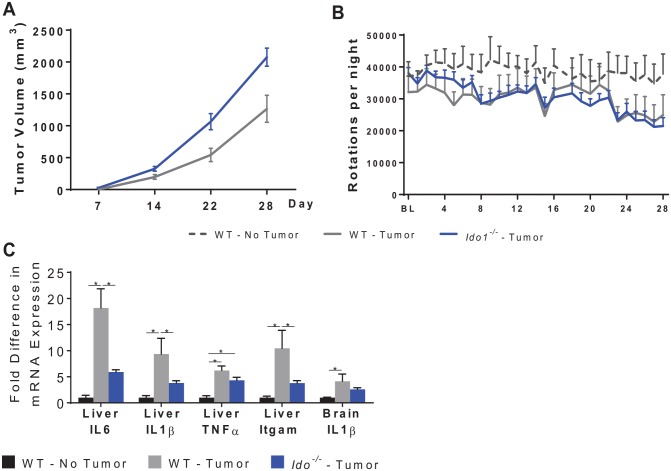
The expression of indoleamine 2,3 dioxygenase (IDO) by tumors can contribute to immunotolerance, and IDO induced by inflammation can also increase risk for the development of behavioral alterations. Thus, this study was initiated to determine whether IDO inhibition, intended to facilitate tumor clearance in response to treatment, attenuates behavioral alterations associated with tumor growth and treatment. We used a murine model of human papilloma virus-related head and neck cancer. We confirmed that tumor cells express IDO and expression was increased by radiotherapy. Interestingly, inhibition of IDO activation by the competitive inhibitor 1-methyl tryptophan mildly exacerbated treatment-associated burrowing deficits (burrowing is a sensitive index of sickness in tumor-bearing mice). Genetic deletion of IDO worsened tumor outcomes and had no effect on the behavioral response as by decreased burrowing or reduced voluntary wheel running. In contrast, oral administration of a specific inhibitor of IDO1 provided no apparent benefit on the tumor response to cancer therapy, yet decreased voluntary wheel-running activity independent of treatment. These results indicate that, independent of its potential effect on tumor clearance, inhibition of IDO does not improve cancer-related symptoms.
肿瘤中吲哚胺2,3-双加氧酶(IDO)的表达可导致免疫耐受,炎症诱导的IDO也会增加行为改变的发生风险。因此,开展本研究以确定旨在促进肿瘤治疗清除的IDO抑制是否能减轻与肿瘤生长和治疗相关的行为改变。我们使用了人乳头瘤病毒相关头颈癌的小鼠模型。我们证实肿瘤细胞表达IDO,且放疗会增加其表达。有趣的是,竞争性抑制剂1-甲基色氨酸对IDO激活的抑制轻微加剧了与治疗相关的打洞缺陷(打洞是荷瘤小鼠疾病的敏感指标)。IDO基因缺失使肿瘤结局恶化,且对行为反应无影响,如打洞减少或自主轮转运动减少。相比之下,口服IDO1特异性抑制剂对肿瘤对癌症治疗的反应无明显益处,但会降低自主轮转运动活性,且与治疗无关。这些结果表明,IDO抑制与对肿瘤清除的潜在作用无关,不会改善癌症相关症状。