Teeravisutkul Pichita, Chumchua Vasunun, Saengcharnchai Pichai, Leelahanaj Thawatchai
Department of Psychiatry and Neurology, Phramongkutklao Hospital, Bangkok, Thailand.
National Institute for Child and Family Development, Mahidol University, Nakhon Pathom, Thailand.
Psychol Res Behav Manag. 2019 Aug 6;12:619-627. doi: 10.2147/PRBM.S199762. eCollection 2019.
Stress is an environmental cue, which may lead to increased alcohol craving, and vulnerability to relapse. Heart rate variability (HRV) biofeedback, a supplement standard for inpatient rehabilitation, has been applied for treatment and has been shown to effectively reduce craving and anxiety, increase HRV, and improve vasomotor function, among patients who have alcohol dependence problems. Therefore, the purpose of this study was to investigate the impact of HRV biofeedback and the Phramongkutklao model (PMK model) as an intensive inpatient rehabilitation program concerning stress and craving reduction of inpatients with alcohol use disorder. The findings could benefit treatment design to increase the effectiveness regarding stress and craving reduction among patients with alcohol use disorder and may also reduce rehabilitation costs.
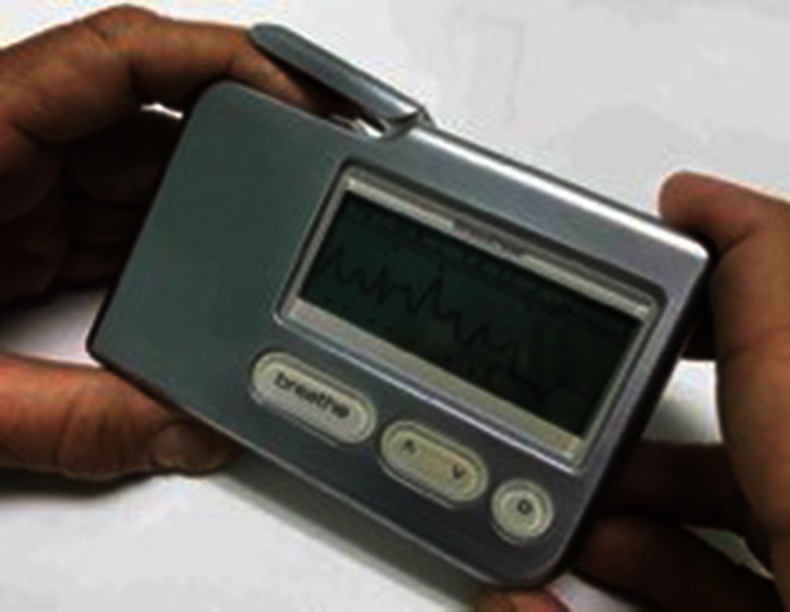
We conducted this study as a randomized controlled intervention trial, which was also performed single blinded. In all, 35 patients with alcohol use disorder were recruited and randomly assigned in two groups. Patients in the intervention group (n=17) were treated under the PMK model and underwent 16 sessions of the HRV biofeedback program, which included 30 minute long sessions, 4 days per week, for 4 weeks continuously. Patients in the control group (n=18) received PMK model treatment only. Participants were asked to complete a Stress Test (ST-5) and the Penn Alcohol-Craving Scale at baseline, after completing treatment, and at one month afterward (follow-up).
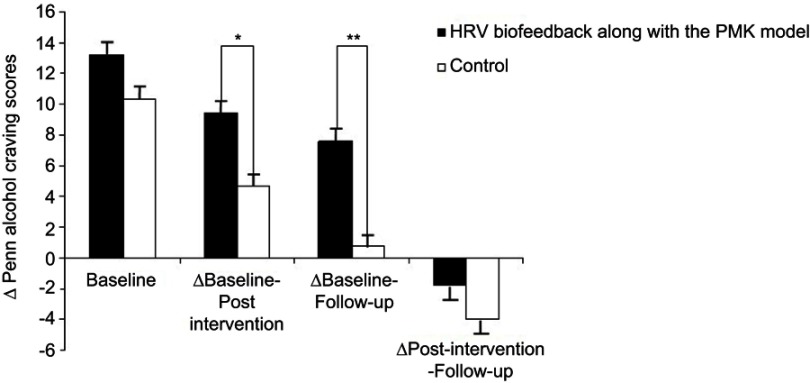
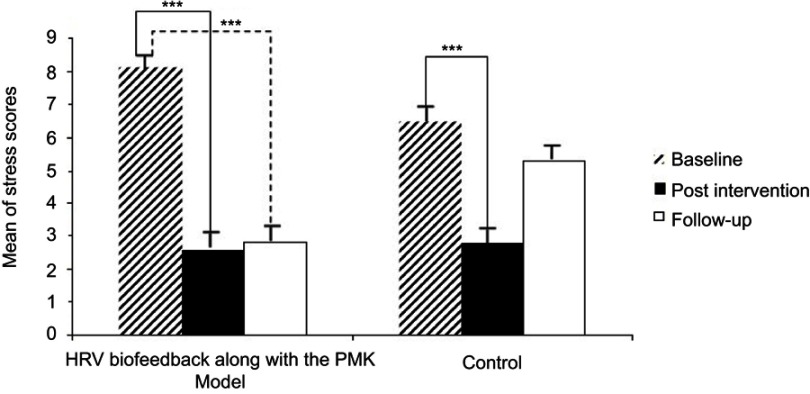
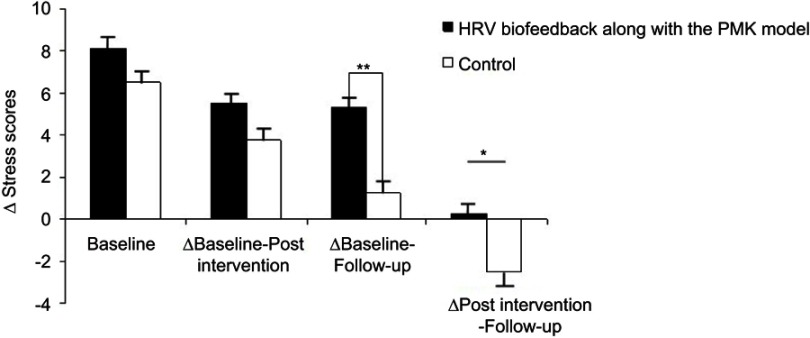
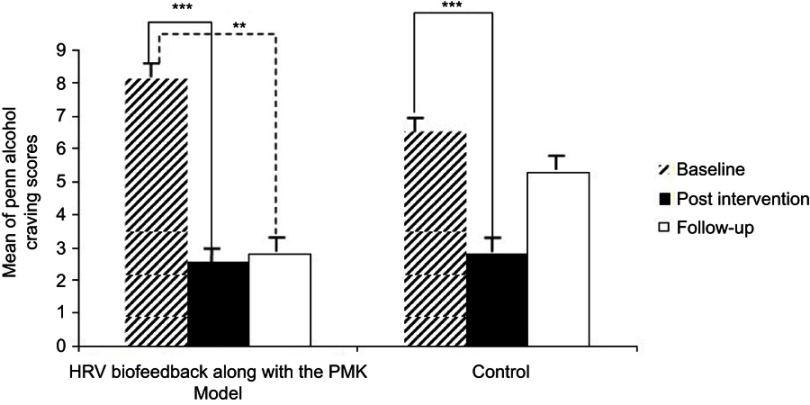
The study showed decreased stress and craving in the intervention group immediately after treatment and at one-month follow-up, whereas the control group had reduced stress and craving only immediately after treatment. Furthermore, we found a significant effect concerning stress and craving between baseline and at one-month follow-up that showed the intervention group exhibited higher difference of scores than the control group.
The study results showed that applying HRV biofeedback may be considered beneficial for standard rehabilitation inpatients to reduce stress and craving for patients with alcohol use disorder.
压力是一种环境诱因,可能导致酒精渴望增加以及复发易感性。心率变异性(HRV)生物反馈作为住院康复的一种辅助标准,已被应用于治疗,并且已证明在有酒精依赖问题的患者中能有效减少渴望和焦虑、增加HRV以及改善血管舒缩功能。因此,本研究的目的是调查HRV生物反馈和帕蒙固告皇家陆军医疗中心模型(PMK模型)作为一项强化住院康复计划对酒精使用障碍住院患者压力和渴望减轻的影响。这些发现可能有益于治疗设计,以提高酒精使用障碍患者在减轻压力和渴望方面的有效性,还可能降低康复成本。
我们将本研究作为一项随机对照干预试验进行,且试验为单盲。总共招募了35名酒精使用障碍患者,并将其随机分为两组。干预组(n = 17)的患者在PMK模型下接受治疗,并进行16次HRV生物反馈计划,每次疗程时长30分钟,每周4天,连续进行4周。对照组(n = 18)的患者仅接受PMK模型治疗。参与者被要求在基线、治疗结束后以及之后一个月(随访)时完成一项压力测试(ST - 5)和宾夕法尼亚酒精渴望量表。
研究表明,干预组在治疗后即刻和一个月随访时压力和渴望均降低,而对照组仅在治疗后即刻压力和渴望有所降低。此外,我们发现在基线和一个月随访之间,干预组在压力和渴望方面有显著效果,且干预组的得分差异高于对照组。
研究结果表明,应用HRV生物反馈可能对标准康复住院患者有益,可减轻酒精使用障碍患者的压力和渴望。