Akbari Mojdeh, Yassaee Fakhrolmolouk, Aminbeidokhti Mona, Abedin-Do Atieh, Mirfakhraie Reza
Department of Medical Genetics, School of Medicine, Shahid Beheshti University of Medical Sciences, Tehran, Iran.
Department of Obstetrics and Gynecology, Taleghani Hospital, Shahid Beheshti University of Medical Sciences, Tehran, Iran.
Int J Womens Health. 2019 Aug 29;11:495-500. doi: 10.2147/IJWH.S211632. eCollection 2019.
Uterine leiomyomas (ULMs) are benign uterine tumors that are estrogen-dependent. Recent studies suggest that the abnormal expression of the steroid receptor RNA activator 1 (SRA1) long non-coding RNA (lncRNA) might participate in the mechanisms of tumorigenesis of some hormone-dependent tumors including breast cancer. SRA1 is known to enhance the transcriptional activity of steroid receptors and also promotes steroidogenesis. The level of steroid hormones, such as estrogen and the progesterone, and their receptors play an important role in the development and growth of leiomyoma. The aim of the present study was to determine the expression level of lncRNA SRA1 in ULM tissues considering the mutation pattern.
Mutation screening was performed for exons 1 and 2 and the intronic flanking regions using Sanger sequencing in 60 ULM tissues. Quantitative real-time polymerase chain reaction (qRT-PCRs) was performed in order to estimate the expression of lncRNA SRA1 in leiomyoma samples with and without gene mutations. The expression results were analyzed by using LinReg and REST software.
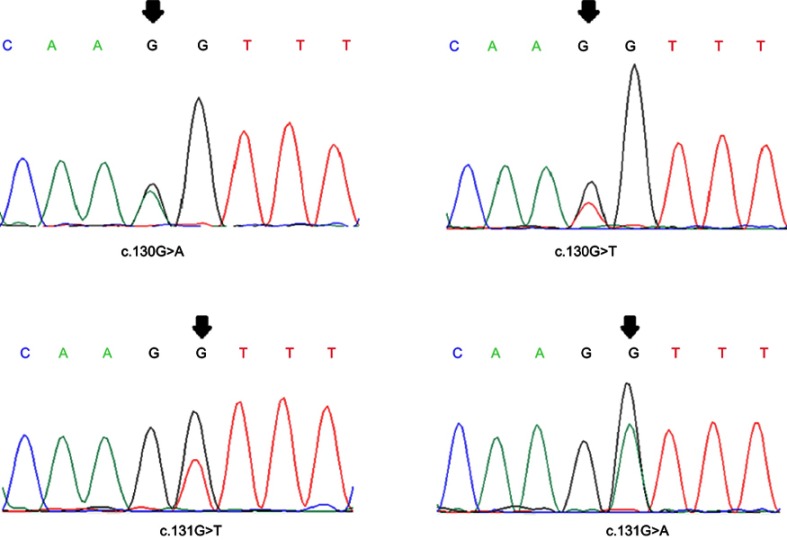
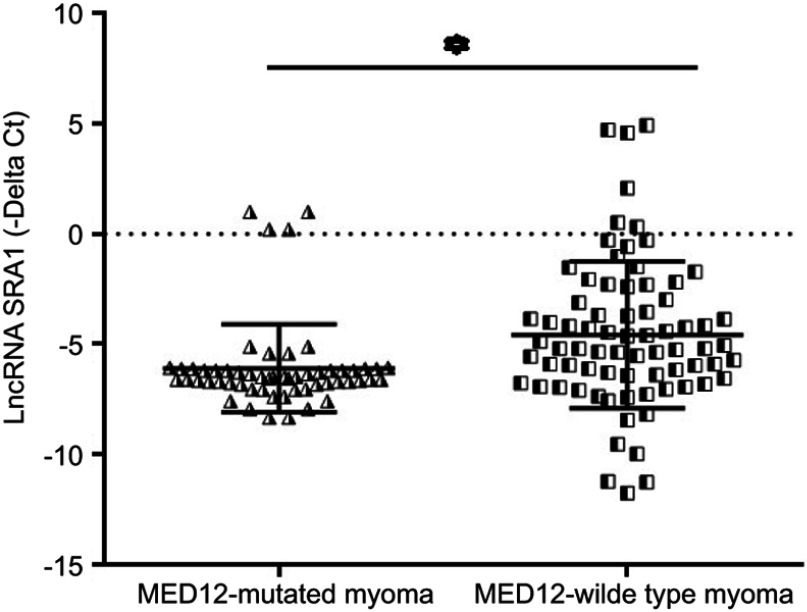
Mutations were detected in exon 2 of the in 28 (46.67%) ULM samples; including, 21 (75%) missense mutations and 7 (25%) in-frame deletions. No mutation was detected in the exon 1. LncRNA SRA1 was over-expressed in ULM samples without mutation compared with ULM samples harboring mutation (Expression ratio=2.5, -value=0.004).
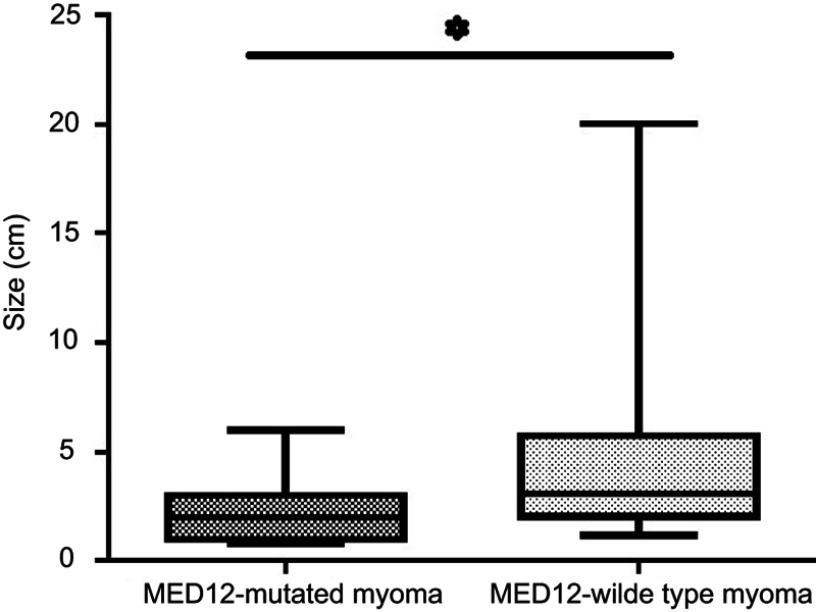
Present results suggest that lncRNA SRA1 may explain the phenotypic difference observed in the tumor size of ULM samples considering mutation pattern. Therefore, it serves as a good therapeutic target and provides new insight into understanding the disease molecular mechanism.
子宫平滑肌瘤(ULMs)是雌激素依赖性的良性子宫肿瘤。最近的研究表明,类固醇受体RNA激活剂1(SRA1)长链非编码RNA(lncRNA)的异常表达可能参与包括乳腺癌在内的一些激素依赖性肿瘤的肿瘤发生机制。已知SRA1可增强类固醇受体的转录活性并促进类固醇生成。雌激素和孕激素等类固醇激素及其受体的水平在平滑肌瘤的发生和生长中起重要作用。本研究的目的是根据突变模式确定lncRNA SRA1在ULM组织中的表达水平。
使用桑格测序法对60个ULM组织的外显子1和2以及内含子侧翼区域进行突变筛查。进行定量实时聚合酶链反应(qRT-PCR)以估计有基因突变和无基因突变的平滑肌瘤样本中lncRNA SRA1的表达。使用LinReg和REST软件分析表达结果。
在28个(46.67%)ULM样本的外显子2中检测到突变;包括21个(75%)错义突变和7个(25%)框内缺失。在外显子1中未检测到突变。与有突变的ULM样本相比,lncRNA SRA1在无突变的ULM样本中过表达(表达比=2.5,P值=0.004)。
目前的结果表明,考虑到突变模式,lncRNA SRA1可能解释了在ULM样本肿瘤大小中观察到的表型差异。因此,它是一个良好的治疗靶点,并为理解该疾病的分子机制提供了新的见解。