Qin Yi-Xian, Xia Yi, Muir Jesse, Lin Wei, Rubin Clinton T
Department of Biomedical Engineering, Stony Brook University, Stony Brook, NY 11794-5281, USA.
J Orthop Translat. 2018 Dec 24;18:48-58. doi: 10.1016/j.jot.2018.11.004. eCollection 2019 Jul.
Osteoporosis parallels aging and functional mechanical unloading (e.g., space flight and bed rest), jeopardizing mineral density, microstructure, and integrity of bone and leading to an increased risk of fracture. A way to combat this deterioration is to harness the sensitivity of bone to mechanical signals.
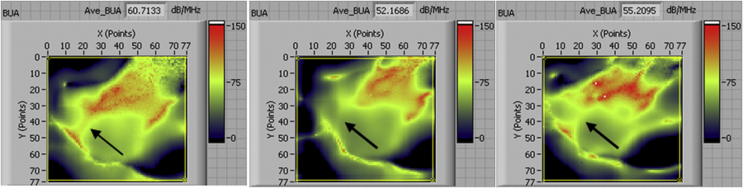
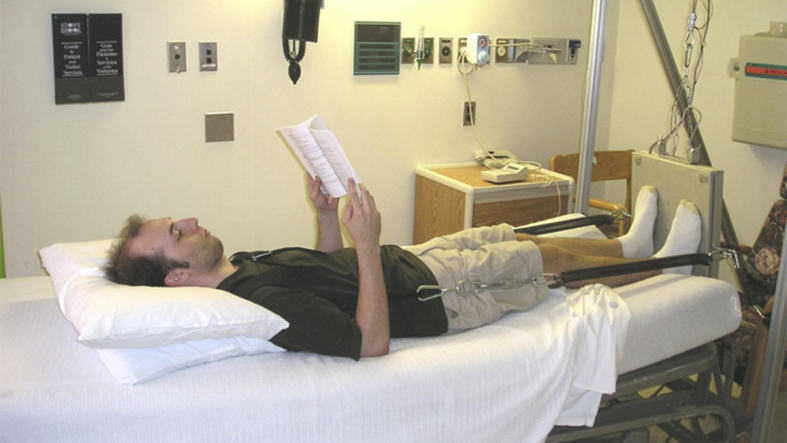
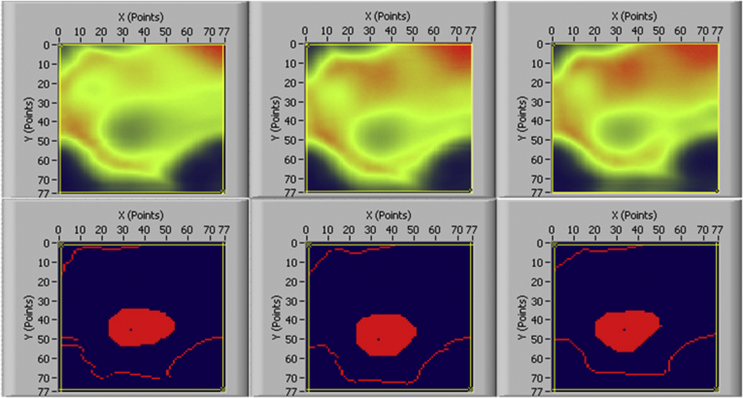
This study evaluates the longitudinal effect of a dynamic mechanical loading through the heel on human bone in vivo during 90-day bed rest, monitored by quantitative ultrasound (QUS) imaging and dual-energy X-ray absorptiometry (DXA) in localized regions of interests, i.e., calcaneus.
A total of 29 bed rest individuals were evaluated (11 control and 18 treatment) with a brief (10-minute) daily low-intensity (0.3g), high-frequency (30Hz) dynamic mechanical stimulation countermeasure through vibrational inhibition bone erosion (VIBE). Both QUS and DXA detected longitudinal bone density and quality changes.
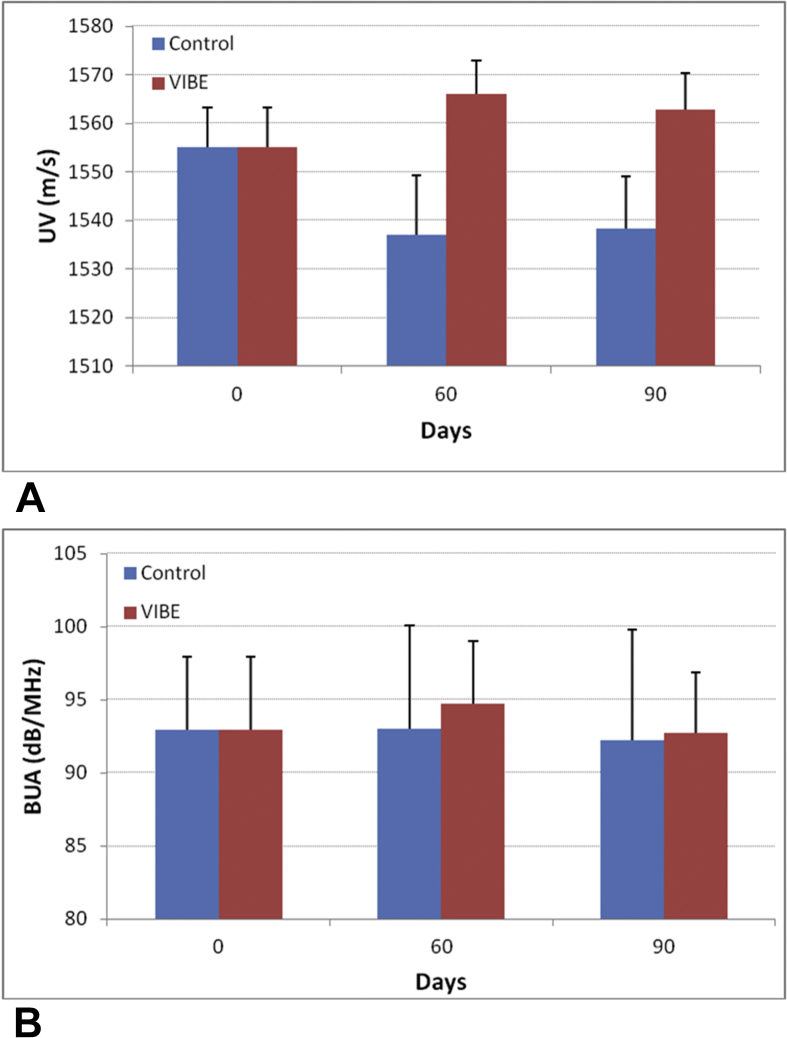
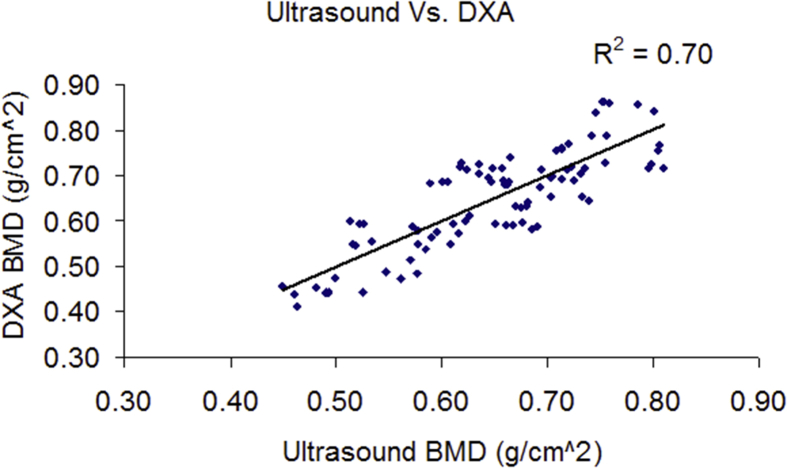
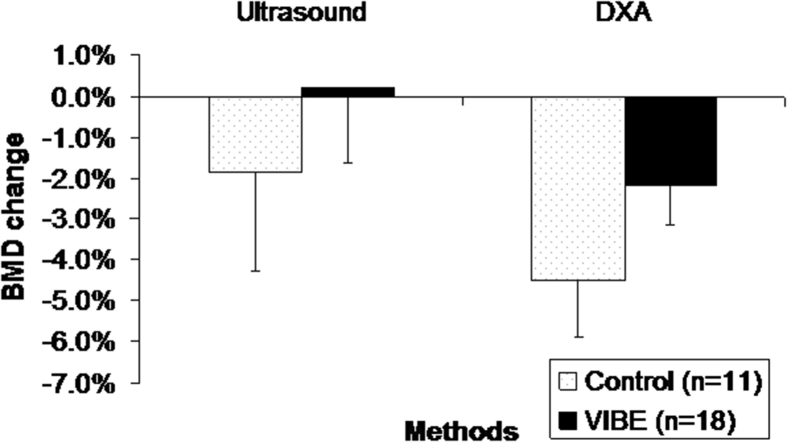
Ultrasound velocity (UV) decreased in the control group and increased in the group treated with low-intensity loading. The UV increased by 1.9% and 1.6% at 60- and 90-day bed rest (p=0.01) in VIBE over control groups. A trend was found in broadband ultrasound attenuation (BUA), with a VIBE benefit of 1.8% at day 60 and 0.5% at day 90 in comparison with control (). Bone mineral density (BMD) assessed by DXA decreased -4.50% for control individuals and -2.18% for VIBE individuals, showing a moderate effect of the mechanical intervention (). Significant correlations between QUS and DXA were observed, with a combined BUA and UV vs. BMD: r=0.70.
These results indicated that low-intensity, high-frequency loading has the potential to mitigate regional bone loss induced by long-term bed rest and that QUS imaging may be able to assess the subtle changes in bone alteration.
Quantitative ultrasound has shown the efficacy of noninvasively assessing bone mass and structural properties in cadaver and isolated trabecular bone samples. While its ability in measuring in vivo bone quality and density is still unclear, a scanning confocal ultrasound imaging is developed and can perform an instant assessment for the subtle changes of such bone loss. This ultrasound imaging modality can potentially be used in the clinical assessment of bone mass. Moreover, physical stimulation has shown the ability to prevent bone loss induced by functional disuse and estrogen deficiency in animal models. However, its treatment capability is unclear. This study has shown that low-magnitude mechanical signals, introduced using low-intensity vibration (LIV), can mitigate regional bone loss caused by functional disuse. Thus localized mechanical treatment, and the quantitative ultrasound imaging have shown translational potential to noninvasively attenuate bone loss, and assess bone mass in the clinic, e.g., in an extreme condition such as long-term space mission, and long-term bedrest such as in case of spinal cord injury.
骨质疏松与衰老及功能性机械卸载(如太空飞行和卧床休息)相伴,会损害骨矿物质密度、微观结构和骨完整性,导致骨折风险增加。对抗这种退化的一种方法是利用骨骼对机械信号的敏感性。
本研究通过定量超声(QUS)成像和双能X线吸收法(DXA)在感兴趣的局部区域(即跟骨)监测,评估90天卧床休息期间通过足跟进行动态机械加载对人体骨骼的纵向影响。
共有29名卧床休息个体接受评估(11名对照组和18名治疗组),通过振动抑制骨侵蚀(VIBE)进行每日一次简短(10分钟)的低强度(0.3g)、高频(30Hz)动态机械刺激对策。QUS和DXA均检测了骨密度和质量的纵向变化。
对照组超声速度(UV)降低,低强度加载治疗组超声速度增加。与对照组相比,VIBE组在卧床休息60天和90天时UV分别增加了1.9%和1.6%(p = 0.01)。在宽带超声衰减(BUA)方面发现有趋势,与对照组相比,VIBE组在第60天的益处为1.8%,在第90天为0.5%。DXA评估的骨矿物质密度(BMD),对照组个体降低了-4.50%,VIBE组个体降低了-2.18%,显示出机械干预有中等效果。观察到QUS和DXA之间存在显著相关性,联合BUA和UV与BMD的相关性:r = 0.70。
这些结果表明,低强度、高频加载有可能减轻长期卧床休息引起的局部骨质流失,并且QUS成像可能能够评估骨改变的细微变化。
定量超声已显示出在尸体和分离的小梁骨样本中无创评估骨量和结构特性的功效。虽然其测量体内骨质量和密度的能力仍不明确,但已开发出扫描共聚焦超声成像,可对这种骨质流失的细微变化进行即时评估。这种超声成像模式有可能用于骨量的临床评估。此外,物理刺激已显示出在动物模型中预防功能性废用和雌激素缺乏引起的骨质流失的能力。然而,其治疗能力尚不清楚。本研究表明,使用低强度振动(LIV)引入的低强度机械信号可减轻功能性废用引起的局部骨质流失。因此,局部机械治疗和定量超声成像已显示出在临床上无创减轻骨质流失和评估骨量的转化潜力,例如在长期太空任务等极端情况下,以及在脊髓损伤等长期卧床休息的情况下。