Mulyani Sri Wigati Mardi, Astuti Eha Renwi, Wahyuni Otty Ratna, Ernawati Diah Savitri, Ramadhani Nastiti Faradilla
Department of Dentomaxillofacial Radiology, Faculty of Dental Medicine, Airlangga University, Surabaya, Indonesia.
Department of Oral Medicine, Faculty of Dental Medicine, Airlangga University, Surabaya, Indonesia.
Eur J Dent. 2019 May;13(2):238-242. doi: 10.1055/s-0039-1694697. Epub 2019 Sep 11.
The aim of this study was to describe the process of regeneration of damaged salivary glands due to ionizing radiations by bone marrow mesenchymal stem cells (BM-MSCs) transplantation that have been given hypoxic preconditioning with 1% O concentration.
Stem cell culture was performed under normoxic (O: 21%) and hypoxic conditions by incubating the cells for 48 hours in a low oxygen tension chamber consisting of 95% N, 5% CO, and 1% O. Thirty male Wistar rats were divided into four groups: two groups of control and two groups of treatment. A single dose of 15 Gy radiation was provided to the ventral region of the neck in all treatment groups, damaging the salivary glands. BM-MSCs transplantation was performed in the treatment groups for normoxia and hypoxia 24-hour postradiation.
Statistical analysis was done using normality test, followed by MANOVA test ( < 0.05).
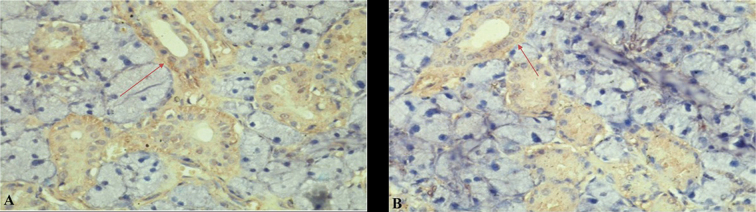
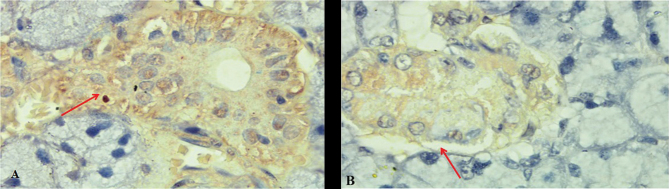
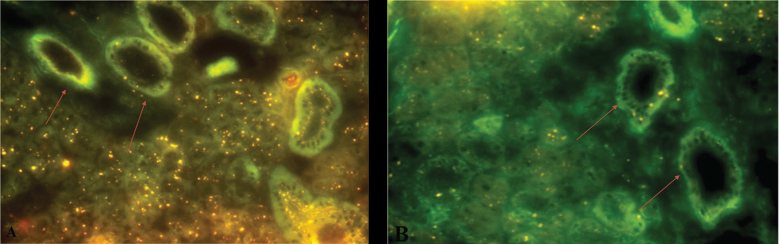
There was a significant difference in the expression of binding SDF1-CXCR4, Bcl-2 ( < 0.05) and also the activity of the enzyme α-amylase in all groups of hypoxia.
BM-MSCs transplantation with hypoxic precondition increases the expression of binding SDF1-CXCR4, Bcl-2 that contributes to cell migration, cell survival, and cell differentiation.
本研究旨在描述经1%氧气浓度低氧预处理的骨髓间充质干细胞(BM-MSCs)移植对因电离辐射受损的唾液腺的再生过程。
在常氧(氧气:21%)和低氧条件下进行干细胞培养,将细胞置于由95%氮气、5%二氧化碳和1%氧气组成的低氧张力培养箱中孵育48小时。30只雄性Wistar大鼠分为四组:两组对照组和两组治疗组。所有治疗组均在颈部腹侧区域给予单次15 Gy辐射,损伤唾液腺。在辐射后24小时,对常氧和低氧治疗组进行BM-MSCs移植。
采用正态性检验进行统计分析,随后进行多变量方差分析(P<0.05)。
在所有低氧组中,趋化因子基质细胞衍生因子1-趋化因子受体4(SDF1-CXCR4)、Bcl-2的表达(P<0.05)以及α淀粉酶的活性存在显著差异。
低氧预处理的BM-MSCs移植可增加SDF1-CXCR4、Bcl-2的表达,这有助于细胞迁移、细胞存活和细胞分化。