Li Yanli, Li Xuehan, Pang Runxuan, Yang Guang, Tian Mingxu, Zhao Tengyu, Sun Yunhan, Lee Eui-Seok, Jiang Heng Bo, Han Jianmin
Department of Dental Materials, Peking University School and Hospital of Stomatology, National Center of Stomatology, National Clinical Research Center for Oral Diseases, National Engineering Laboratory for Digital and Material Technology of Stomatology, Beijing Key Laboratory of Digital Stomatology, Research Center of Engineering and Technology for Computerized Dentistry Ministry of Health, NMPA Key Laboratory for Dental Materials, Beijing 100081, China.
The Conversationalist Club, School of Stomatology, Shandong First Medical University and Shandong Academy of Medical Sciences, Jinan, Shandong 250117, China.
J Oncol. 2022 Aug 27;2022:7802334. doi: 10.1155/2022/7802334. eCollection 2022.
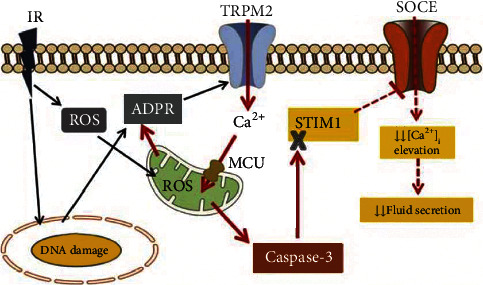
In patients with head and neck cancer, irradiation (IR)-sensitive salivary gland (SG) tissue is highly prone to damage during radiotherapy (RT). This leads to SG hypofunction and xerostomia. Xerostomia is defined as the subjective complaint of dry mouth, which can cause other symptoms and adversely affect the quality of life. In recent years, diagnostic techniques have constantly improved with the emergence of more reliable and valid questionnaires as well as more accurate equipment for saliva flow rate measurement and imaging methods. Preventive measures such as the antioxidant MitoTEMPO, botulinum toxin (BoNT), and growth factors have been successfully applied in animal experiments, resulting in positive outcomes. Interventions, such as the new delivery methods of pilocarpine, edible saliva substitutes, acupuncture and electrical stimulation, gene transfer, and stem cell transplantation, have shown potential to alleviate or restore xerostomia in patients. The review summarizes the existing and new diagnostic methods for xerostomia, along with current and potential strategies for reducing IR-induced damage to SG function. We also aim to provide guidance on the advantages and disadvantages of the diagnostic methods. Additionally, most prevention and treatment methods remain in the stage of animal experiments, suggesting a need for further clinical research, among which we believe that antioxidants, gene transfer, and stem cell transplantation have broad prospects.
在头颈癌患者中,放疗(RT)期间,对辐射(IR)敏感的唾液腺(SG)组织极易受损。这会导致唾液腺功能减退和口干症。口干症被定义为口干的主观感受,它会引发其他症状并对生活质量产生不利影响。近年来,随着更可靠、有效的问卷以及更精确的唾液流速测量设备和成像方法的出现,诊断技术不断改进。抗氧化剂MitoTEMPO、肉毒杆菌毒素(BoNT)和生长因子等预防措施已在动物实验中成功应用,并取得了积极成果。毛果芸香碱的新给药方法、可食用唾液替代品、针灸和电刺激、基因转移以及干细胞移植等干预措施已显示出缓解或恢复患者口干症的潜力。本综述总结了现有的和新的口干症诊断方法,以及减少IR诱导的唾液腺功能损伤的当前和潜在策略。我们还旨在就诊断方法的优缺点提供指导。此外,大多数预防和治疗方法仍处于动物实验阶段,这表明需要进一步开展临床研究,其中我们认为抗氧化剂、基因转移和干细胞移植具有广阔前景。