Oliveira Ilanna Vanessa Pristo de Medeiros, Deps Patrícia Duarte, Antunes João Marcelo Azevedo de Paula
Universidade Federal Rural do Semi-Árido, Hospital Veterinário Jerônimo Dix-Huit Rosado Maia, Mossoró, Rio Grande do Norte, Brazil.
Universidade Federal do Espírito Santo, Departamento de Medicina Social, Vitória, Espírito Santo, Brazil.
Rev Inst Med Trop Sao Paulo. 2019 Sep 12;61:e44. doi: 10.1590/S1678-9946201961044.
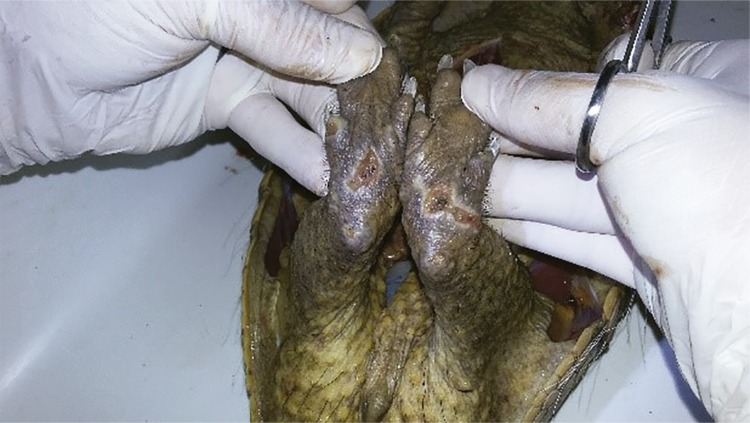
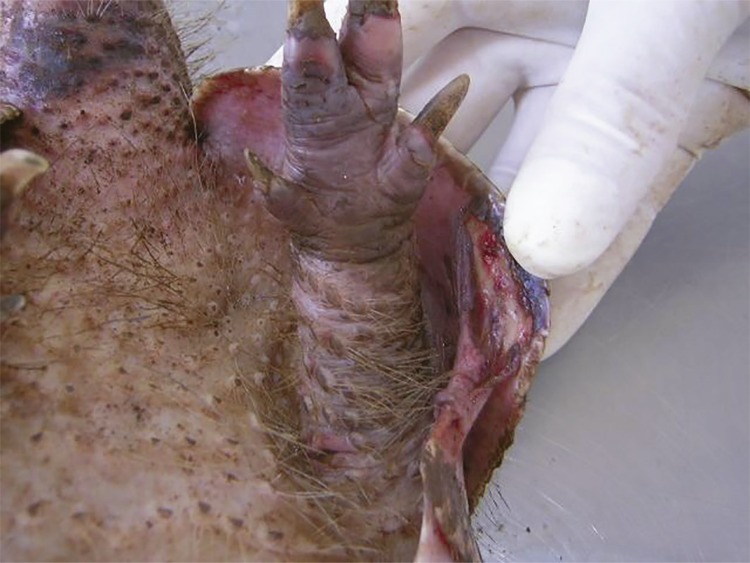
Mycobacterium leprae is the primary causative agent of Hansen's disease or leprosy. Besides human beings, natural infection has been described in animals such as mangabey monkeys and armadillos. Leprosy is considered a global health problem and its complete pathogenesis is still unknown. As M. leprae does not grow in artificial media, armadillos have become the primary experimental model for leprosy, mimicking human disease including involvement of the peripheral nervous system. Leprosy transmission occurs through continuous and close contact of susceptible people with untreated infected people. However, unknown leprosy contact has been reported in leprosy-affected people, and contact with armadillos is a risk factor for leprosy. In the USA, leprosy is considered a zoonosis and this classification has recently been accepted in Brazil. This review presents information regarding the role of wild armadillos as a source of M. leprae for human infections, as well as the pathogenesis of leprosy.
麻风分枝杆菌是汉森病或麻风病的主要病原体。除人类外,在诸如白眉猴和犰狳等动物中也发现了自然感染情况。麻风病被视为一个全球健康问题,其完整的发病机制仍不清楚。由于麻风分枝杆菌不能在人工培养基中生长,犰狳已成为麻风病的主要实验模型,可模拟包括累及周围神经系统在内的人类疾病。麻风病通过易感人群与未经治疗的感染者持续密切接触进行传播。然而,在麻风病患者中已报告存在不明的麻风病接触情况,并且与犰狳接触是麻风病的一个危险因素。在美国,麻风病被视为一种人畜共患病,这种分类最近在巴西也已被接受。本综述介绍了有关野生犰狳作为人类感染麻风分枝杆菌来源的作用以及麻风病发病机制的信息。