Institute for immunization and prevention, Beijing Center for Disease Prevention and Control, Beijing Research Center for Preventive Medicine, No.16, HePingLi Middle Street, DongCheng District, Beijing, 100013, China.
China Institute of Medical Information/Medical Library, CAMS&PUMC, No. 69 Dongdan North Street, Dongcheng District, Beijing, 100005, China.
BMC Infect Dis. 2019 Sep 18;19(1):811. doi: 10.1186/s12879-019-4428-y.
Hepatitis B virus (HBV) infection is a major public health problem in China. Over a decade has passed since the last National Hepatitis Seroepidemiological Survey was conducted in 2006. The lack of updated data on hepatitis B in China makes assessing the current prevalence and burden of the disease inadequate. In response to the above situation, a systematic review and meta-analysis was conducted to provide a better understanding of hepatitis B epidemiology in the general population of China.
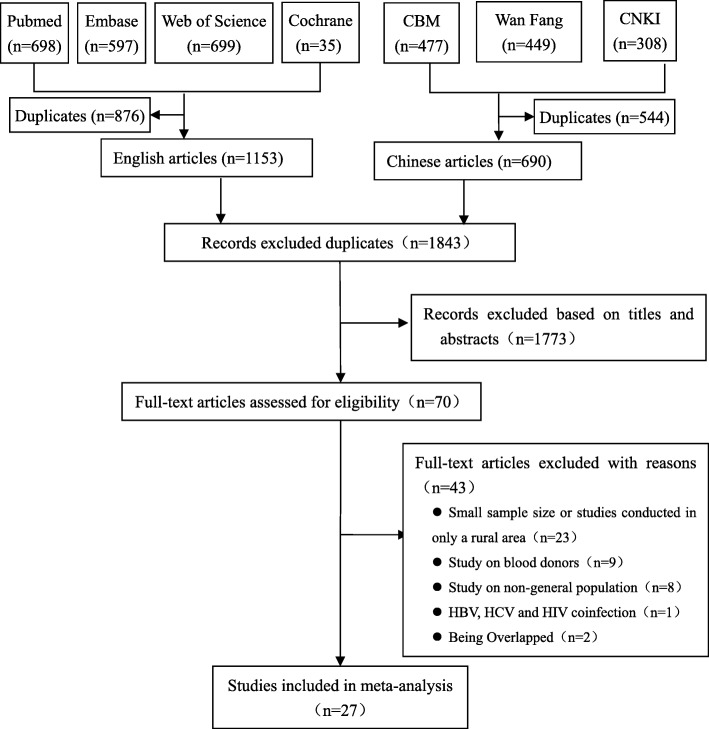
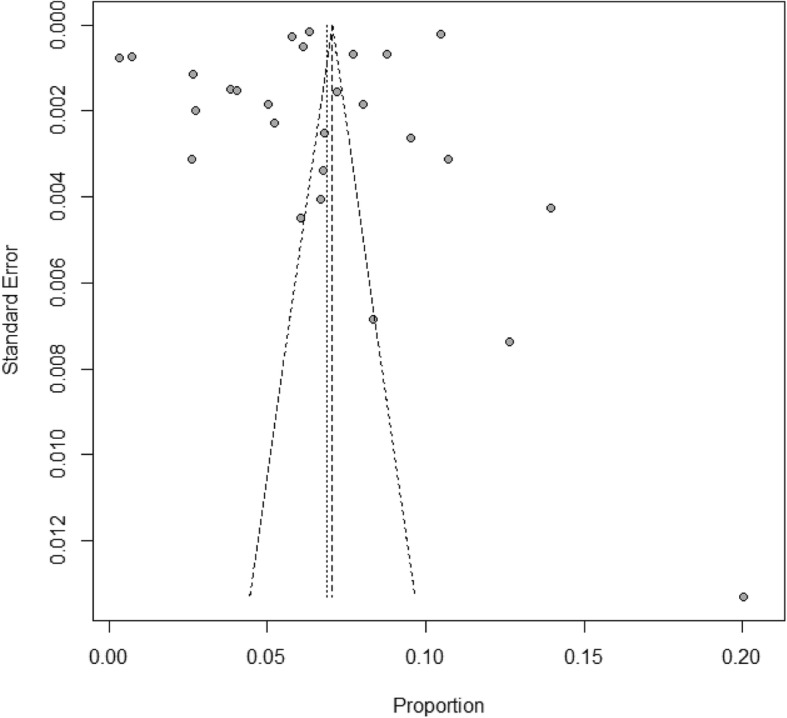
A systematic search was conducted in international databases (Medline through PubMed, EMBASE, Cochrane, Web of Science) and national databases (CBM, CNKI, WanFang Data) to retrieve primary studies published between January 1, 2013 and December 31, 2017. The pooled prevalence of HBV infection and 95% confidence intervals were calculated. Quality assessment, heterogeneity testing and publication bias assessment were also performed.
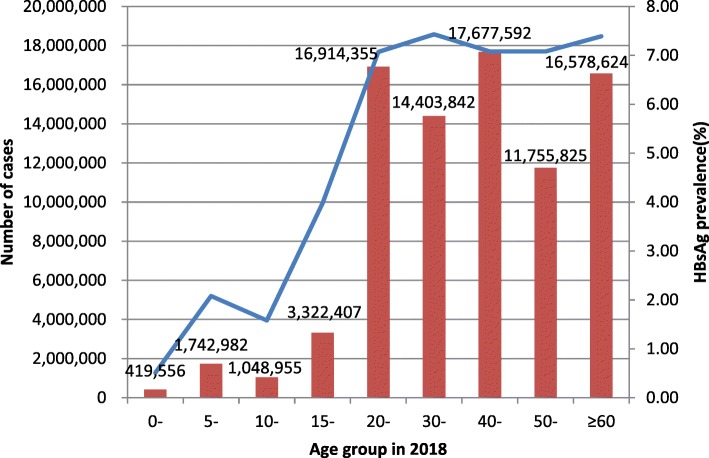
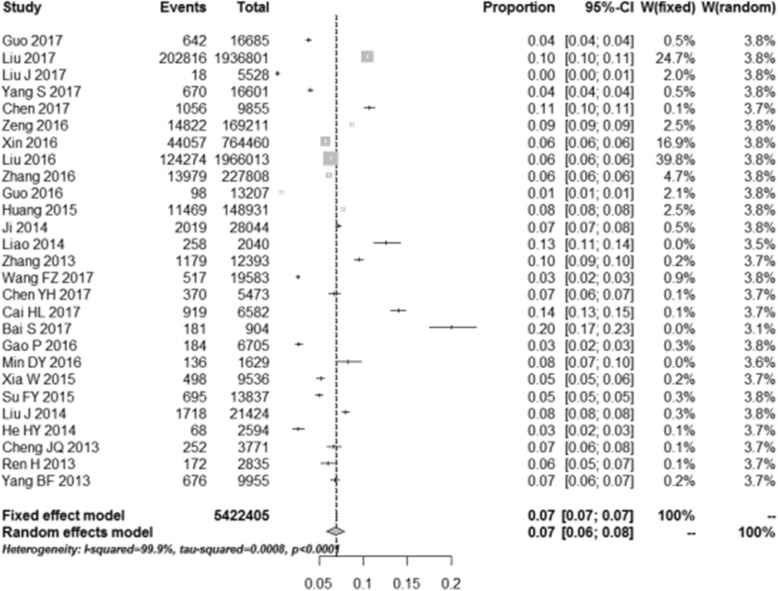
Of the 27 studies included in the meta-analysis, the pooled estimated prevalence of HBV infection in the general population of China from 2013 to 2017 was 6.89% (95% CI:5.84-7.95%), which could be extrapolated to an estimated population of 84 million living with HBsAg in 2018. The prevalence of HBV infection in males was higher than that in females (5.88% vs 5.05%), and rural areas had a higher prevalence than urban areas (5.86% vs 3.29%). The highest prevalence of HBV infection was reported in Western provinces (8.92, 95% CI: 7.19-10.64%). In adults older than 20 years, the prevalence of HBV infection was approximately 7%, which was higher than that in children.
The prevalence of HBV infection in the general population of China was classified as higher intermediate prevalence (5-7.99%), of which more than 90% of the HBV infection population included adults older than 20 years. The blocking of mother-to-infant hepatitis B transmission and plans involving timely birth dose of hepatitis B vaccine within 24 h should be implemented. Additionally, improving the quality of life and survival rate of the infected population through antiviral therapy and high-risk adult vaccination will be the priority of our future work. Moreover, various control measures should be implemented in different provinces across China.
乙型肝炎病毒(HBV)感染是中国的一个主要公共卫生问题。自 2006 年进行最后一次全国乙型肝炎血清流行病学调查以来,已经过去了十年。由于缺乏中国乙型肝炎的最新数据,因此无法充分评估该疾病的当前流行率和负担。针对上述情况,进行了系统评价和荟萃分析,以更好地了解中国一般人群中的乙型肝炎流行病学。
在国际数据库(通过 PubMed 的 Medline、EMBASE、Cochrane、Web of Science)和国家数据库(CBM、CNKI、万方数据)中进行了系统检索,以检索 2013 年 1 月 1 日至 2017 年 12 月 31 日期间发表的原始研究。计算了 HBV 感染的合并患病率和 95%置信区间。还进行了质量评估、异质性检验和发表偏倚评估。
在纳入荟萃分析的 27 项研究中,2013 年至 2017 年中国一般人群中 HBV 感染的合并估计患病率为 6.89%(95%CI:5.84-7.95%),可推断 2018 年有 8400 万人患有 HBsAg。男性的 HBV 感染率高于女性(5.88%比 5.05%),农村地区的感染率高于城市地区(5.86%比 3.29%)。HBV 感染率最高的是西部地区(8.92,95%CI:7.19-10.64%)。20 岁以上成年人的 HBV 感染率约为 7%,高于儿童。
中国一般人群的 HBV 感染率被归类为高中间流行率(5-7.99%),其中超过 90%的 HBV 感染人群包括 20 岁以上的成年人。应实施母婴乙型肝炎传播阻断和 24 小时内及时接种乙型肝炎疫苗的出生剂量计划。此外,通过抗病毒治疗和高危成人接种提高感染人群的生活质量和生存率将是我们未来工作的重点。此外,中国各地应实施各种控制措施。