Shulan (Hangzhou) Hospital, Zhejiang University International Hospital, Hangzhou, 310012, China.
State Key Laboratory for Diagnosis and Treatment of Infectious Diseases, Collaborative Innovation Center for Diagnosis and Treatment of Infectious Diseases, The First Affiliated Hospital, College of Medicine, Zhejiang University, 79 Qing-Chun Road, Hangzhou, 310003, China.
BMC Infect Dis. 2017 Dec 29;17(1):809. doi: 10.1186/s12879-017-2922-7.
The overall prevalence of hepatitis B virus (HBV) infection in China is declining. The purpose of this study was to use a community-based epidemiological study to update the infection status of hepatitis B virus (HBV) in mountainous regions of China, and to evaluate the impact of the Expanded Program of Immunization (EPI) on HBV transmission.
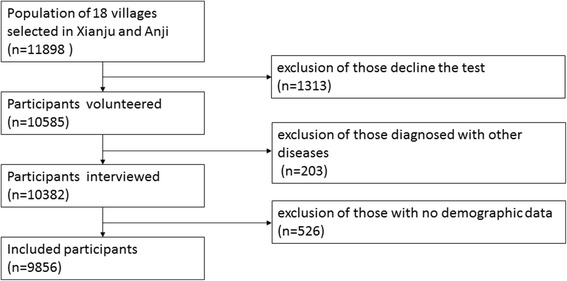
In total, 10,383 participants were selected by multi-stage stratified random cluster sampling in two mountainous regions, Xianju and Anji, in Zhejiang province, China.
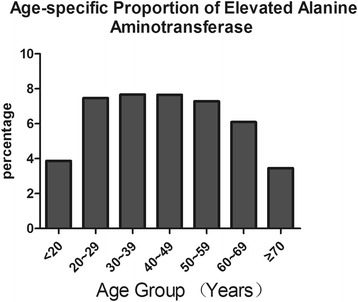
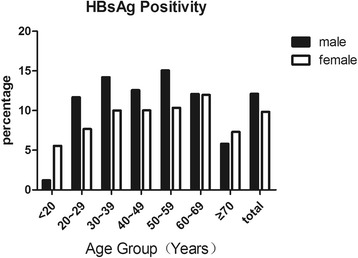
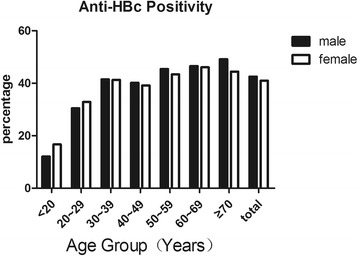
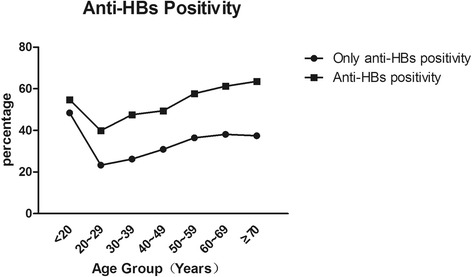
The positive rates of hepatitis B virus surface antigen (HBsAg), anti-HBV core antigen (anti-HBc), and anti-HBV surface antigen (anti-HBs) were 9.5%, 33.9%, and 51.0%, respectively. Positive HBV markers were more frequently detected in males than in females (P < 0.01). The alanine aminotransferase (ALT) levels were elevated (>38 IU/L) in 15.3% of the HBsAg-positive and 6.3% of the HBsAg-negative subjects. The α-fetoprotein (AFP) level was elevated in 0.8% of the HBsAg-positive participants who were older than 30 years old.
The epidemiology of HBV infection is location dependent. The prevalence of HBV infection in the mountainous regions is higher than the national levels. Moreover, HBV infection in women of childbearing age is up to 10%, which represents a main factor for continuous HBV transmission.
中国乙型肝炎病毒(HBV)感染的总体流行率正在下降。本研究旨在使用基于社区的流行病学研究来更新中国山区乙型肝炎病毒(HBV)的感染状况,并评估扩大免疫规划(EPI)对 HBV 传播的影响。
在中国浙江省的两个山区(仙居和安吉),通过多阶段分层随机聚类抽样共选择了 10383 名参与者。
乙型肝炎病毒表面抗原(HBsAg)、抗乙型肝炎核心抗原(抗-HBc)和抗乙型肝炎表面抗原(抗-HBs)的阳性率分别为 9.5%、33.9%和 51.0%。HBV 标志物阳性者中男性多于女性(P<0.01)。HBsAg 阳性者中 15.3%的丙氨酸氨基转移酶(ALT)水平升高(>38IU/L),而 HBsAg 阴性者中仅 6.3%的 ALT 水平升高。年龄>30 岁的 HBsAg 阳性者中,甲胎蛋白(AFP)水平升高者占 0.8%。
HBV 感染的流行病学与地理位置有关。山区 HBV 感染的流行率高于全国水平。此外,育龄妇女的 HBV 感染率高达 10%,这是 HBV 持续传播的主要因素。