Dos Santos Gomes Ana Carolina, Falkoski Daniel, Battaglia Evy, Peng Mao, Nicolau de Almeida Maira, Coconi Linares Nancy, Meijnen Jean-Paul, Visser Jaap, de Vries Ronald P
1Fungal Physiology, Westerdijk Fungal Biodiversity Institute & Fungal Molecular Physiology, Utrecht University, Uppsalalaan 8, 3584 CT Utrecht, The Netherlands.
Present Address: Novozymes Latin America, Professor Francisco Ribeiro Street 683, Araucária, PR 83707-660 Brazil.
Biotechnol Biofuels. 2019 Sep 16;12:220. doi: 10.1186/s13068-019-1556-y. eCollection 2019.
is a thermophilic ascomycete fungus that is used as a producer of enzyme cocktails used in plant biomass saccharification. Further development of this species as an industrial enzyme factory requires a detailed understanding of its regulatory systems driving the production of plant biomass-degrading enzymes. In this study, we analyzed the function of MtXlr1, an ortholog of the (hemi-)cellulolytic regulator XlnR first identified in another industrially relevant fungus, .
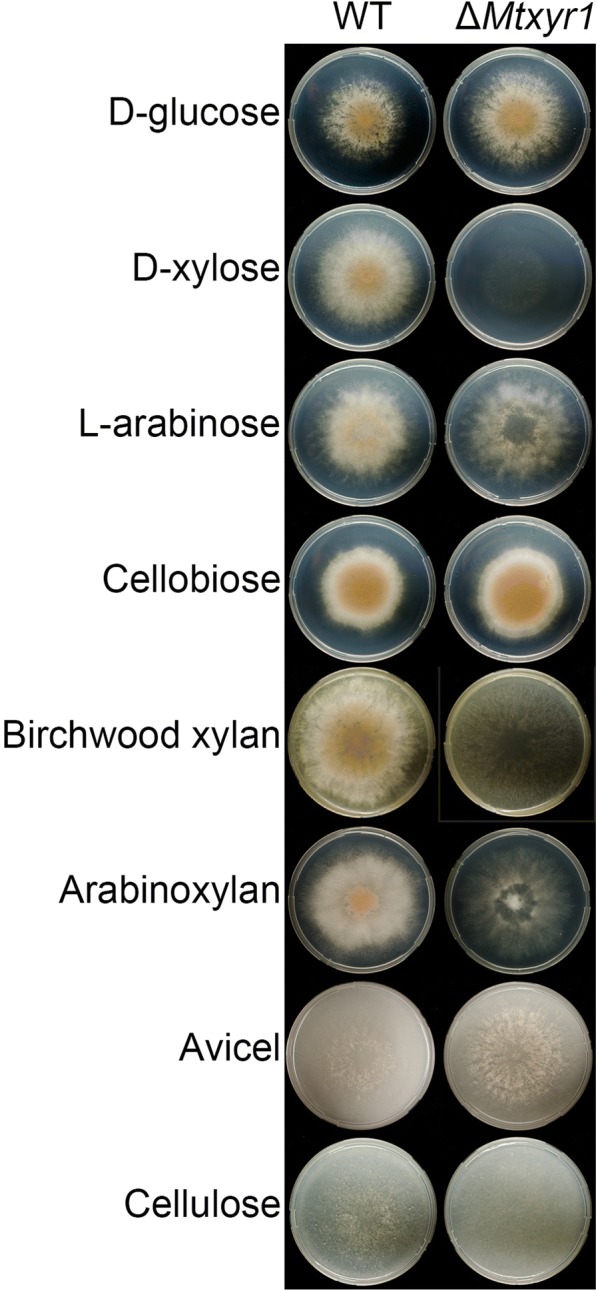
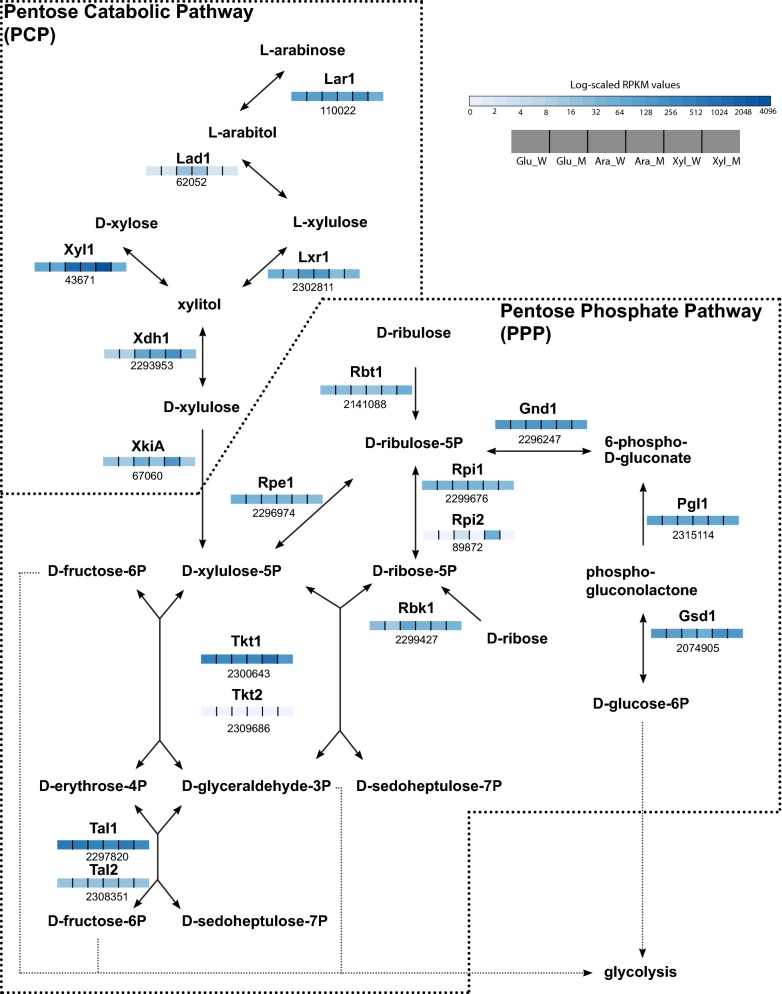
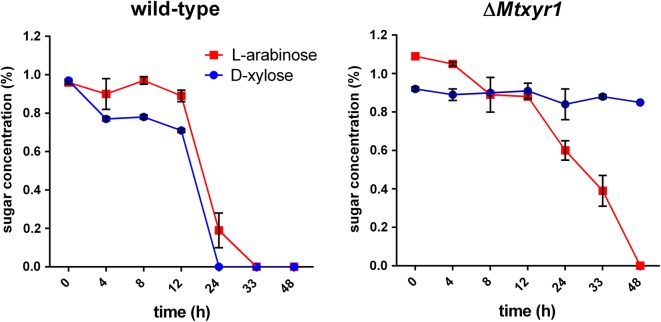
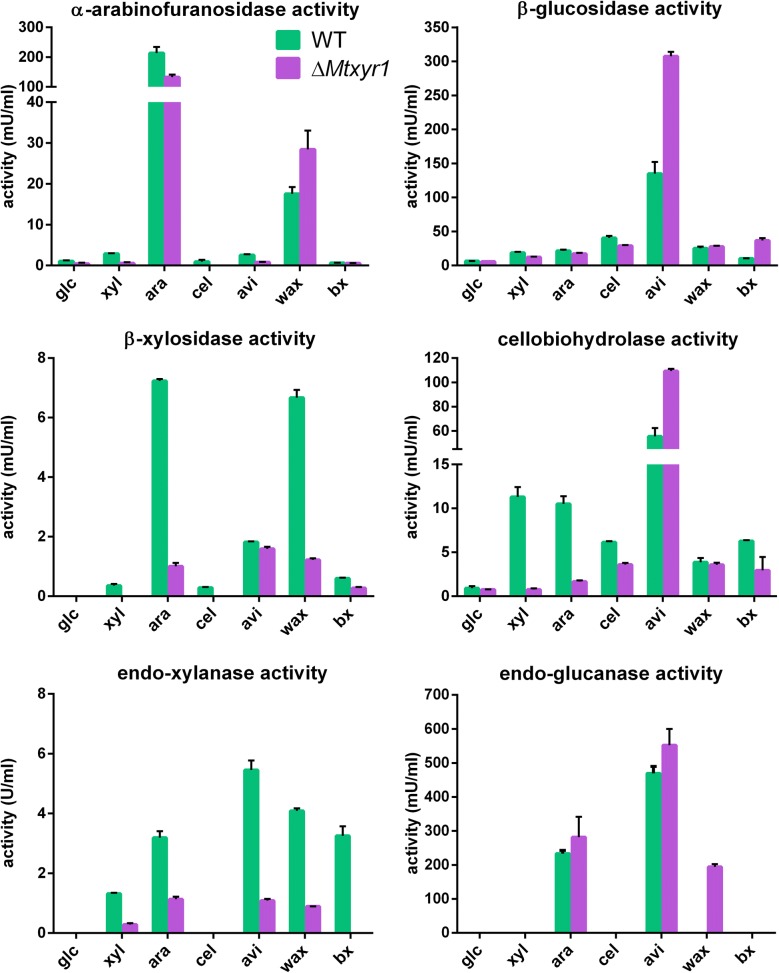
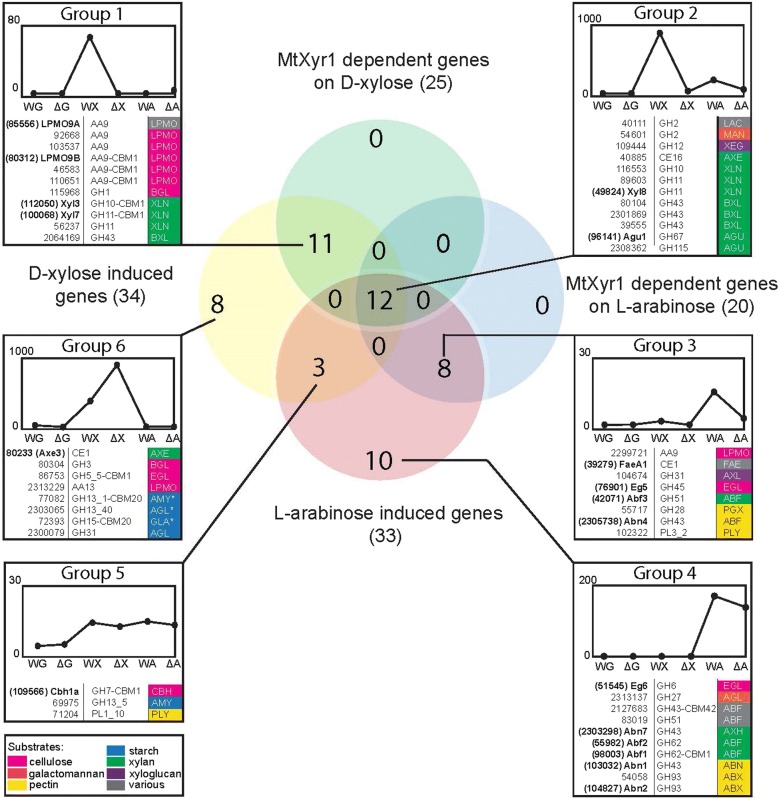
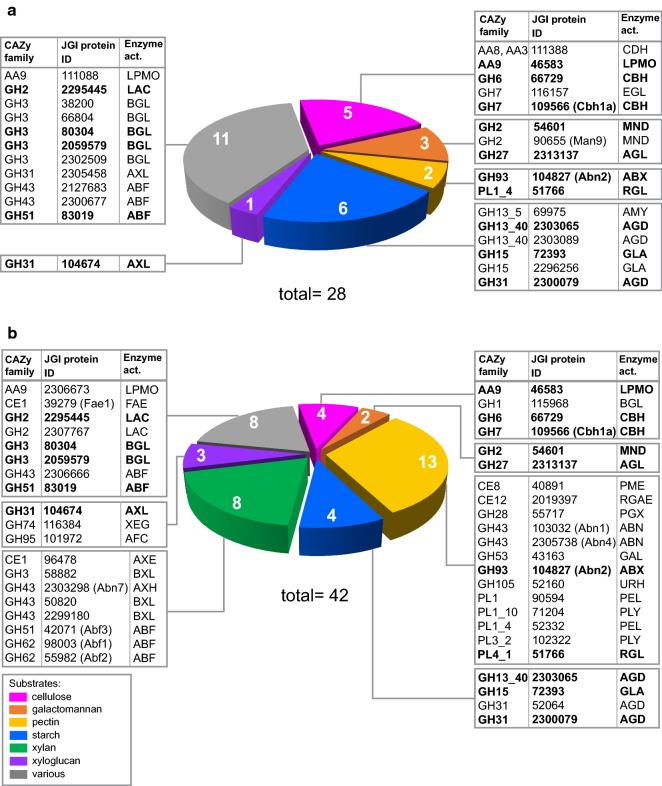
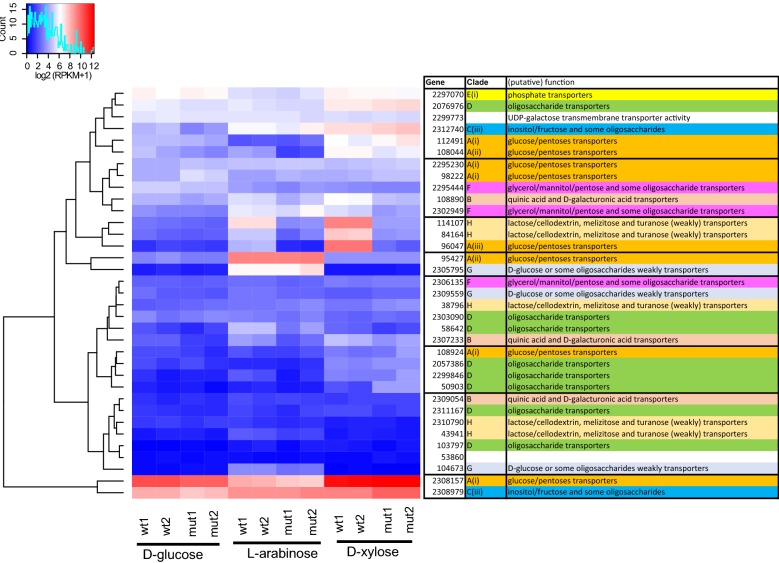
The gene was deleted and the resulting strain was compared to the wild type using growth profiling and transcriptomics. The deletion strain was unable to grow on xylan and d-xylose, but showed only a small growth reduction on l-arabinose, and grew similar to the wild type on Avicel and cellulose. These results were supported by the transcriptome analyses which revealed reduction of genes encoding xylan-degrading enzymes, enzymes of the pentose catabolic pathway and putative pentose transporters. In contrast, no or minimal effects were observed for the expression of cellulolytic genes.
MtXlr1 controls the expression of xylanolytic genes and genes involved in pentose transport and catabolism, but has no significant effects on the production of cellulases. It therefore resembles more the role of its ortholog in , rather than the broader role described for this regulator in and . By revealing the range of genes controlled by MtXlr1, our results provide the basic knowledge for targeted strain improvement by overproducing or constitutively activating this regulator, to further improve the biotechnological value of .
是一种嗜热子囊真菌,用作植物生物质糖化中使用的酶混合物的生产者。将该物种进一步开发为工业酶工厂需要详细了解驱动植物生物质降解酶生产的调控系统。在本研究中,我们分析了MtXlr1的功能,MtXlr1是首次在另一种与工业相关的真菌中鉴定出的(半)纤维素分解调节因子XlnR的直系同源物。
删除了基因,并使用生长分析和转录组学将所得菌株与野生型进行比较。缺失菌株无法在木聚糖和D-木糖上生长,但在L-阿拉伯糖上仅表现出轻微的生长减少,在微晶纤维素和纤维素上的生长与野生型相似。这些结果得到了转录组分析的支持,转录组分析揭示了编码木聚糖降解酶、戊糖分解代谢途径的酶和假定的戊糖转运蛋白的基因减少。相比之下,未观察到纤维素分解基因的表达有影响或影响最小。
MtXlr1控制木聚糖分解基因以及参与戊糖转运和分解代谢的基因的表达,但对纤维素酶的产生没有显著影响。因此,它更类似于其在中的直系同源物的作用,而不是在和中描述的该调节因子的更广泛作用。通过揭示由MtXlr1控制的基因范围,我们的结果为通过过量生产或组成性激活该调节因子来有针对性地改良菌株提供了基础知识,以进一步提高的生物技术价值。