Schuldner Maximiliane, Dörsam Bastian, Shatnyeva Olga, Reiners Katrin S, Kubarenko Andriy, Hansen Hinrich P, Finkernagel Florian, Roth Katrin, Theurich Sebastian, Nist Andrea, Stiewe Thorsten, Paschen Annette, Knittel Gero, Reinhardt Hans C, Müller Rolf, Hallek Michael, von Strandmann Elke Pogge
Experimental Tumor Research, Center for Tumor Biology and Immunology, Clinic for Hematology, Oncology and Immunology, Philipps University, Marburg, Germany.
Innate Immunity Group, Department I of Internal Medicine, University Hospital of Cologne, Cologne, Germany.
Theranostics. 2019 Aug 14;9(21):6047-6062. doi: 10.7150/thno.36378. eCollection 2019.
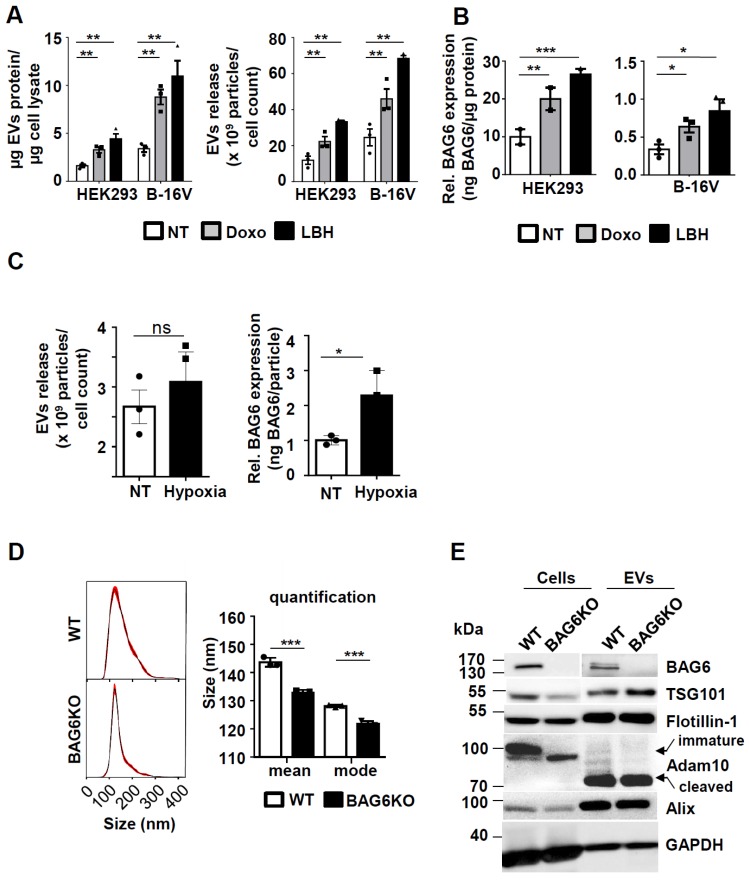
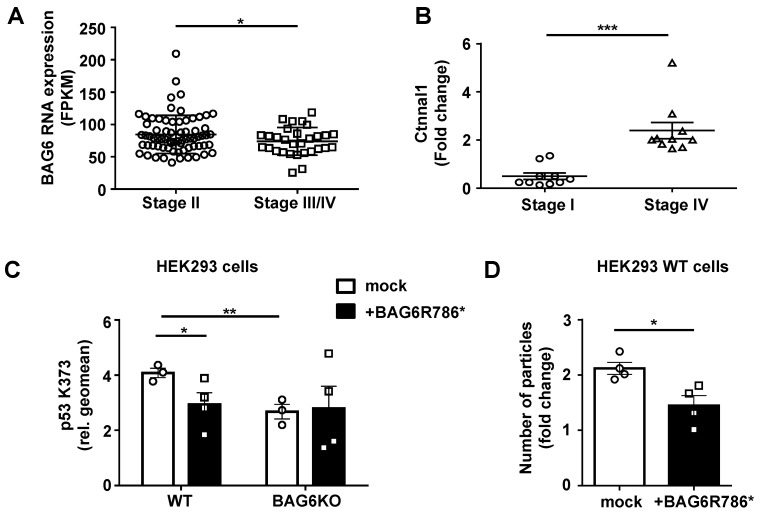
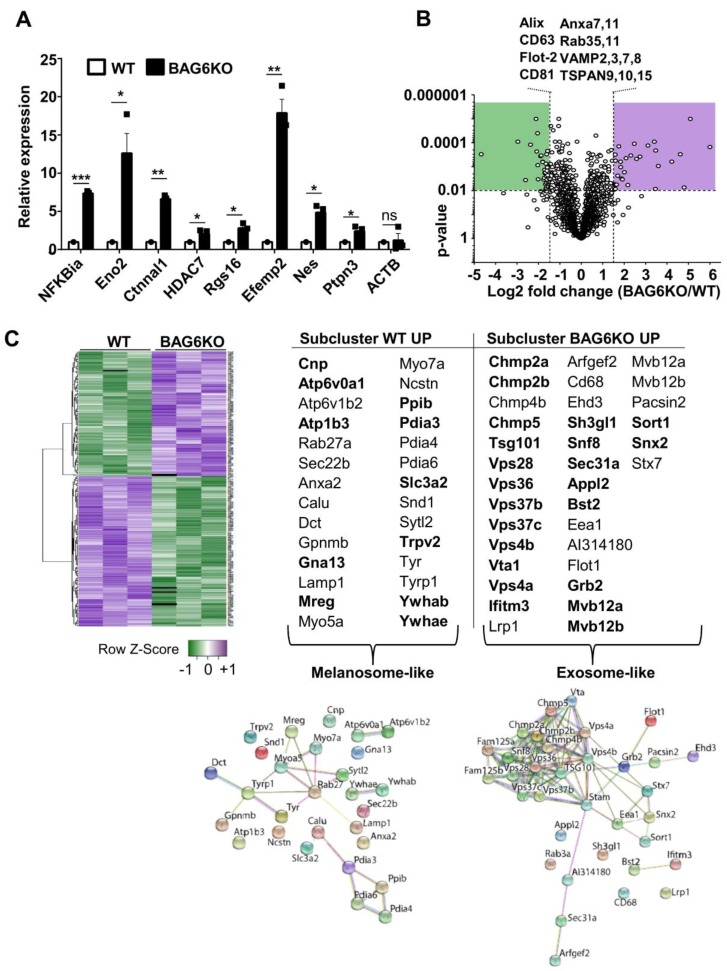
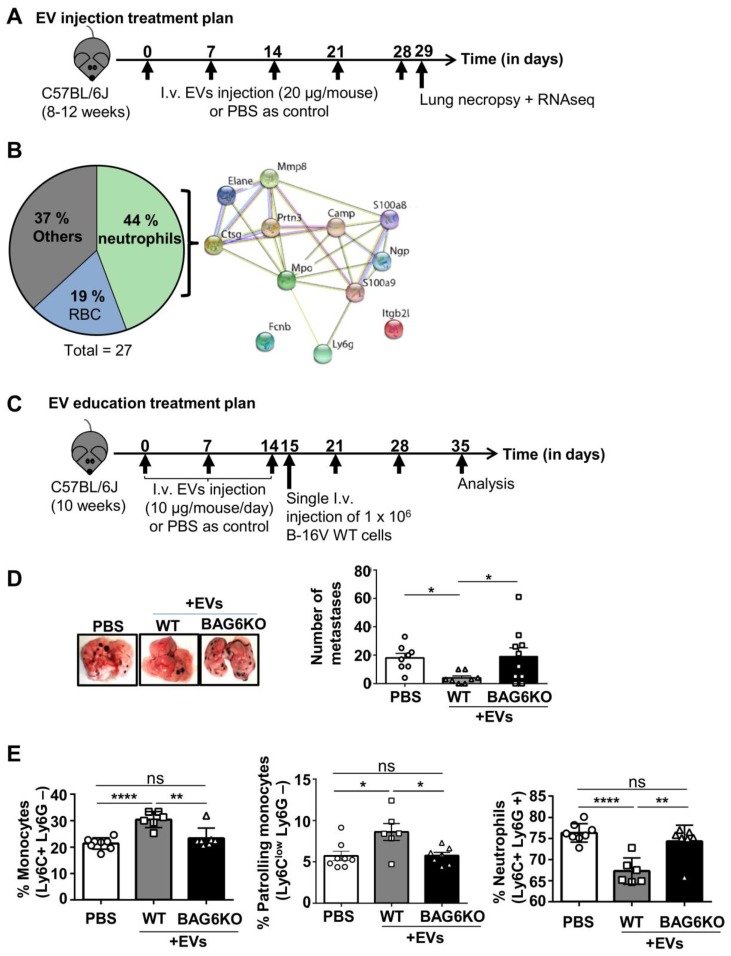
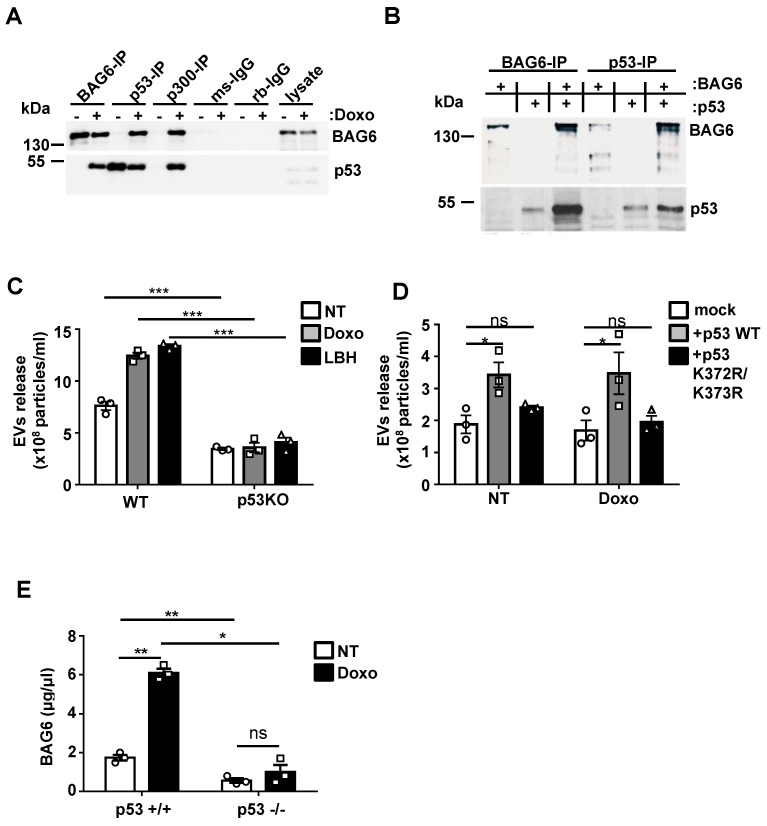
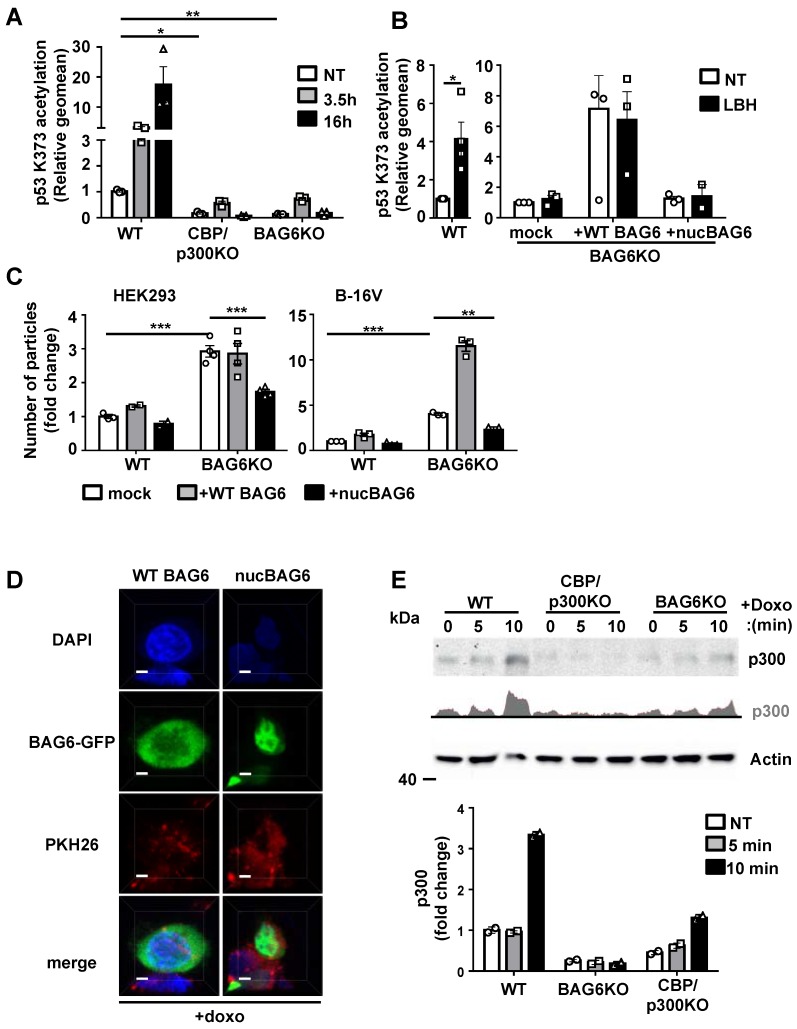
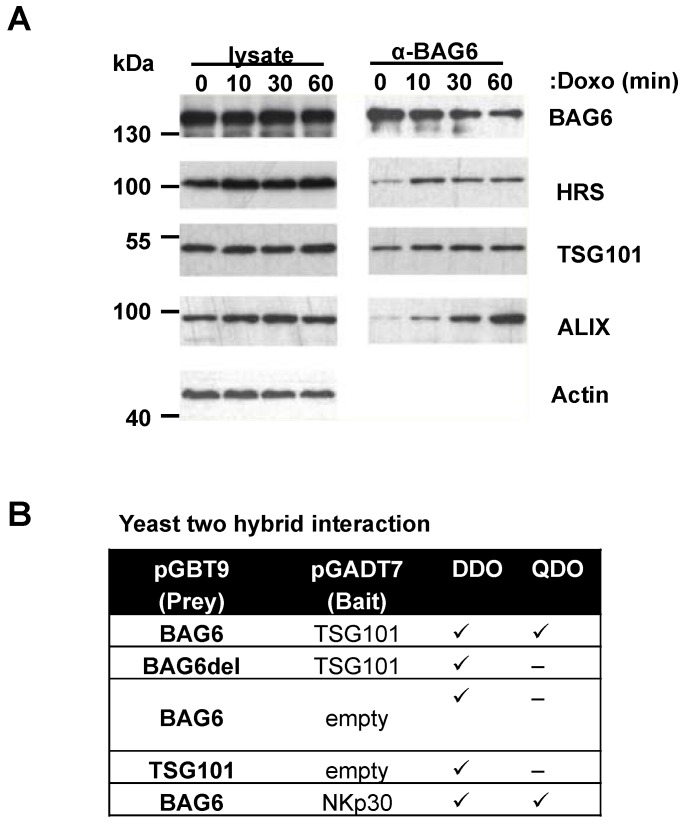
Extracellular vesicles released by tumor cells contribute to the reprogramming of the tumor microenvironment and interfere with hallmarks of cancer including metastasis. Notably, melanoma cell-derived EVs are able to establish a pre-metastatic niche in distant organs, or on the contrary, exert anti-tumor activity. However, molecular insights into how vesicles are selectively packaged with cargo defining their specific functions remain elusive. : Here, we investigated the role of the chaperone Bcl2-associated anthogene 6 (BAG6, synonym Bat3) for the formation of pro- and anti-tumor EVs. EVs collected from wildtype cells and BAG6-deficient cells were characterized by mass spectrometry and RNAseq. Their tumorigenic potential was analyzed using the B-16V transplantation mouse melanoma model. : We demonstrate that EVs from B-16V cells inhibit lung metastasis associated with the mobilization of Ly6C patrolling monocytes. The formation of these anti-tumor-EVs was dependent on acetylation of p53 by the BAG6/CBP/p300-acetylase complex, followed by recruitment of components of the endosomal sorting complexes required for transport (ESCRT) via a P(S/T)AP double motif of BAG6. Genetic ablation of BAG6 and disruption of this pathway led to the release of a distinct EV subtype, which failed to suppress metastasis but recruited tumor-promoting neutrophils to the pre-metastatic niche. : We conclude that the BAG6/CBP/p300-p53 axis is a key pathway directing EV cargo loading and thus a potential novel microenvironmental therapeutic target.
肿瘤细胞释放的细胞外囊泡有助于肿瘤微环境的重编程,并干扰包括转移在内的癌症特征。值得注意的是,黑色素瘤细胞衍生的细胞外囊泡能够在远处器官建立前转移生态位,或者相反,发挥抗肿瘤活性。然而,关于囊泡如何选择性地包裹决定其特定功能的货物的分子见解仍然难以捉摸。在这里,我们研究了分子伴侣Bcl2相关抗基因6(BAG6,同义词Bat3)在促肿瘤和抗肿瘤细胞外囊泡形成中的作用。通过质谱和RNA测序对从野生型细胞和BAG6缺陷细胞中收集的细胞外囊泡进行了表征。使用B-16V移植小鼠黑色素瘤模型分析了它们的致瘤潜力。我们证明,来自B-16V细胞的细胞外囊泡抑制与Ly6C巡逻单核细胞动员相关的肺转移。这些抗肿瘤细胞外囊泡的形成依赖于BAG6/CBP/p300乙酰转移酶复合物对p53的乙酰化,随后通过BAG6的P(S/T)AP双基序招募转运所需的内体分选复合物(ESCRT)的成分。BAG6的基因消融和该途径的破坏导致释放出一种不同的细胞外囊泡亚型,该亚型未能抑制转移,但将促肿瘤中性粒细胞招募到前转移生态位。我们得出结论,BAG6/CBP/p300-p53轴是指导细胞外囊泡货物装载的关键途径,因此是一个潜在的新型微环境治疗靶点。