Bourquain Daniel, Bodenstein Clemens, Schürer Stefanie, Schaade Lars
Centre for Biological Threats and Special Pathogens, Robert Koch Institute, 13353 Berlin, Germany.
Viruses. 2019 Sep 14;11(9):855. doi: 10.3390/v11090855.
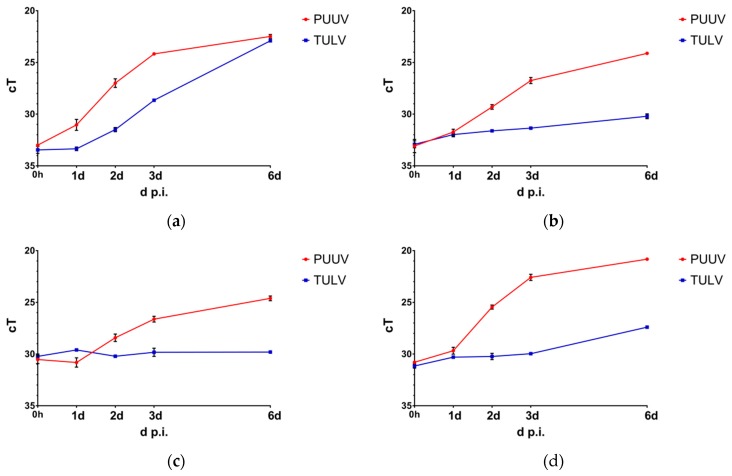
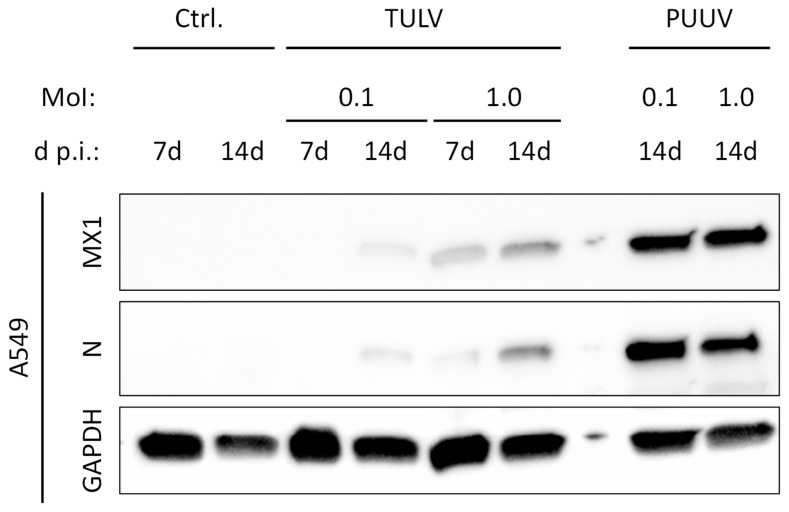
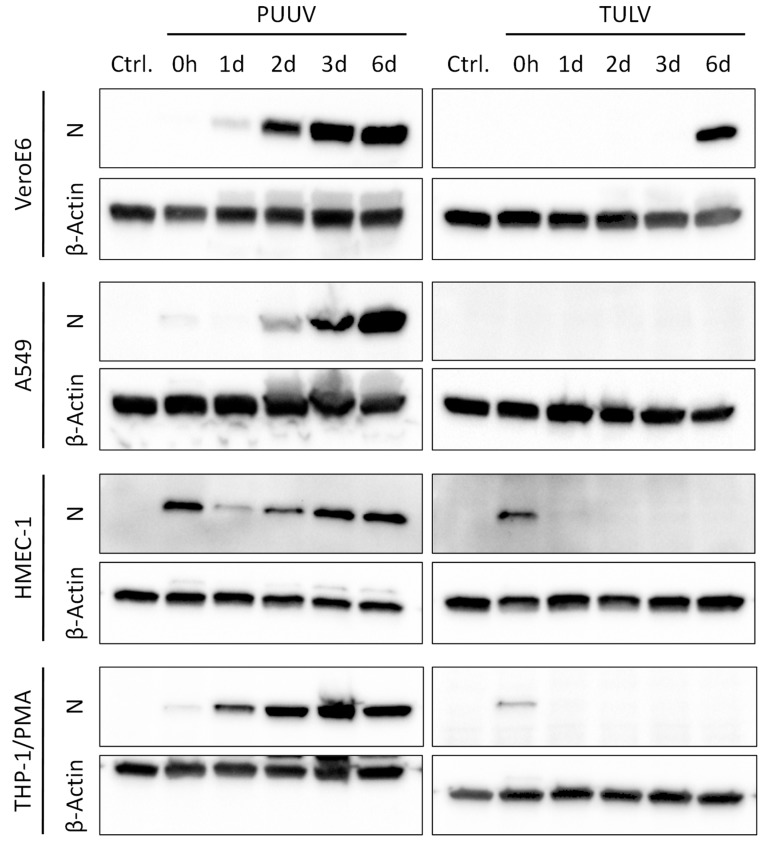
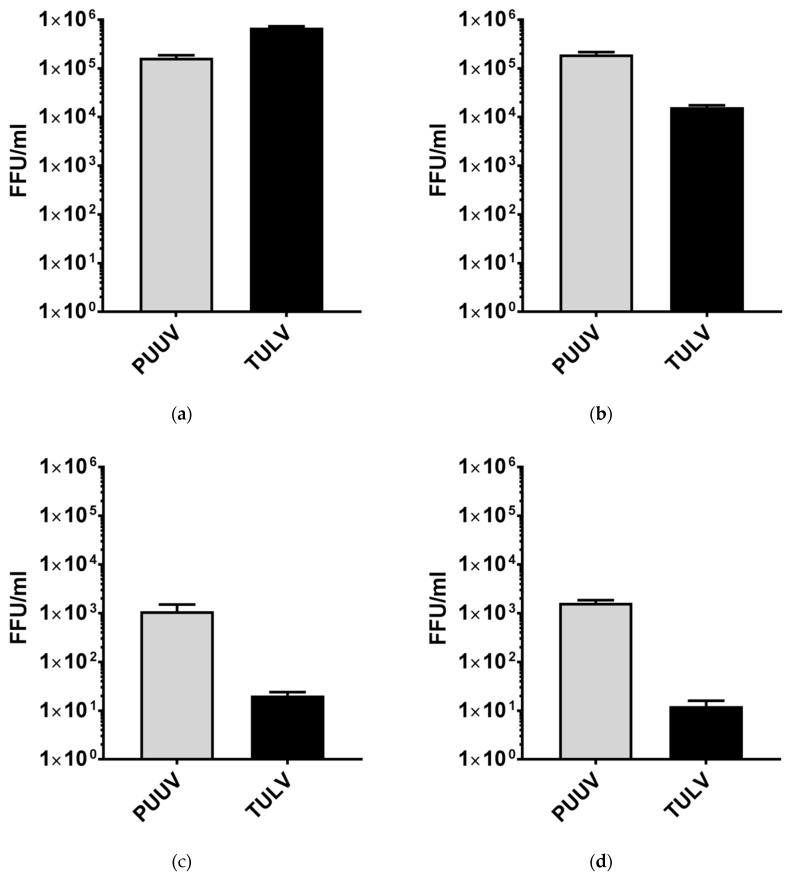
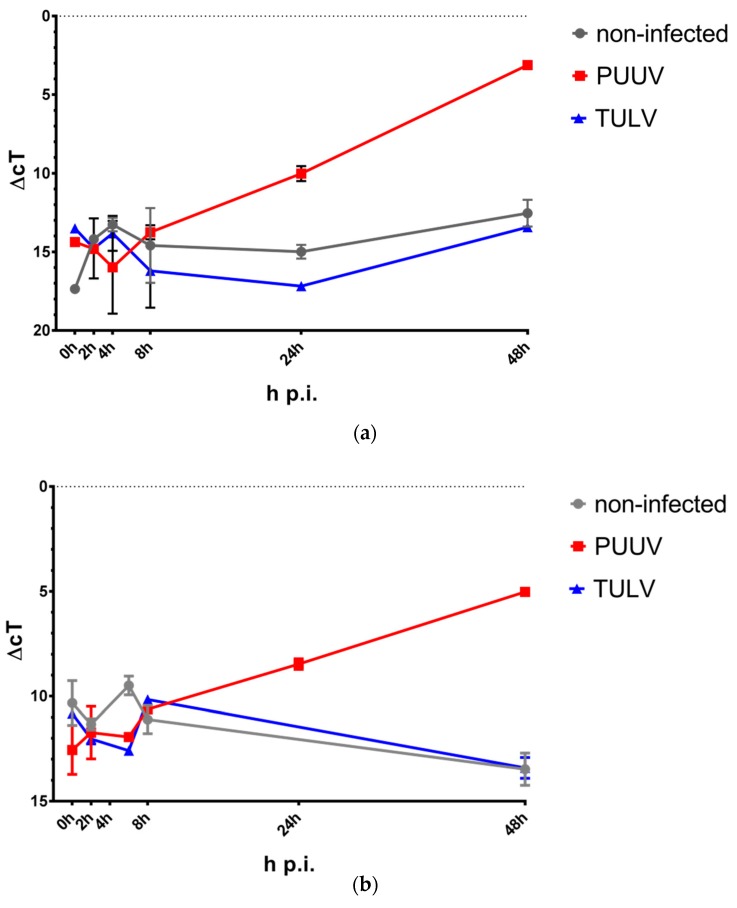
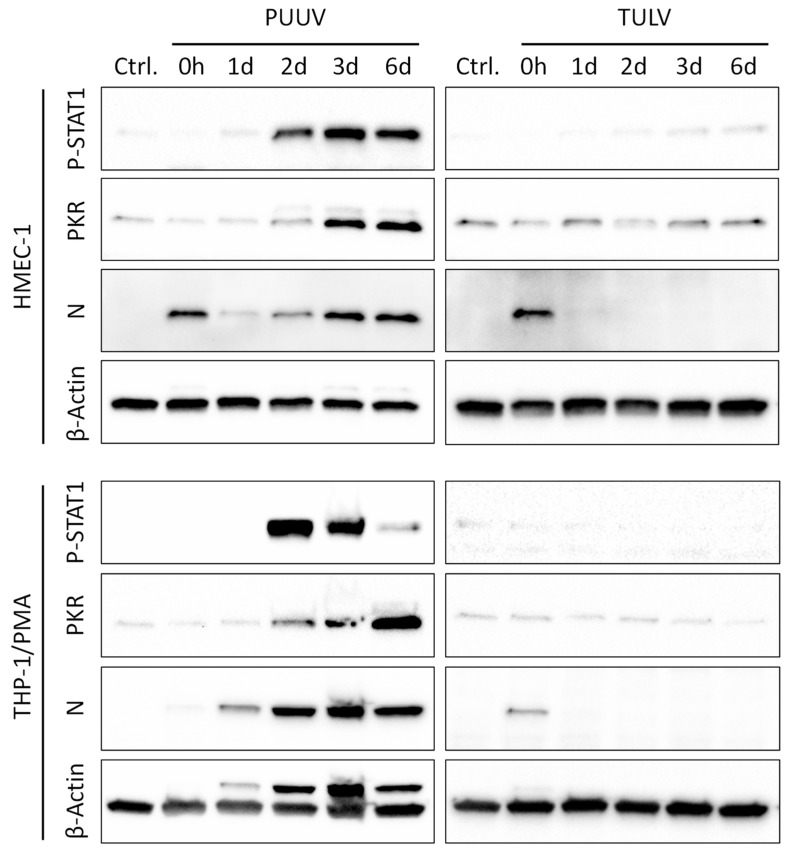
Old world hantaviruses cause hemorrhagic fever with renal syndrome (HFRS) upon zoonotic transmission to humans. In Europe, the Puumala virus (PUUV) is the main causative agent of HFRS. Tula virus (TULV) is also widely distributed in Europe, but there is little knowledge about the pathogenicity of TULV for humans, as reported cases are rare. We studied the replication of TULV in different cell types in comparison to the pathogenic PUUV and analyzed differences in stimulation of innate immunity. While both viruses replicated to a similar extent in interferon (IFN)-deficient Vero E6 cells, TULV replication in human lung epithelial (A549) cells was slower and less efficient when compared to PUUV. In contrast to PUUV, no replication of TULV could be detected in human microvascular endothelial cells and in macrophages. While a strong innate immune response towards PUUV infection was evident at 48 h post infection, TULV infection triggered only a weak IFN response late after infection of A549 cells. Using appropriate in vitro cell culture models for the orthohantavirus infection, we could demonstrate major differences in host cell tropism, replication kinetics, and innate immune induction between pathogenic PUUV and the presumably non- or low-pathogenic TULV that are not observed in Vero E6 cells and may contribute to differences in virulence.
旧世界汉坦病毒通过人畜共患病传播给人类后会引发肾综合征出血热(HFRS)。在欧洲,普马拉病毒(PUUV)是HFRS的主要病原体。图拉病毒(TULV)也在欧洲广泛分布,但由于报告的病例很少,关于TULV对人类的致病性了解甚少。我们将TULV与致病性PUUV进行比较,研究了其在不同细胞类型中的复制情况,并分析了先天免疫刺激方面的差异。虽然两种病毒在缺乏干扰素(IFN)的Vero E6细胞中的复制程度相似,但与PUUV相比,TULV在人肺上皮(A549)细胞中的复制较慢且效率较低。与PUUV不同,在人微血管内皮细胞和巨噬细胞中未检测到TULV的复制。虽然在感染后48小时对PUUV感染有明显的强烈先天免疫反应,但TULV感染在A549细胞感染后期仅引发了微弱的IFN反应。使用合适的体外细胞培养模型进行正汉坦病毒感染,我们可以证明致病性PUUV与可能无致病性或低致病性的TULV在宿主细胞嗜性、复制动力学和先天免疫诱导方面存在主要差异,这些差异在Vero E6细胞中未观察到,可能导致毒力差异。