Muslin Claire, Mac Kain Alice, Bessaud Maël, Blondel Bruno, Delpeyroux Francis
One Health Research Group, Faculty of Health Sciences, Universidad de las Américas, Quito EC170125, Pichincha, Ecuador.
Institut Pasteur, Viral Populations and Pathogenesis Unit, CNRS UMR 3569, 75015 Paris, France.
Viruses. 2019 Sep 14;11(9):859. doi: 10.3390/v11090859.
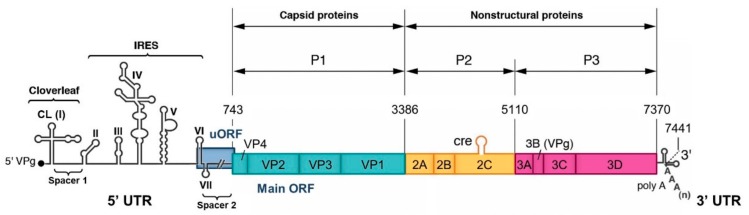
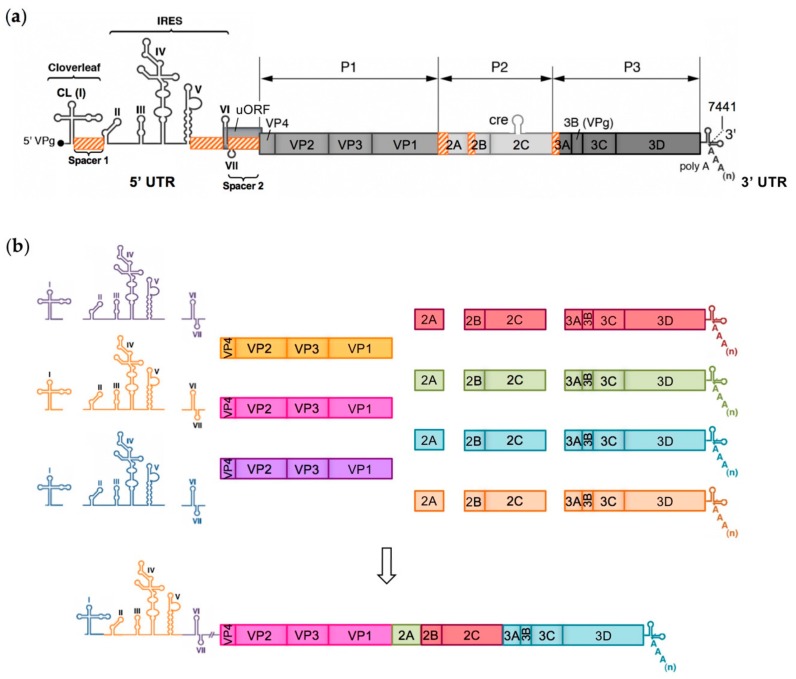
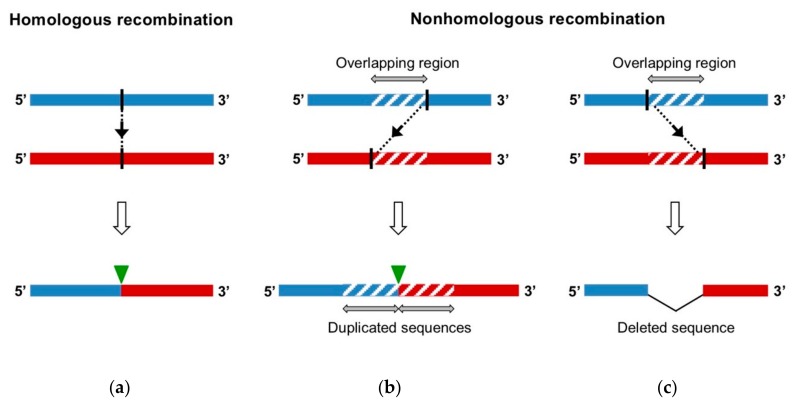
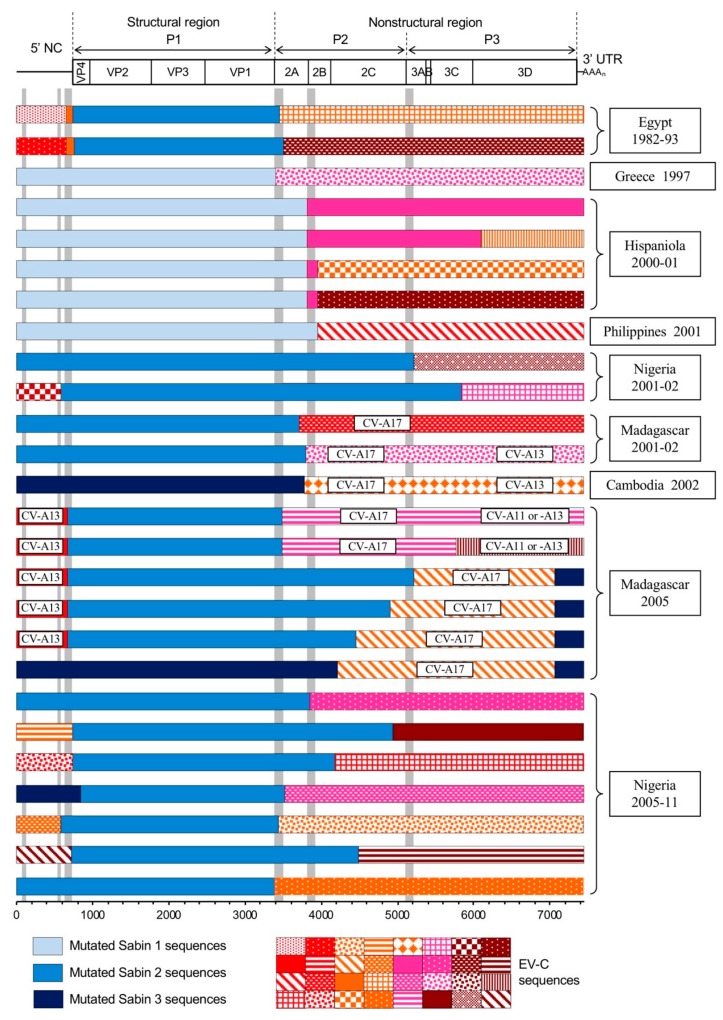
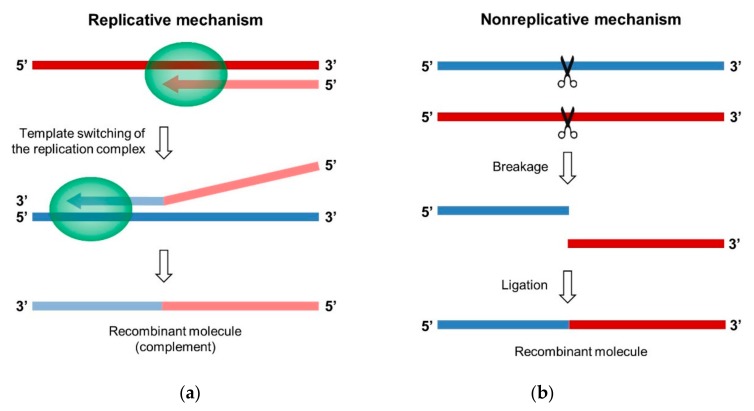
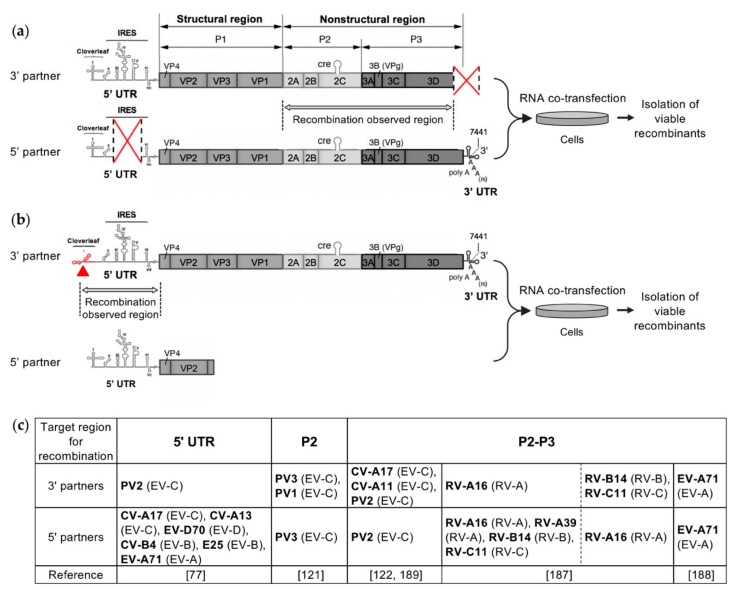
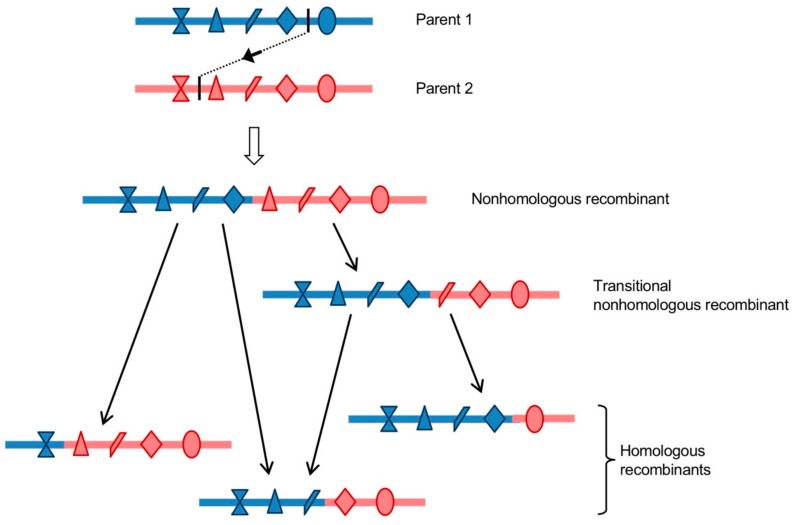
RNA recombination is a major driving force in the evolution and genetic architecture shaping of enteroviruses. In particular, intertypic recombination is implicated in the emergence of most pathogenic circulating vaccine-derived polioviruses, which have caused numerous outbreaks of paralytic poliomyelitis worldwide. Recent experimental studies that relied on recombination cellular systems mimicking natural genetic exchanges between enteroviruses provided new insights into the molecular mechanisms of enterovirus recombination and enabled to define a new model of genetic plasticity for enteroviruses. Homologous intertypic recombinant enteroviruses that were observed in nature would be the final products of a multi-step process, during which precursor nonhomologous recombinant genomes are generated through an initial inter-genomic RNA recombination event and can then evolve into a diversity of fitter homologous recombinant genomes over subsequent intra-genomic rearrangements. Moreover, these experimental studies demonstrated that the enterovirus genome could be defined as a combination of genomic modules that can be preferentially exchanged through recombination, and enabled defining the boundaries of these recombination modules. These results provided the first experimental evidence supporting the theoretical model of enterovirus modular evolution previously elaborated from phylogenetic studies of circulating enterovirus strains. This review summarizes our current knowledge regarding the mechanisms of recombination in enteroviruses and presents a new evolutionary process that may apply to other RNA viruses.
RNA重组是肠道病毒进化和遗传结构塑造的主要驱动力。特别是,不同型间的重组与大多数致病性循环疫苗衍生脊髓灰质炎病毒的出现有关,这些病毒在全球范围内引发了多次麻痹性脊髓灰质炎疫情。最近的实验研究依赖于模拟肠道病毒之间自然基因交换的重组细胞系统,为肠道病毒重组的分子机制提供了新的见解,并能够为肠道病毒定义一种新的遗传可塑性模型。自然界中观察到的同源不同型重组肠道病毒将是一个多步骤过程的最终产物,在此过程中,前体非同源重组基因组通过最初的基因组间RNA重组事件产生,然后在随后的基因组内重排过程中演变成多种更适应的同源重组基因组。此外,这些实验研究表明,肠道病毒基因组可以被定义为一组基因组模块的组合,这些模块可以通过重组优先交换,并能够定义这些重组模块的边界。这些结果提供了首个实验证据,支持先前从循环肠道病毒株的系统发育研究中阐述的肠道病毒模块化进化的理论模型。本综述总结了我们目前关于肠道病毒重组机制的知识,并提出了一个可能适用于其他RNA病毒的新进化过程。