Cellular Senescence and Translation and Pharmacology Programs, Robert and Arlene Kogod Center on Aging, Mayo Clinic, United States of America; Division of Geriatric Medicine and Gerontology, Department of Medicine, Mayo Clinic, United States of America; Division of Nephrology and Hypertension, Department of Medicine, Mayo Clinic, United States of America.
Cellular Senescence and Translation and Pharmacology Programs, Robert and Arlene Kogod Center on Aging, Mayo Clinic, United States of America.
EBioMedicine. 2019 Sep;47:446-456. doi: 10.1016/j.ebiom.2019.08.069. Epub 2019 Sep 18.
Senescent cells, which can release factors that cause inflammation and dysfunction, the senescence-associated secretory phenotype (SASP), accumulate with ageing and at etiological sites in multiple chronic diseases. Senolytics, including the combination of Dasatinib and Quercetin (D + Q), selectively eliminate senescent cells by transiently disabling pro-survival networks that defend them against their own apoptotic environment. In the first clinical trial of senolytics, D + Q improved physical function in patients with idiopathic pulmonary fibrosis (IPF), a fatal senescence-associated disease, but to date, no peer-reviewed study has directly demonstrated that senolytics decrease senescent cells in humans.
In an open label Phase 1 pilot study, we administered 3 days of oral D 100 mg and Q 1000 mg to subjects with diabetic kidney disease (N = 9; 68·7 ± 3·1 years old; 2 female; BMI:33·9 ± 2·3 kg/m; eGFR:27·0 ± 2·1 mL/min/1·73m). Adipose tissue, skin biopsies, and blood were collected before and 11 days after completing senolytic treatment. Senescent cell and macrophage/Langerhans cell markers and circulating SASP factors were assayed.
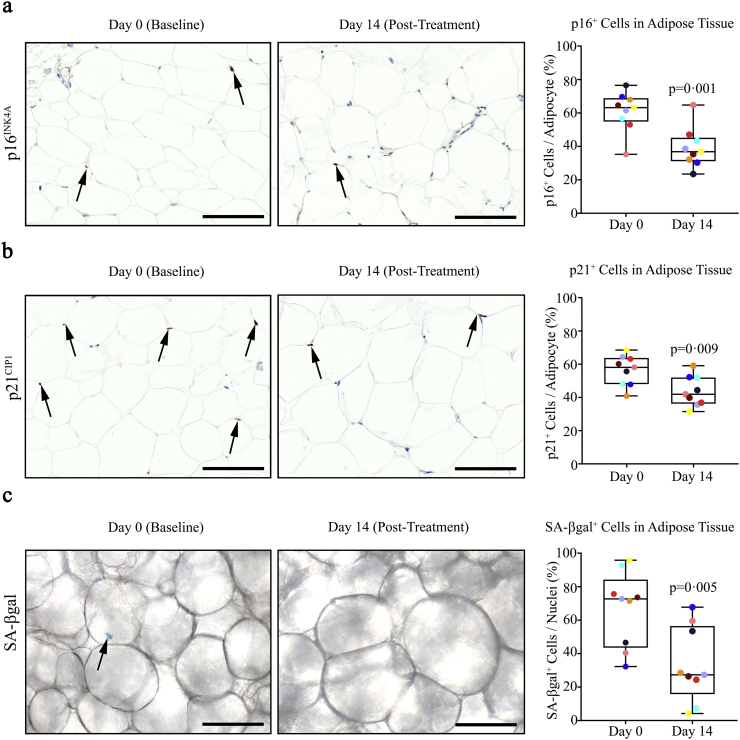
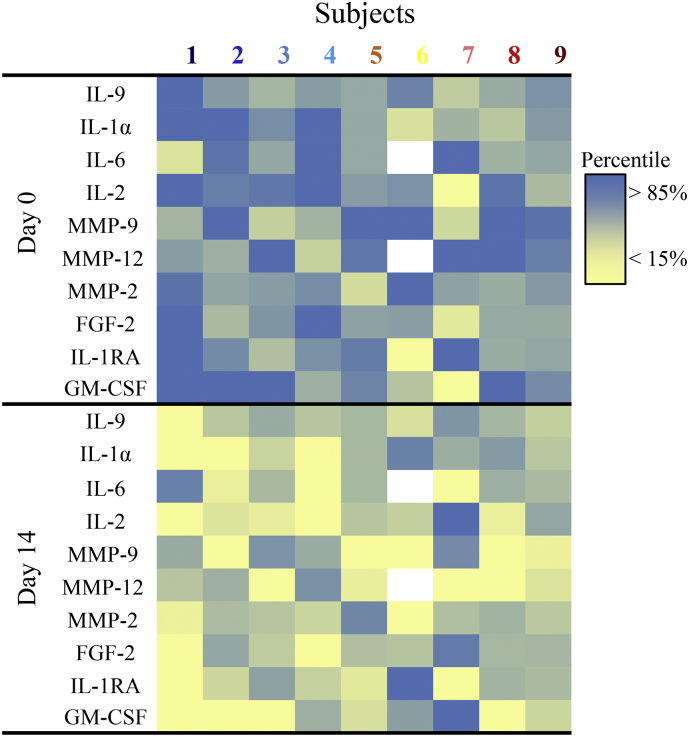
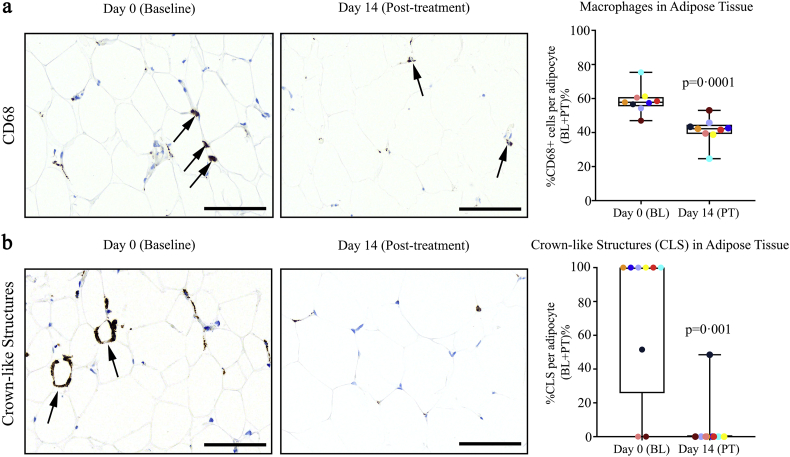
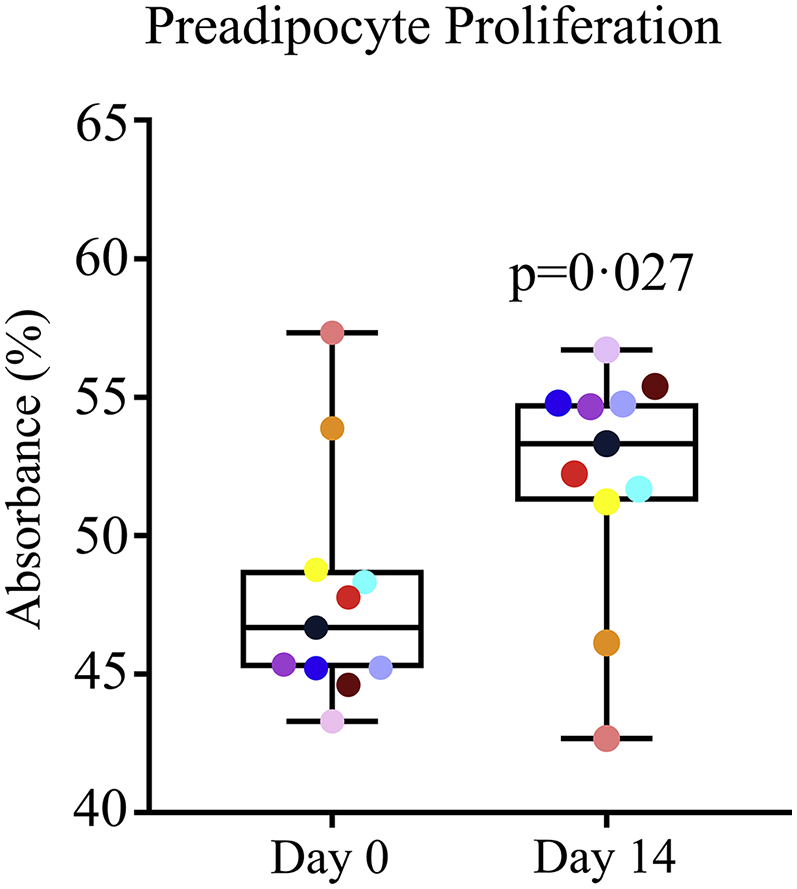
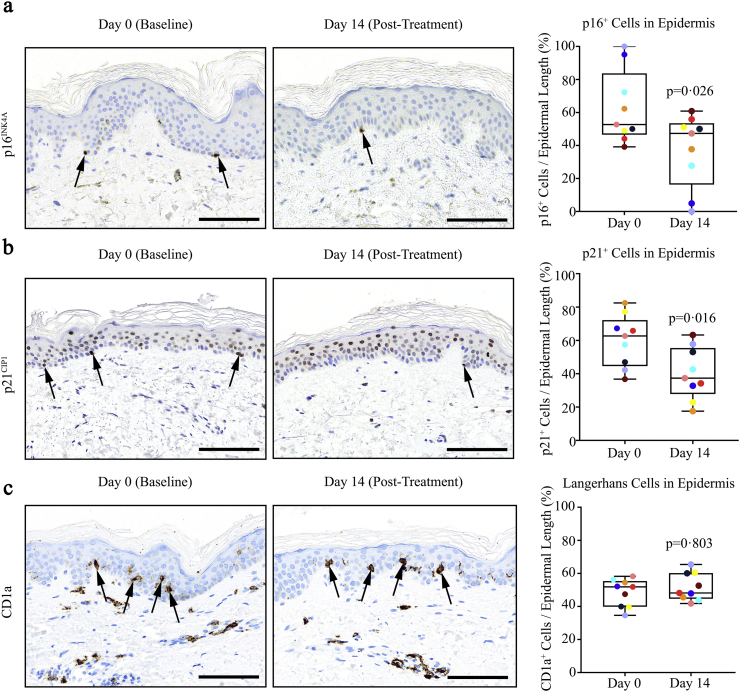
D + Q reduced adipose tissue senescent cell burden within 11 days, with decreases in p16-and p21-expressing cells, cells with senescence-associated β-galactosidase activity, and adipocyte progenitors with limited replicative potential. Adipose tissue macrophages, which are attracted, anchored, and activated by senescent cells, and crown-like structures were decreased. Skin epidermal p16 and p21 cells were reduced, as were circulating SASP factors, including IL-1α, IL-6, and MMPs-9 and -12.
"Hit-and-run" treatment with senolytics, which in the case of D + Q have elimination half-lives <11 h, significantly decreases senescent cell burden in humans. FUND: NIH and Foundations. ClinicalTrials.gov Identifier: NCT02848131. Senescence, Frailty, and Mesenchymal Stem Cell Functionality in Chronic Kidney Disease: Effect of Senolytic Agents.
衰老细胞会释放引发炎症和功能障碍的因子,即衰老相关分泌表型(SASP),随着年龄的增长以及在多种慢性疾病的病因部位积累。衰老细胞清除剂,包括达沙替尼和槲皮素(D+Q)联合使用,通过暂时使保护衰老细胞免受自身凋亡环境影响的生存网络失活,选择性地清除衰老细胞。在衰老细胞清除剂的首次临床试验中,D+Q 改善了特发性肺纤维化(IPF)患者的身体机能,IPF 是一种致命的与衰老相关的疾病,但迄今为止,尚无同行评议的研究直接证明衰老细胞清除剂可减少人类的衰老细胞。
在一项开放标签的 1 期试验中,我们给 9 名患有糖尿病肾病(68·7±3·1 岁;2 名女性;BMI:33·9±2·3kg/m2;eGFR:27·0±2·1mL/min/1·73m)的患者口服 D 100mg 和 Q 1000mg 共 3 天。在完成衰老细胞清除治疗前和 11 天后收集脂肪组织、皮肤活检和血液。检测衰老细胞和巨噬细胞/朗格汉斯细胞标志物以及循环 SASP 因子。
D+Q 在 11 天内降低了脂肪组织衰老细胞负担,减少了 p16 和 p21 表达细胞、具有衰老相关β-半乳糖苷酶活性的细胞以及增殖潜力有限的脂肪细胞祖细胞。脂肪组织巨噬细胞减少,这些细胞是被衰老细胞吸引、锚定和激活的,冠层样结构也减少。皮肤表皮 p16 和 p21 细胞减少,循环 SASP 因子包括 IL-1α、IL-6 和 MMP-9 和 -12 也减少。
以半衰期<11 小时的衰老细胞清除剂“打了就跑”治疗,可显著降低人类的衰老细胞负担。资金来源:NIH 和基金会。临床试验注册:NCT02848131。衰老、虚弱与慢性肾脏病间充质干细胞功能:衰老细胞清除剂的作用。