Department of Microbiology, Institute of Basic Medical Sciences, Chinese Academy of Medical Sciences and School of Basic Medicine, Peking Union Medical College, Beijing, China (mainland).
State Key Laboratory of Medical Molecular Biology, Institute of Basic Medical Sciences, Chinese Academy of Medical Sciences and School of Basic Medicine, Peking Union Medical College, Beijing, China (mainland).
Med Sci Monit. 2019 Sep 22;25:7100-7114. doi: 10.12659/MSM.917097.
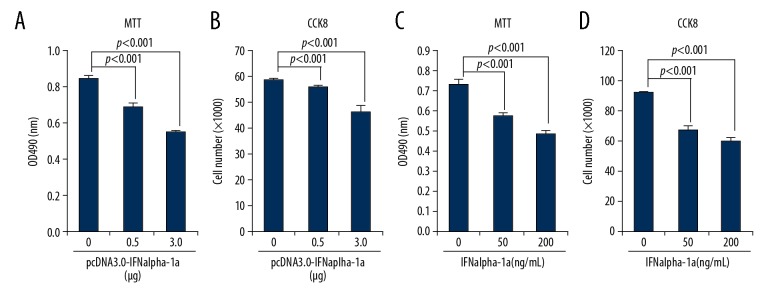
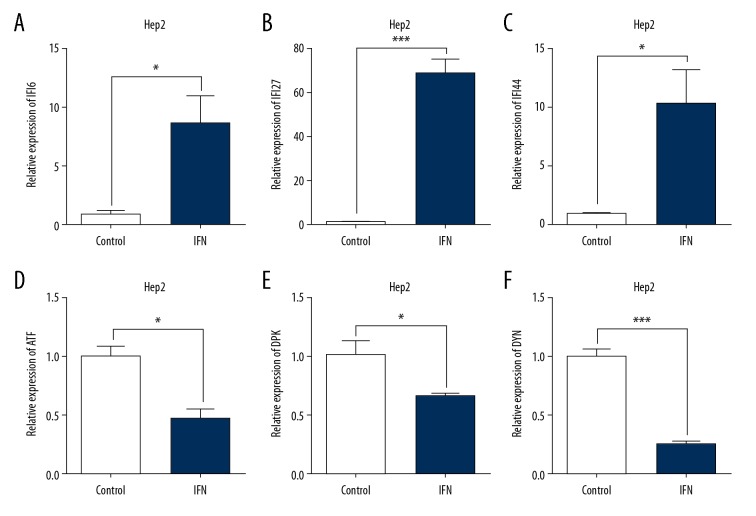
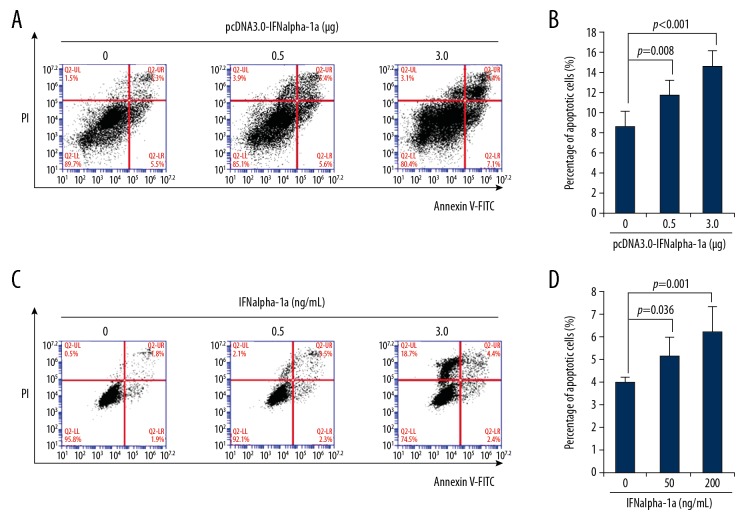
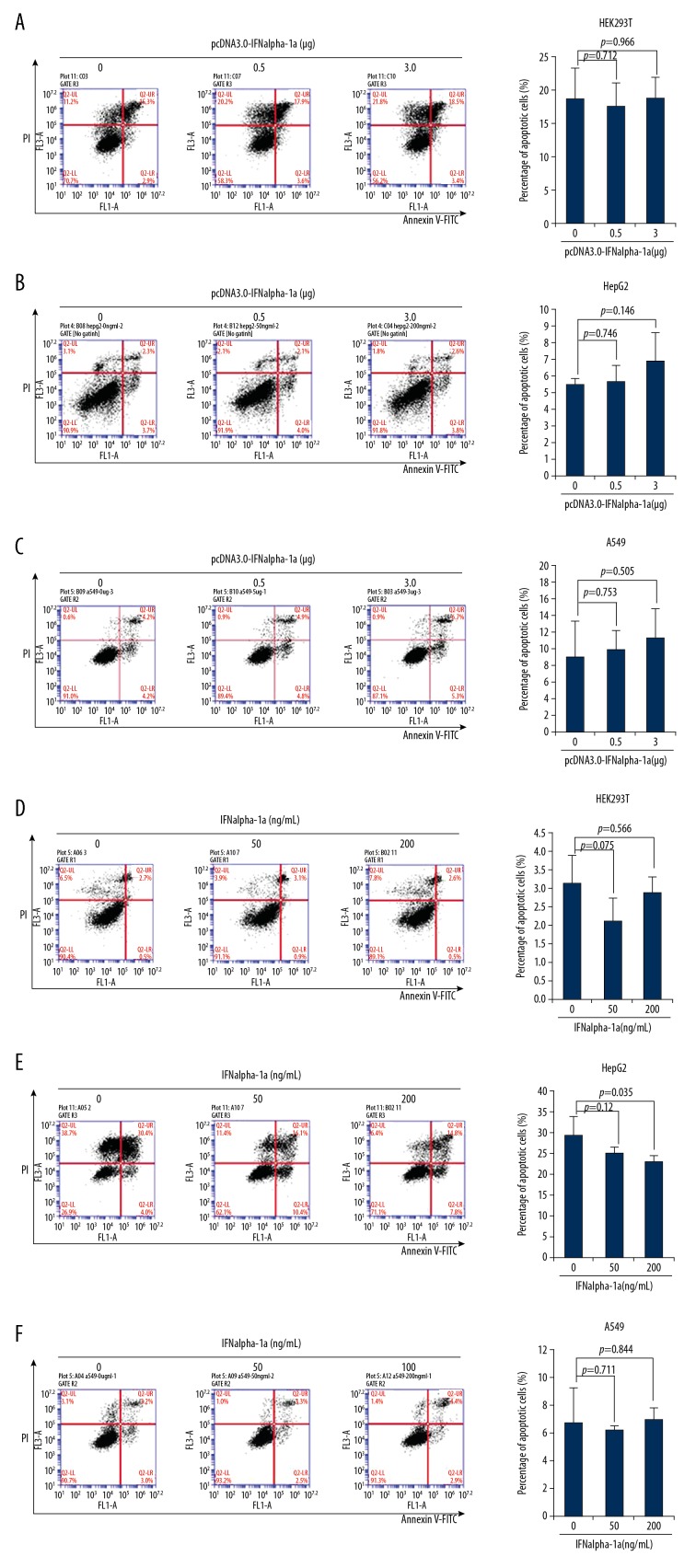
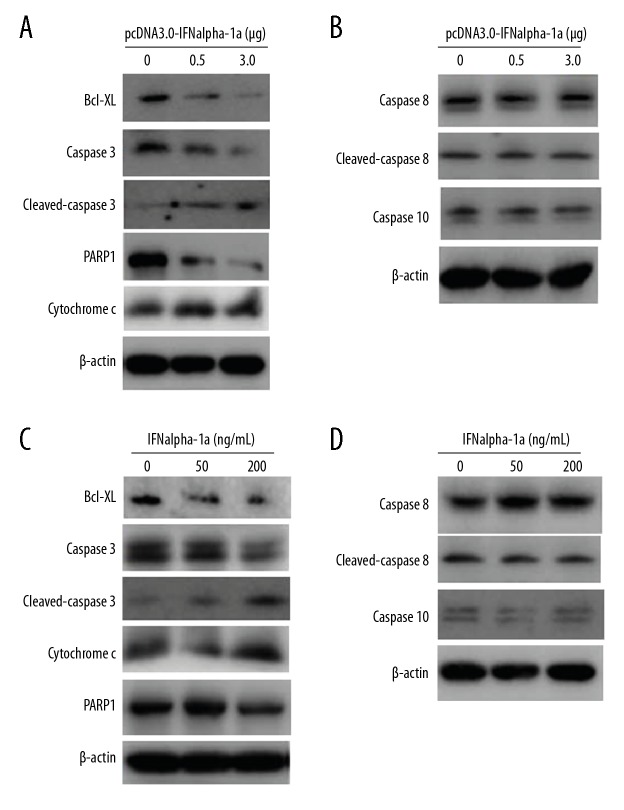
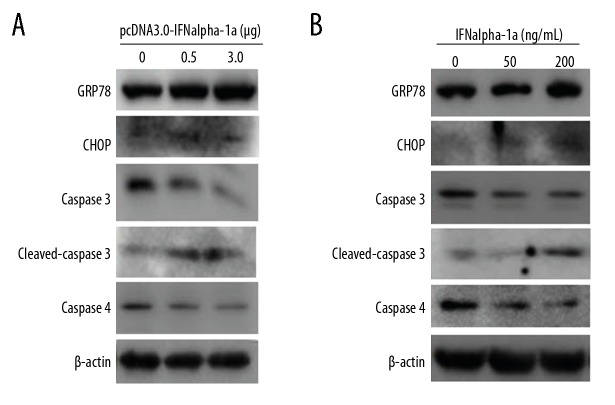
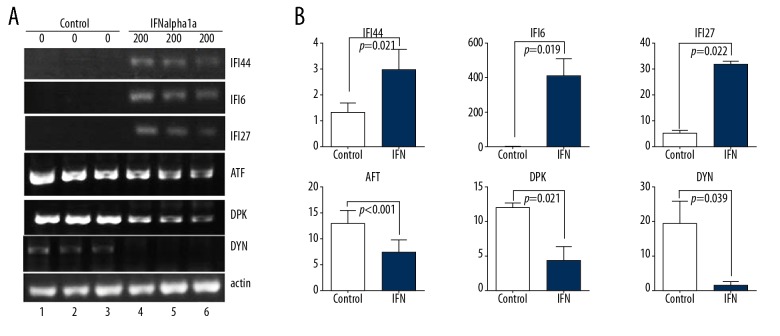
BACKGROUND Interferon alpha (IFNalpha) exerts its anti-proliferative effect on many human cancers. Among the 13 subtypes of human IFNalpha, IFNalpha-1 subtype has 2 variants, named IFNalpha-1a and IFNalpha-1b, that differ from each other in only 1 amino acid, at residue 114. However, the mechanism by which IFNalpha-1a mediates growth inhibition is still unclear. MATERIAL AND METHODS Human laryngeal carcinoma HEp2 cells were treated with IFNalpha-1a by either transient transfection or exogenous delivery. Western blot and RT-PCR analysis were carried out to assess apoptotic pathways active in IFNalpha-1a-treated HEp2 cells. Microarray analysis was conducted to uncover the differential gene expressions after IFNalpha-1a treatment. KEGG pathway enrichment analysis was also performed. RESULTS IFNalpha-1a markedly inhibited the proliferation and significantly promoted the apoptosis of HEp-2 cells. Mechanistic studies indicate that IFNalpha-1a-mediated cell apoptosis is directly linked to intrinsic and endoplasmic reticulum (ER) stress-related apoptosis, but is independent of extrinsic apoptosis. The top 40 differentially expressed genes discovered by microarray analysis included 20 upregulated genes (e.g., IFI6, IFI27, IFI44L, and MIR548X) and 20 downregulated genes (e.g., PRKDC, HIST1H3B, DYNC1H1, and HIST1H2AM). KEGG pathway enrichment analysis revealed that 4 out of 6 pathways are TP53-related. CONCLUSIONS We demonstrated a detailed mechanism involved in IFNalpha-1a-mediated anti-proliferation activity in human laryngeal carcinoma cells.
干扰素 alpha(IFNalpha)对许多人类癌症具有抗增殖作用。在人类 IFNalpha 的 13 种亚型中,IFNalpha-1 亚型有 2 种变体,分别命名为 IFNalpha-1a 和 IFNalpha-1b,它们仅在 114 位残基处的 1 个氨基酸上有所不同。然而,IFNalpha-1a 介导生长抑制的机制仍不清楚。
用人喉癌细胞 HEp2 通过瞬时转染或外源性给药进行 IFNalpha-1a 处理。通过 Western blot 和 RT-PCR 分析评估 IFNalpha-1a 处理的 HEp2 细胞中活跃的凋亡途径。进行微阵列分析以揭示 IFNalpha-1a 处理后的差异基因表达。还进行了 KEGG 途径富集分析。
IFNalpha-1a 显著抑制 HEp-2 细胞的增殖,并显著促进细胞凋亡。机制研究表明,IFNalpha-1a 介导的细胞凋亡与内在和内质网(ER)应激相关的凋亡直接相关,而与外在凋亡无关。微阵列分析发现的前 40 个差异表达基因包括 20 个上调基因(如 IFI6、IFI27、IFI44L 和 MIR548X)和 20 个下调基因(如 PRKDC、HIST1H3B、DYNC1H1 和 HIST1H2AM)。KEGG 途径富集分析显示,6 条途径中有 4 条与 TP53 相关。
我们详细阐述了 IFNalpha-1a 在人喉癌细胞中介导的抗增殖活性的机制。