Department of Epidemiology and Biostatistics, School of Public Health, College of Health Sciences, Jackson State University, Jackson, MS 39213, USA.
School of Pharmacy and Biomedical Sciences, University of Portsmouth, Portsmouth PO1 2DT, UK.
Int J Environ Res Public Health. 2019 Sep 22;16(19):3543. doi: 10.3390/ijerph16193543.
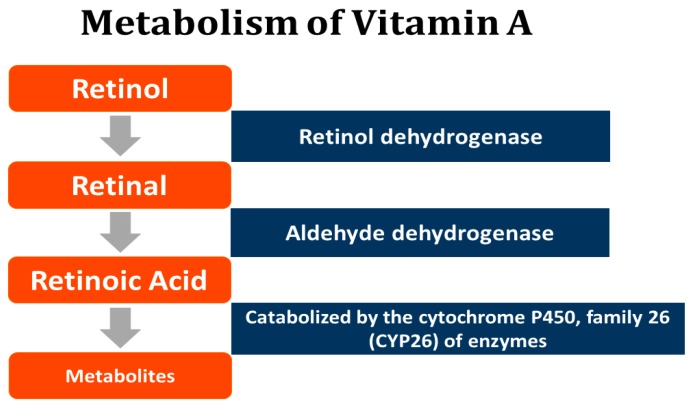
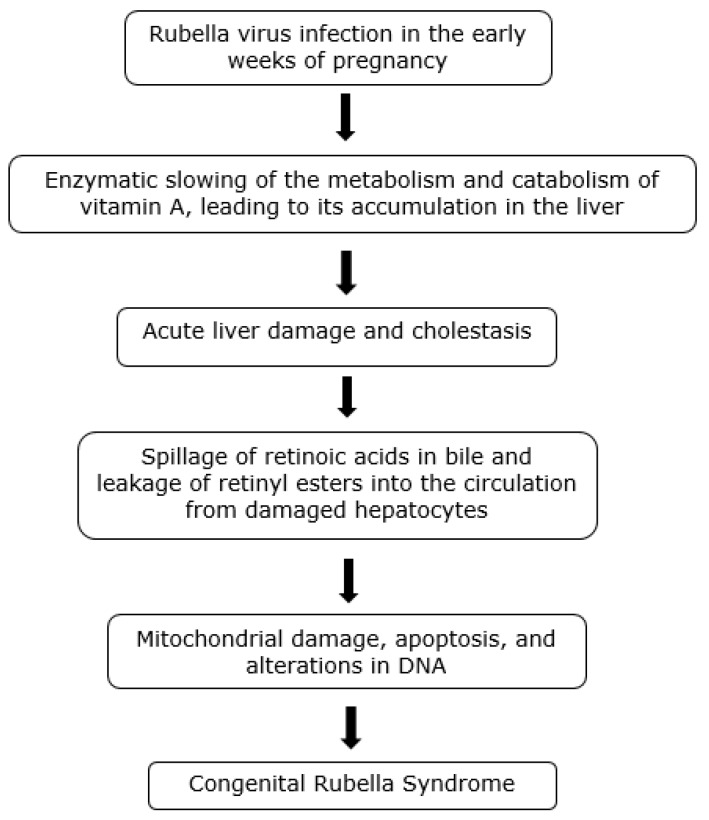
Rubella is a systemic virus infection that is usually mild. It can, however, cause severe birth defects known as the congenital rubella syndrome (CRS) when infection occurs early in pregnancy. As many as 8%-13% of children with CRS developed autism during the rubella epidemic of the 1960s compared to the background rate of about 1 new case per 5000 children. Rubella infection and CRS are now rare in the U.S. and in Europe due to widespread vaccination. However, autism rates have risen dramatically in recent decades to about 3% of children today, with many cases appearing after a period of normal development ('regressive autism'). Evidence is reviewed here suggesting that the signs and symptoms of rubella may be due to alterations in the hepatic metabolism of vitamin A (retinoids), precipitated by the acute phase of the infection. The infection causes mild liver dysfunction and the spillage of stored vitamin A compounds into the circulation, resulting in an endogenous form of hypervitaminosis A. Given that vitamin A is a known teratogen, it is suggested that rubella infection occurring in the early weeks of pregnancy causes CRS through maternal liver dysfunction and exposure of the developing fetus to excessive vitamin A. On this view, the multiple manifestations of CRS and associated autism represent endogenous forms of hypervitaminosis A. It is further proposed that regressive autism results primarily from post-natal influences of a liver-damaging nature and exposure to excess vitamin A, inducing CRS-like features as a function of vitamin A toxicity, but without the associated dysmorphogenesis. A number of environmental factors are discussed that may plausibly be candidates for this role, and suggestions are offered for testing the model. The model also suggests a number of measures that may be effective both in reducing the risk of fetal CRS in women who acquire rubella in their first trimester and in reversing or minimizing regressive autism among children in whom the diagnosis is suspected or confirmed.
风疹是一种全身性病毒感染,通常症状较轻。然而,当感染发生在妊娠早期时,可导致严重的出生缺陷,即先天性风疹综合征(CRS)。在 20 世纪 60 年代风疹流行期间,多达 8%-13%的 CRS 患儿患有自闭症,而背景发病率约为每 5000 名儿童中有 1 例新病例。由于广泛接种疫苗,风疹感染和 CRS 在美国和欧洲现在已很少见。然而,自闭症的发病率在最近几十年急剧上升,目前约为儿童的 3%,许多病例出现在正常发育一段时间后(“退行性自闭症”)。这里回顾的证据表明,风疹的体征和症状可能是由于感染急性期肝代谢维生素 A(类视黄醇)的改变所致。感染导致轻度肝功能障碍和储存的维生素 A 化合物溢出到循环中,导致内源性维生素 A 过多症。鉴于维生素 A 是一种已知的致畸物,因此推测妊娠早期的风疹感染通过母体肝功能障碍和发育中的胎儿暴露于过量的维生素 A 导致 CRS。根据这一观点,CRS 的多种表现形式和相关自闭症代表内源性维生素 A 过多症。进一步提出退行性自闭症主要源于具有肝损伤性质的产后影响和暴露于过量维生素 A,引起类似于 CRS 的特征作为维生素 A 毒性的功能,但没有相关的畸形发生。讨论了一些环境因素,这些因素可能是这种作用的候选因素,并提出了一些测试该模型的建议。该模型还提出了一些措施,这些措施对于降低在妊娠早期感染风疹的女性胎儿 CRS 的风险以及对于怀疑或确诊患有退行性自闭症的儿童逆转或最小化退行性自闭症可能是有效的。