Department of Medical Research, China Medical University Hospital, China Medical University, Taichung 40447, Taiwan.
Department of Traditional Chinese Medicine, Chang Gung Memorial Hospital, Keelung 20401, Taiwan.
Int J Mol Sci. 2019 Sep 12;20(18):4528. doi: 10.3390/ijms20184528.
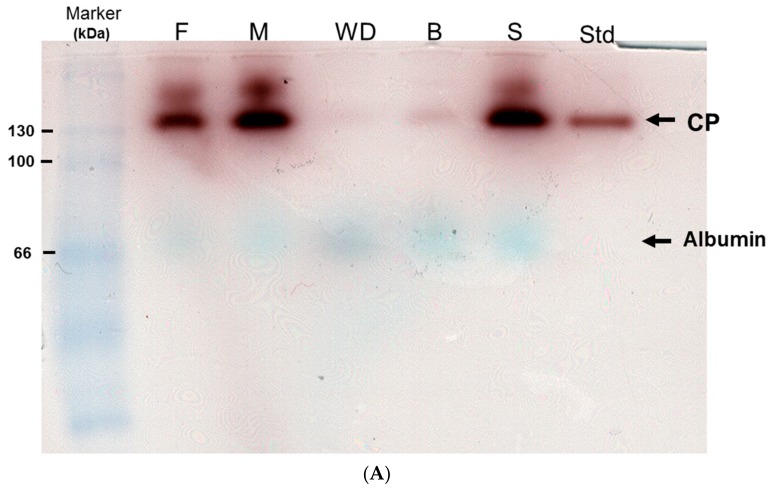
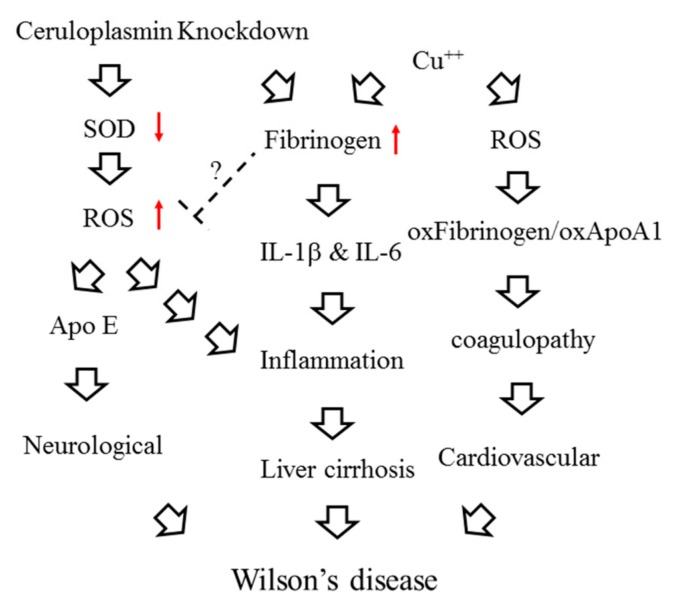
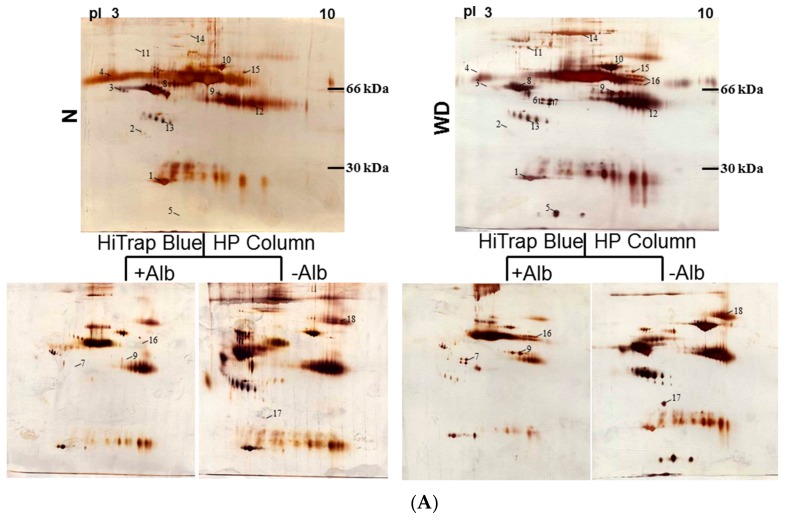
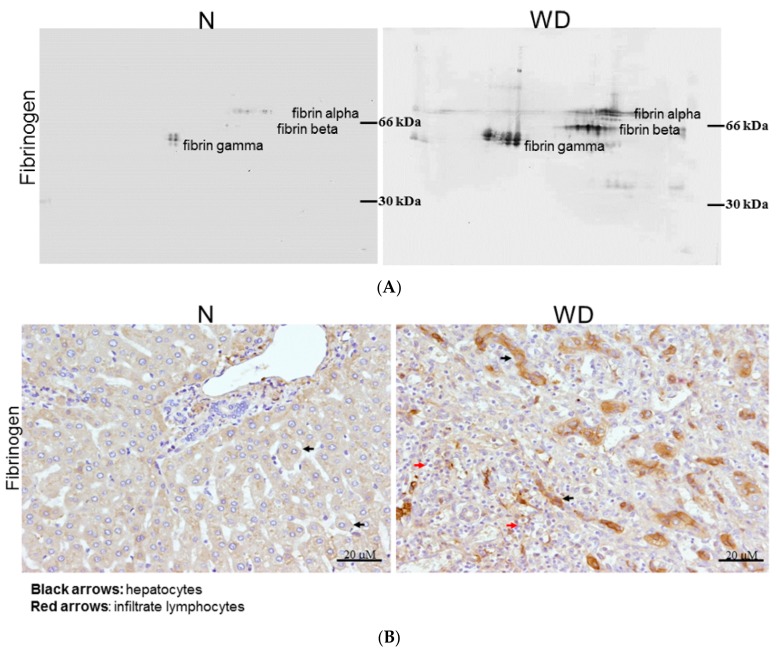
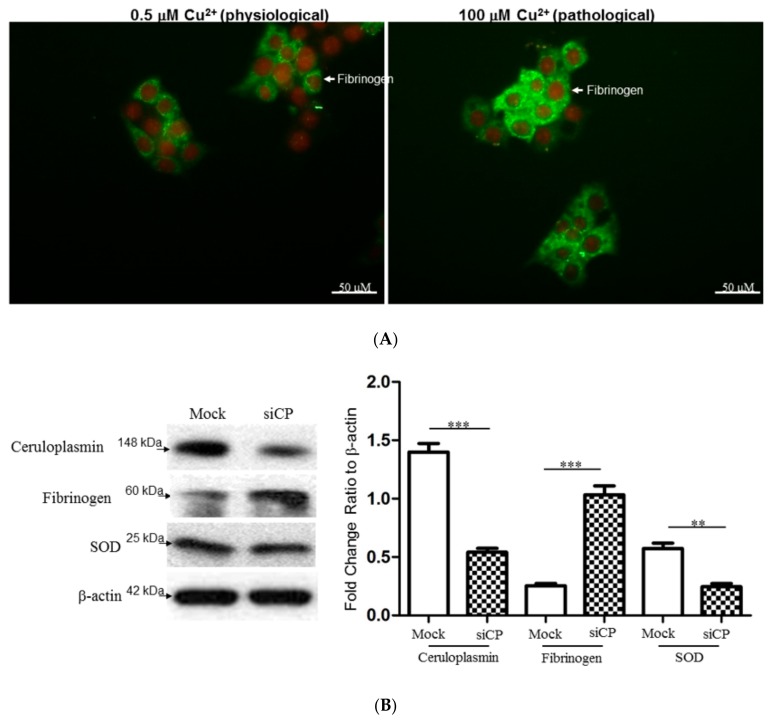
Wilson's disease (WD) is an autosomal recessive disorder of copper metabolism caused by defects in the ATPase gene (ATP7B). The various clinical features result from the massive accumulation of copper in the liver, cornea and basal ganglia. Although WD can be effectively treated with proper medicine, this disease is difficult to clearly diagnose due to its indefinite symptoms. In the current study, we achieved a positive correlation between clinical symptoms and the enzymatic activity of ceruloplasmin in WD patients. Furthermore, proteome profiles of plasma as well as network analysis demonstrated that fibrinogen is a critical indicator which is significantly unregulated in WD subjects in comparison to healthy donors and closely linked to pathogenesis of WD. Here, we applied 2DE-immunoblots and immunohistochemistry to verify the protein level and localization in situ. The enhanced expression of fibrinogen in the plasma of WD subjects with respect to that of healthy controls and patients with distinct disorders was also confirmed by utilizing clinical samples. As expected, application of high dose of copper induced expression of fibrinogen, while knockdown of ceruloplasmin also resulted in upregulation of fibrinogen as well as elimination of superoxide dismutase (SOD), leading to increased oxidative stress in cells. In summary, the liver injury or oxidative stress induced by the progression of WD may account for the obvious increase of fibrinogen, which in turn triggers inflammatory responses and interferes coagulation cascades; this finding sheds light on the early detection and diagnosis of WD.
威尔逊病(WD)是一种常染色体隐性遗传性铜代谢疾病,由 ATP 酶基因(ATP7B)缺陷引起。由于铜在肝脏、角膜和基底神经节中的大量积累,导致了各种临床特征。尽管 WD 可以通过适当的药物有效治疗,但由于其症状不确定,因此难以明确诊断。在本研究中,我们发现 WD 患者的临床症状与铜蓝蛋白的酶活性呈正相关。此外,血浆的蛋白质组谱和网络分析表明,纤维蛋白原是一个关键指标,与健康供体相比,WD 患者显著失调,与 WD 的发病机制密切相关。在这里,我们应用 2-DE-免疫印迹和免疫组织化学来验证蛋白质水平和原位定位。利用临床样本还证实了 WD 患者血浆中纤维蛋白原的表达增强相对于健康对照和具有不同疾病的患者。正如预期的那样,高剂量铜的应用诱导了纤维蛋白原的表达,而铜蓝蛋白的敲低也导致了纤维蛋白原的上调以及超氧化物歧化酶(SOD)的消除,从而导致细胞内氧化应激增加。总之,WD 进展引起的肝损伤或氧化应激可能是纤维蛋白原明显增加的原因,而纤维蛋白原反过来又会引发炎症反应并干扰凝血级联反应;这一发现为 WD 的早期检测和诊断提供了依据。