Laboratory of Stem Cell Biology, Department of Biosciences, Kitasato University School of Science, 1-15-1 Kitasato, Minami-ku, Sagamihara, Kanagawa, 252-0373, Japan.
Department of Functional Anatomy and Reproductive Biology and Medicine, Graduate School of Medicine, 1-8-1, Inohana, Chuo-ku, Chiba, Chiba, Japan.
Sci Rep. 2019 Sep 24;9(1):13757. doi: 10.1038/s41598-019-50318-6.
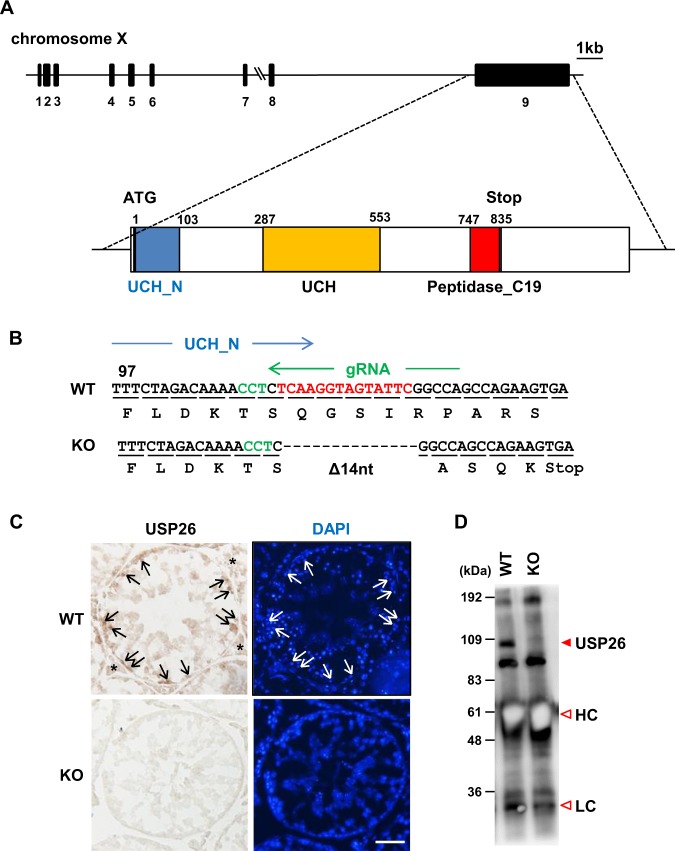
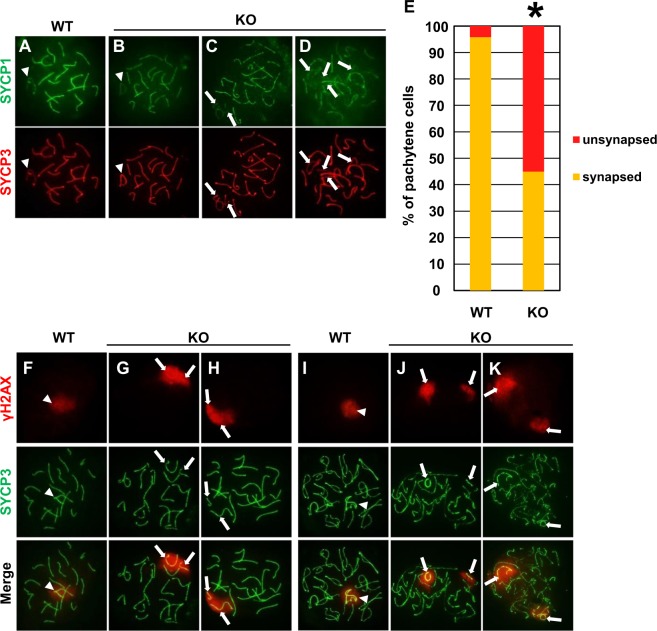
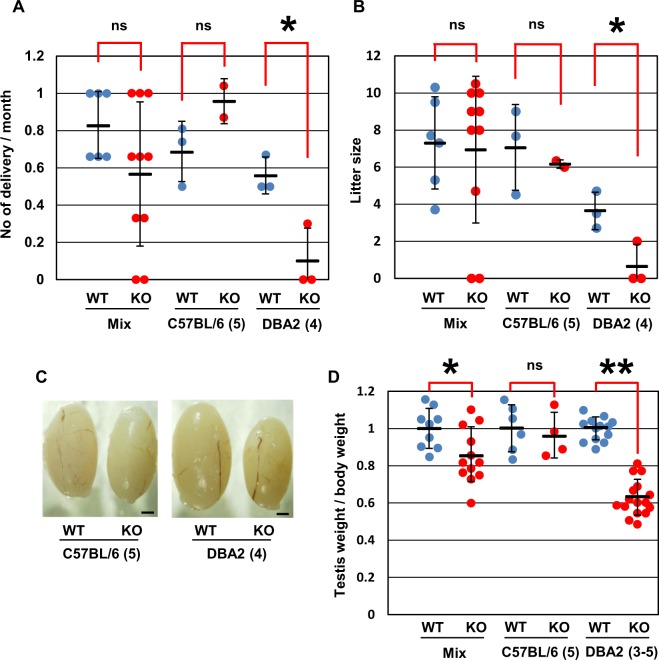
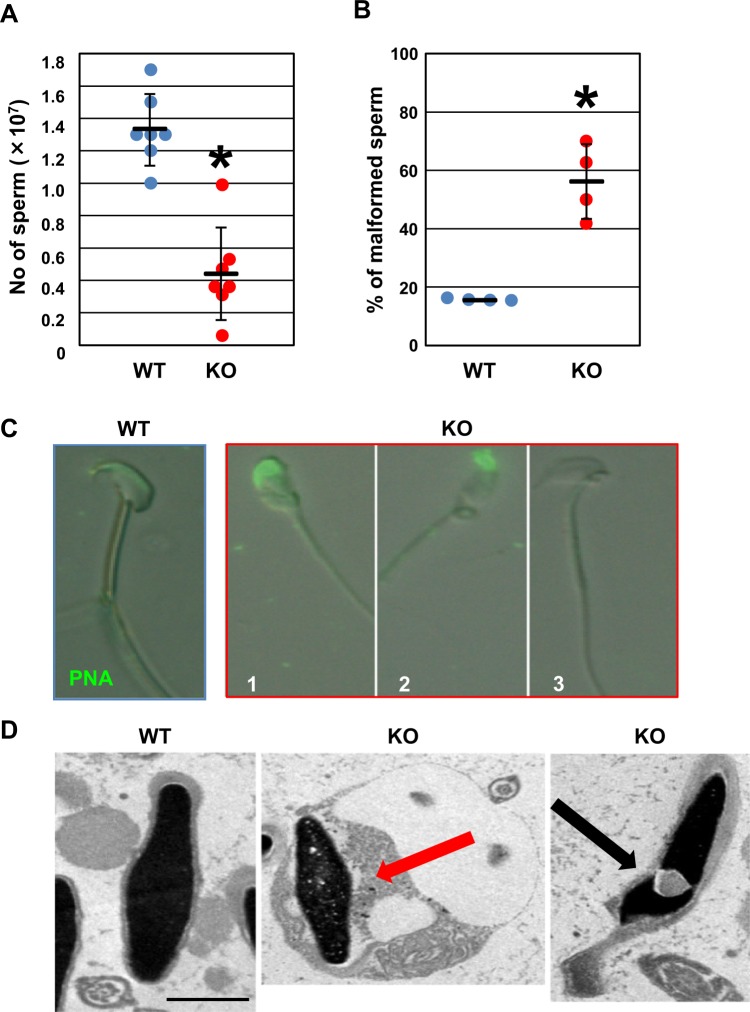
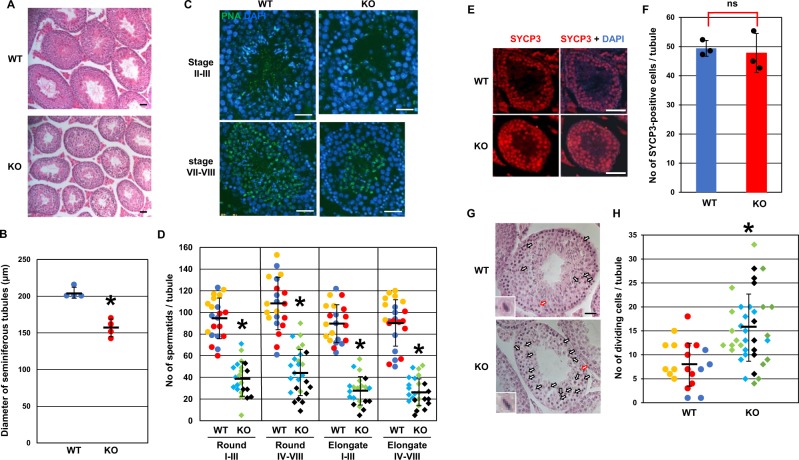
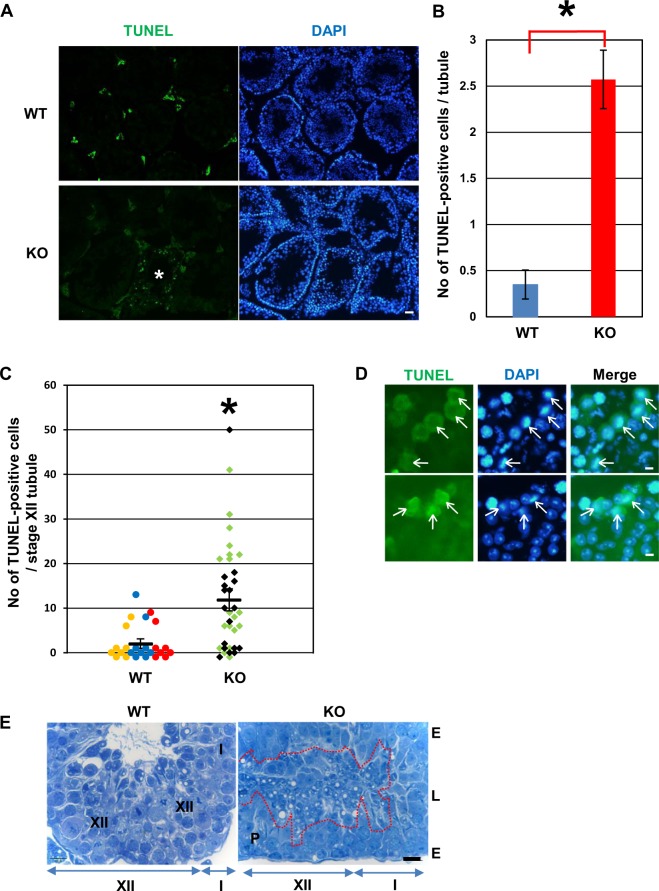
Spermatogenesis is a reproductive system process that produces sperm. Ubiquitin specific peptidase 26 (USP26) is an X chromosome-linked deubiquitinase that is specifically expressed in the testes. It has long been controversial whether USP26 variants are associated with human male infertility. Thus, in the present study, we introduced a mutation into the Usp26 gene in mice and found that Usp26 mutant males backcrossed to a DBA/2 background, but not a C57BL/6 background, were sterile or subfertile and had atrophic testes. These findings indicate that the effects of the Usp26 mutation on male reproductive capacity were influenced by genetic background. Sperm in the cauda epididymis of Usp26 mutant mice backcrossed to a DBA/2 background were decreased in number and showed a malformed head morphology compared to those of wild-type mice. Additionally, histological examinations of the testes revealed that the number of round and elongated spermatids were dramatically reduced in Usp26 mutant mice. The mutant mice exhibited unsynapsed chromosomes in pachynema and defective chiasma formation in diplonema, which presumably resulted in apoptosis of metaphase spermatocytes and subsequent decrease of spermatids. Taken together, these results indicate that the deficiencies in fertility and spermatogenesis caused by mutation of Usp26 were dependent on genetic background.
精子发生是一种生殖系统过程,可产生精子。泛素特异性肽酶 26(USP26)是一种 X 染色体连锁的去泛素化酶,特异性表达于睾丸。USP26 变体是否与人类男性不育有关一直存在争议。因此,在本研究中,我们在小鼠中引入了 Usp26 基因的突变,发现 Usp26 突变雄性与 DBA/2 背景回交,但不与 C57BL/6 背景回交,是不育或亚不育的,并且睾丸萎缩。这些发现表明 Usp26 突变对雄性生殖能力的影响受到遗传背景的影响。与野生型小鼠相比,回交至 DBA/2 背景的 Usp26 突变小鼠尾部附睾中的精子数量减少,并且头部形态畸形。此外,对睾丸的组织学检查显示,Usp26 突变小鼠的圆形和拉长精子数量明显减少。突变小鼠在粗线期表现出未配对的染色体和双线期的异常交叉形成,这可能导致中期精母细胞凋亡,随后精子减少。总之,这些结果表明,Usp26 突变导致的生育能力和精子发生缺陷依赖于遗传背景。