Fischer Luise, Herkner Caroline, Kitte Reni, Dohnke Sebastian, Riewaldt Julia, Kretschmer Karsten, Garbe Annette I
Osteoimmunology, DFG-Center for Regenerative Therapies Dresden (CRTD), Technische Universität Dresden, Dresden, Germany.
Molecular and Cellular Immunology/Immune Regulation, DFG-Center for Regenerative Therapies Dresden (CRTD), Technische Universität Dresden, Dresden, Germany.
Front Endocrinol (Lausanne). 2019 Sep 10;10:578. doi: 10.3389/fendo.2019.00578. eCollection 2019.
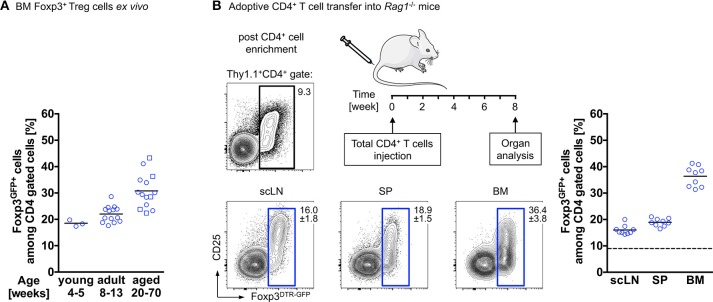
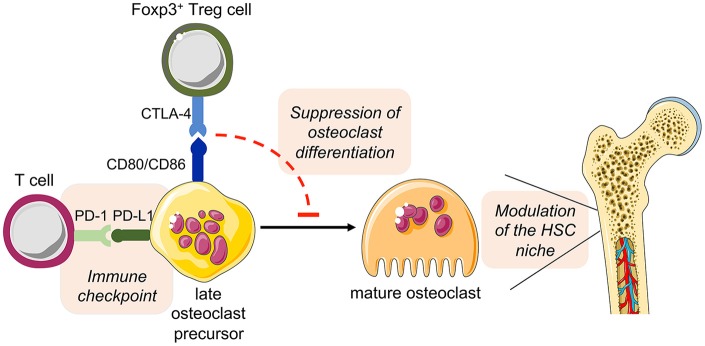
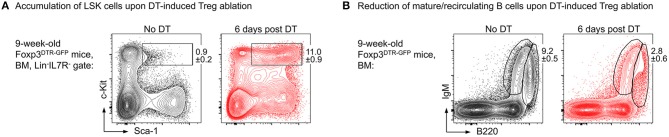
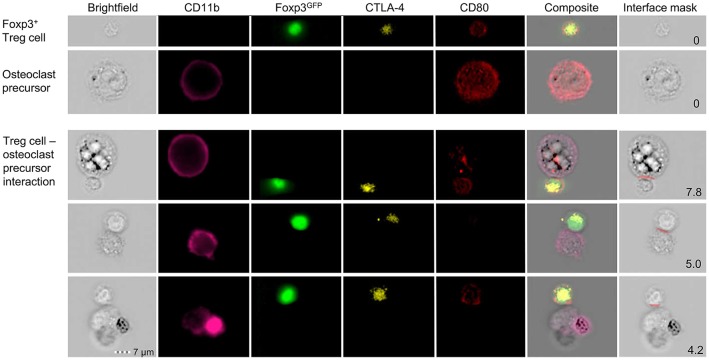
The bone represents surprisingly dynamic structures that are subject to constant remodeling by the concerted action of bone-forming osteoblasts and bone-resorbing osteoclasts - two cell subsets of distinct developmental origin that are key in maintaining skeletal integrity throughout life. In general, abnormal bone remodeling due to dysregulated bone resorption and formation is an early event in the manifestation of various human bone diseases, such as osteopetrosis/osteoporosis and arthritis. But bone remodeling is also closely interrelated with lympho-hematopoietic homeostasis, as the bone marrow niche is formed by solid and trabecular bone structures that provide a framework for the long-term maintenance and differentiation of HSCs (>blood lineage cells and osteoclasts) and MSCs (>osteoblasts). Numerous studies in mice and humans have implicated innate and adaptive immune cells in the dynamic regulation of bone homeostasis, but despite considerable clinical relevance, the exact mechanisms of such immuno-bone interplay have remained incompletely understood. This holds particularly true for CD4 regulatory T (Treg) cells expressing the lineage specification factor Foxp3: Foxp3 Treg cells have been shown to play an indispensable role in maintaining immune homeostasis, but may also exert critical non-immune functions, which includes the control of metabolic and regenerative processes, as well as the differentiation of HSCs and function of osteoclasts. Here, we summarize our current knowledge on the T cell/bone interplay, with a particular emphasis on our own efforts to dissect the role of Foxp3 Treg cells in bone and hematopoietic homeostasis, employing experimental settings of gain- and loss-of-Treg cell function. These data make a strong case that Foxp3 Treg cells impinge on lympho-hematopoiesis through indirect mechanisms, i.e., by acting on osteoclast development and function, which translates into changes in niche size. Furthermore, we propose that, besides disorders that involve inflammatory bone loss, the modulation of Foxp3 Treg cell function may represent a suitable approach to reinstate bone homeostasis in non-autoimmune settings of aberrant bone remodeling.
骨骼是令人惊讶的动态结构,在成骨的成骨细胞和骨吸收的破骨细胞的协同作用下不断重塑——这两种细胞亚群起源不同,在维持一生的骨骼完整性中起关键作用。一般来说,由于骨吸收和形成失调导致的异常骨重塑是各种人类骨骼疾病(如骨质石化症/骨质疏松症和关节炎)表现的早期事件。但骨重塑也与淋巴造血稳态密切相关,因为骨髓微环境由致密骨和小梁骨结构形成,为造血干细胞(>血细胞谱系细胞和破骨细胞)和间充质干细胞(>成骨细胞)的长期维持和分化提供框架。在小鼠和人类中的大量研究表明,先天性和适应性免疫细胞参与骨稳态的动态调节,但尽管具有相当大的临床相关性,这种免疫-骨相互作用的确切机制仍未完全了解。对于表达谱系特异性因子Foxp3的CD4调节性T(Treg)细胞来说尤其如此:已证明Foxp3 Treg细胞在维持免疫稳态中起不可或缺的作用,但也可能发挥关键的非免疫功能,包括控制代谢和再生过程,以及造血干细胞的分化和破骨细胞的功能。在这里,我们总结了目前关于T细胞/骨相互作用的知识,特别强调了我们自己通过Treg细胞功能获得和缺失的实验设置来剖析Foxp3 Treg细胞在骨和造血稳态中的作用所做的努力。这些数据有力地证明,Foxp3 Treg细胞通过间接机制影响淋巴造血,即通过作用于破骨细胞的发育和功能,这转化为微环境大小的变化。此外,我们提出,除了涉及炎症性骨丢失的疾病外,调节Foxp3 Treg细胞功能可能是在异常骨重塑的非自身免疫环境中恢复骨稳态的合适方法。