Ragon Institute of MGH, MIT and Harvard, Cambridge, MA, United States.
MGH Cancer Center, Boston, MA, United States.
Front Immunol. 2019 Sep 10;10:2109. doi: 10.3389/fimmu.2019.02109. eCollection 2019.
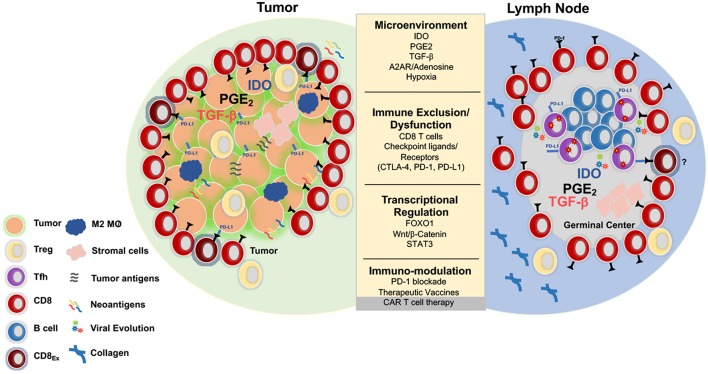
As the AIDS epidemic unfolded, the appearance of opportunistic infections in at-risk persons provided clues to the underlying problem: a dramatic defect in cell-mediated immunity associated with infection and depletion of CD4 T lymphocytes. Moreover, the emergence of HIV-associated malignancies in these same individuals was a clear indication of the significant role effective cellular immunity plays in combating cancers. As research in the HIV field progressed, advances included the first demonstration of the role of PD-1 in human T cell exhaustion, and the development of gene-modified T cell therapies, including chimeric antigen receptor (CAR) T cells. In the intervening years, the oncology field has capitalized on these advances, effectively mobilizing the cellular immune response to achieve immune-mediated remission or cure of previously intractable cancers. Although similar therapeutic advances have not yet been achieved in the HIV field, spontaneous CD8 T cell mediated remission or functional cure of HIV infection does occur in very small subset of individuals in the absence of anti-retroviral therapy (ART). This has many similarities to the CD8 T cell mediated functional control or elimination of cancers, and indicates that immunotherapy for HIV is a rational goal. In HIV infection, one major barrier to successful immunotherapy is the small, persistent population of infected CD4 T cells, the viral reservoir, which evades pharmacological and immune-mediated clearance, and is largely maintained in secondary lymphoid tissues at sites where CD8 T cells have limited access and/or function. The reservoir-enriched lymphoid microenvironment bears a striking resemblance to the tumor microenvironment of many solid tumors-namely high levels of anti-inflammatory cytokines, expression of co-inhibitory receptors, and physical exclusion of immune effector cells. Here, we review the parallels between CD8 T cell-mediated immune control of HIV and cancer, and how advances in cancer immunotherapy may provide insights to direct the development of effective HIV cure strategies. Specifically, understanding the impact of the tissue microenvironment on T cell function and development of CAR T cells and therapeutic vaccines deserve robust attention on the path toward a CD8 T cell mediated cure of HIV infection.
随着艾滋病疫情的发展,高危人群中机会性感染的出现为潜在问题提供了线索:与 CD4 T 淋巴细胞感染和耗竭相关的细胞介导免疫的显著缺陷。此外,这些相同个体中 HIV 相关恶性肿瘤的出现清楚地表明,有效的细胞免疫在对抗癌症方面发挥着重要作用。随着 HIV 领域研究的进展,研究进展包括首次证明 PD-1 在人类 T 细胞耗竭中的作用,以及基因修饰的 T 细胞疗法的发展,包括嵌合抗原受体 (CAR) T 细胞。在这期间,肿瘤学领域利用了这些进展,有效地调动了细胞免疫反应,实现了免疫介导的缓解或治愈以前难以治疗的癌症。尽管在 HIV 领域尚未取得类似的治疗进展,但在没有抗逆转录病毒疗法 (ART) 的情况下,HIV 感染的 CD8 T 细胞介导的缓解或功能性治愈确实会在极少数个体中发生。这与 CD8 T 细胞介导的癌症的功能控制或消除有许多相似之处,并表明免疫疗法治疗 HIV 是一个合理的目标。在 HIV 感染中,成功免疫治疗的一个主要障碍是感染的 CD4 T 细胞的小而持续的群体,即病毒储存库,它逃避了药物和免疫介导的清除,并且主要存在于二级淋巴组织中,在这些地方 CD8 T 细胞的进入和/或功能有限。储存库丰富的淋巴微环境与许多实体瘤的肿瘤微环境非常相似,即高水平的抗炎细胞因子、共抑制受体的表达以及免疫效应细胞的物理排斥。在这里,我们回顾了 CD8 T 细胞介导的 HIV 和癌症免疫控制之间的相似之处,以及癌症免疫疗法的进展如何为指导有效的 HIV 治愈策略的发展提供见解。具体来说,了解组织微环境对 T 细胞功能的影响以及 CAR T 细胞和治疗性疫苗的发展,值得在实现 CD8 T 细胞介导的 HIV 感染治愈的道路上给予强有力的关注。